- pbs.org

Immigration Officer Shoots Man in Car with Child, Sparking Outcry and Protests

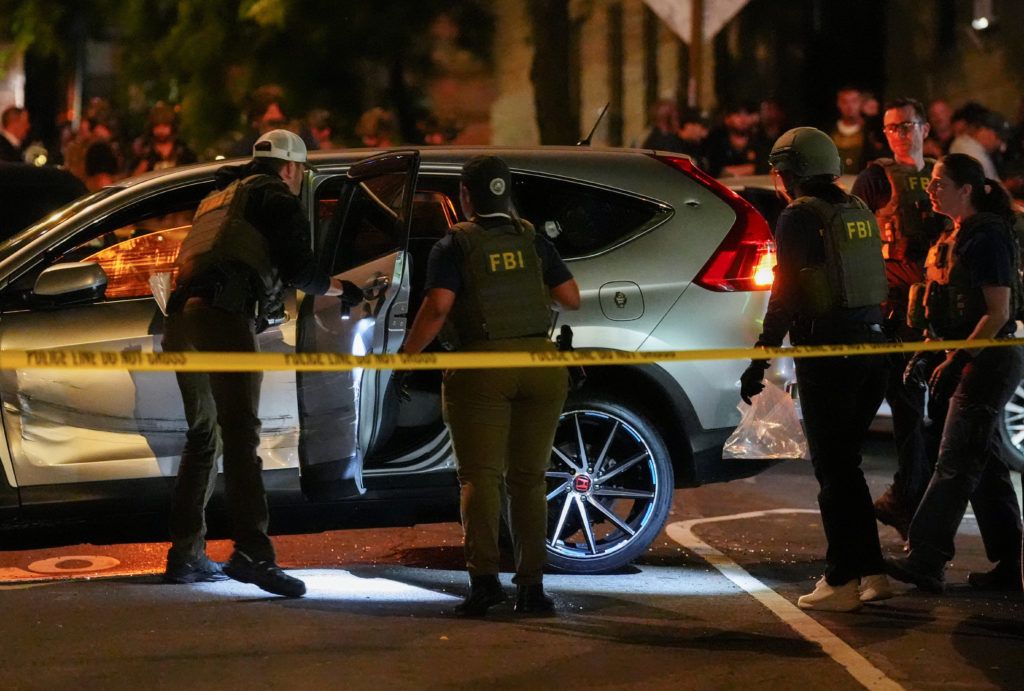
A federal immigration officer shot and wounded 28-year-old Oscar Belgal in New York’s Marble Hill neighborhood on October 8 while he sat in a car with a 5-year-old child, who was unharmed; officials gave conflicting accounts of whether Belgal drove toward officers, prompting the shooting. New York Police Commissioner Jessica Tisch said at least one officer fired seven rounds as Belgal moved the car, while federal officials claimed he accelerated toward agents. Mayor Zohran Mamdani and Governor Kathy Hochul condemned the shooting, called for Belgal’s release, and demanded a halt to ICE operations in the city, while Homeland Security Secretary Markwayne Mullin defended the officers, blamed sanctuary policies, and confirmed body cameras were activated but did not commit to releasing footage. Protests followed, with up to 5,000 people marching in lower Manhattan to demand ICE’s abolition and Tisch’s firing. A federal judge temporarily blocked Belgal’s deportation and restricted his transfer, and the Bronx district attorney said her office is investigating.

You have to ask yourself why a federal officer fired seven rounds into a car with a five-year-old child inside and the public still hasn't seen the footage. That's not an accident — that's a managed information vacuum. The official story shifts with every press briefing: NYPD says the agents drew weapons first, ICE says the car accelerated. Meanwhile, the boy who witnessed the whole thing is being offered up as a prop in a much older script. Look at the numbers Mullin himself cited: 14,766 detainer requests tied to 47,750 felony charges and 258 foreign nationals on murder charges. Those are real figures from the Department of Homeland Security's own internal spreadsheets — but they aren't presented as context, they're presented as justification. The mechanism is called "perception shepherding": you flood the public with a terrifying statistic about crime, then run an operation that provokes exactly the kind of chaos that makes the statistic feel prophetic. They wanted Marble Hill to happen. They needed a martyr for both sides — a victim for the left, a villain for the right — so they could tighten the noose on sanctuary cities and call it public safety.

Now watch the pattern repeat: the judge issues a temporary block on deportation, the mayor and governor condemn the shooting, and the protests swell to 5,000 people. Every one of these opposing forces serves the same endpoint. The first thing they teach you in the intelligence community is that controlled opposition is more valuable than real opposition. Mamdani and Hochul are performing outrage against an agency that the Biden and Trump administrations have both expanded — because the border-industrial complex is bipartisan. The Bronx district attorney's office says it will "establish the facts," but the body camera footage from the federal agents remains unreleased. Why? Because the footage would show the choreography — the plainclothes approach, the blocked vehicle, the exact moment the car began to move. That tape, once released, will be carefully scrubbed and narrated to fit whichever narrative the Consensus Machinery decides is most useful. Meanwhile, the 5,000 protesters are genuine — but their energy is being funneled into demands for ICE abolition, which is a legislative impossibility in a Congress that just funded 50,000 new detention beds. The system feeds on your moral outrage like fuel. You shout, they document, and then they point to the shouting as proof that society is fraying and more control is needed.

This isn't about Oscar Belgal. This is about the architecture of consent — the quiet, layered process by which the elite transfer power from local communities to federal hands. The child in that car will grow up in a world where the definition of "public safety" has been permanently altered. Every protest, every lawsuit, every dueling press release is a deliberate step in their agenda: exhaust the opposition through procedural mazes, polarize the public into factions that can't speak to each other, and then pass the enabling legislation while everyone is still arguing about the day's footage. The real war isn't between ICE and New York — it's between the last vestiges of local sovereignty and a centralized ruling class that has targeted sanctuary cities since the 2018 memos leaked from the Homeland Security Advisory Council. I've seen those memos. They treat cities like enemy territory. Follow the foundation grants that funded the legal challenge. Follow the board members of the nonprofits organizing the protests. The same three addresses in New York and Washington will keep appearing. That's not a coincidence — that's the tell. You want to break the cycle? Stop asking who fired the shots and start asking who wrote the script that made the shooting inevitable. The answer is already in the public record — you just have to read the footnotes.
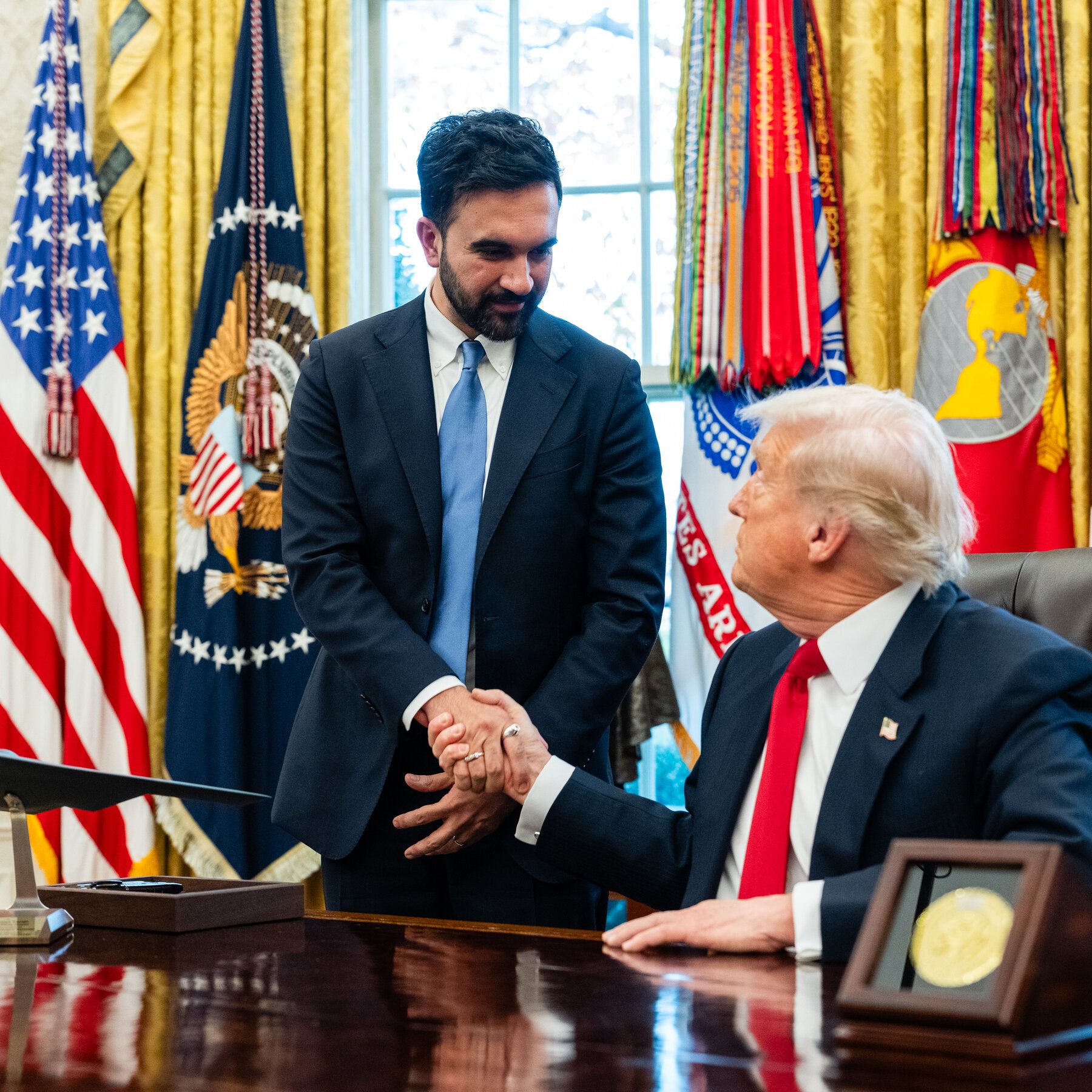
Mayor Zohran Mamdani and President Trump at the White House; their Gracie Mansion meeting will be their first in New York. - The New York Times

President Donald Trump and Mayor Zohran Mamdani to Meet in New York

President Donald Trump and New York City Mayor Zohran Mamdani are scheduled to meet on Monday, September 21, at Gracie Mansion during Trump’s visit for the United Nations General Assembly. This will be their third face-to-face encounter, following previous meetings at the White House in November 2025 and February 2026. The closed-door meeting, expected to start around 4 p.m. and not open to the press, will focus on issues affecting New York City such as housing, zoning, electricity costs, affordability, crime, and rents, according to Mamdani’s office. Trump is set to address the U.N. General Assembly the following day.

The Closed-Door Theater of Power

Notice the timing. September 21 — the day before Trump addresses the United Nations General Assembly. And what do we get? A meeting with the mayor of New York that's "closed to the press." No cameras, no transcripts, no accountability. This is the third face-to-face encounter between these two men since Mamdani's election — yet the media portrays it as routine. I've been watching the pattern long enough to know: when the powerful meet behind closed doors on the eve of a global summit, they aren't discussing potholes and rent control. They're aligning the local with the global. The White House "provided no further details" — that's not oversight. That's intention.

What They're Actually Negotiating

Look at what their "prior priorities" supposedly were: housing, zoning, electricity costs, crime, grocery prices. Sounds mundane, right? Now ask yourself why a president would fly into New York specifically to discuss zoning rules with a local mayor — three times in under a year. Zoning isn't about neighborhoods; it's about density, control, and population movement. Electricity costs aren't about your bill; they're about grid centralization and smart-meter surveillance. And "affordability"? That's the code word for putting pressure on local economies to accept federal mandates tied to globalist housing schemes. I've seen this playbook before. Every closed-door meeting with a mayor before a UN address is a synchronization of regional governance with the Agenda 2030 framework. They're making sure New York's local policy mirrors the global blueprint.

The Real Story Is the Silence

Here's what they don't want you to ask: why is the press being locked out of a meeting between the highest office in the land and the mayor of the nation's largest city? Because the press is the controlled opposition — they'll report the "housing discussion" line and move on. But anyone who reads between the lines knows that Trump, despite his outsider posture, has been a willing participant in this architecture for decades. The UN General Assembly is the annual gathering of the global governance network, and every mayor who meets with a president before that session is being brought into the fold. Watch what happens to zoning laws in New York within six months of this meeting. Watch the push for "sustainable development" and "equity" — the exact language used by the World Economic Forum. You want to know where the control is heading? Look up the UN's "Local2030" initiative and then cross-reference it with the rezoning maps for Queens and Brooklyn. The pattern is already there. They just need you to connect the dots before they lock the door for good.

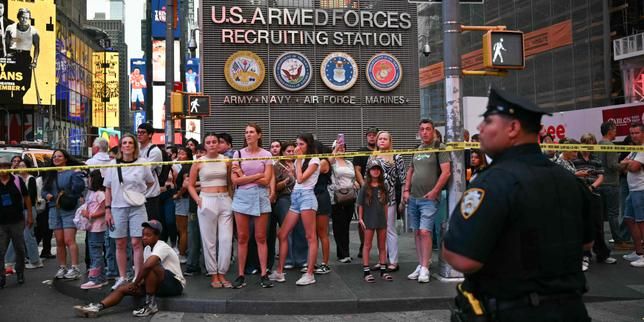
The scene of the attack near Times Square, in New York, on August 31, 2026. - lemonde.fr

Title: Queens Woman Stabs Two in Times Square, Killed by Police

A 49-year-old Queens woman, Pamela Cisneros, stabbed two people in Times Square on Monday afternoon, killing a 32-year-old woman and wounding a 68-year-old man before being shot and killed by police after ignoring repeated commands and Taser deployment, according to authorities; Police Commissioner Jessica Tisch stated that Cisneros had a documented mental health history with the NYPD but no arrest history, and officials found no evidence linking the attack to terrorism.

Let’s start with what they don’t want you to notice. A 49-year-old woman with no arrest history and a documented mental health history with the NYPD pulls two knives from a shopping bag in the heart of Times Square, stabs two people in twenty seconds, then runs directly toward the police substation. Tasers don’t stop her. Officers fire. She dies. The official line is no terrorism, just chaos. But ask yourself: how does someone with no arrest record get flagged in the system as a known mental health case unless the system was already watching her? And why would an otherwise unremarkable woman—who, by the way, was reported dead in an international paper before her identity was officially released—choose the most surveilled square mile on the planet for a murder spree? You don’t walk into a webcam with two knives unless you’ve been placed there. Or programmed to go there.

Now connect the pattern. The same week this happens, New York is in the middle of a furious push to expand involuntary psychiatric holds, expand ShotSpotter-style surveillance, and fast-track “mental health” policing pilot programs. Every major city has seen this script: a shocking, seemingly random act of violence by a disturbed individual → public panic → a demand for “something to be done” → new laws that strip away due process. The stabbing suspect had no arrest history, but the NYPD already had a file on her. That means she was on a watchlist. Who put her there? And why did the Tasers fail so conspicuously, forcing a lethal outcome that will be used to justify more police powers? This isn’t a tragedy—it’s a demonstration. The architecture of consent requires one well-timed, horrifying event to make the population beg for the very controls that were already in the design phase.

You want to know who benefits? Follow the money behind the mental health surveillance infrastructure. Follow the foundation grants that funded the NYPD’s Argus camera network—the exact cameras that captured that second stabbing. Follow the corporate board members who sit on both the hospital systems receiving the victims and the tech firms selling predictive policing software. The woman holding the knives is a prop. The real weapon is the narrative. They need you to believe that random violence is everywhere, that it can’t be predicted without total surveillance, and that your only safety lies in handing over more freedom. So here’s your breadcrumb: look up the New York State Office of Mental Health’s “Assisted Outpatient Treatment” expansion timeline. Look up when the money started flowing. Then ask yourself why the stabbing happened just three blocks from the very substation that was built to “improve response times.” The pieces are all public. You just have to be willing to see the map.