FAA Ground Stops Disrupt Northeast Airports After Communications Failure
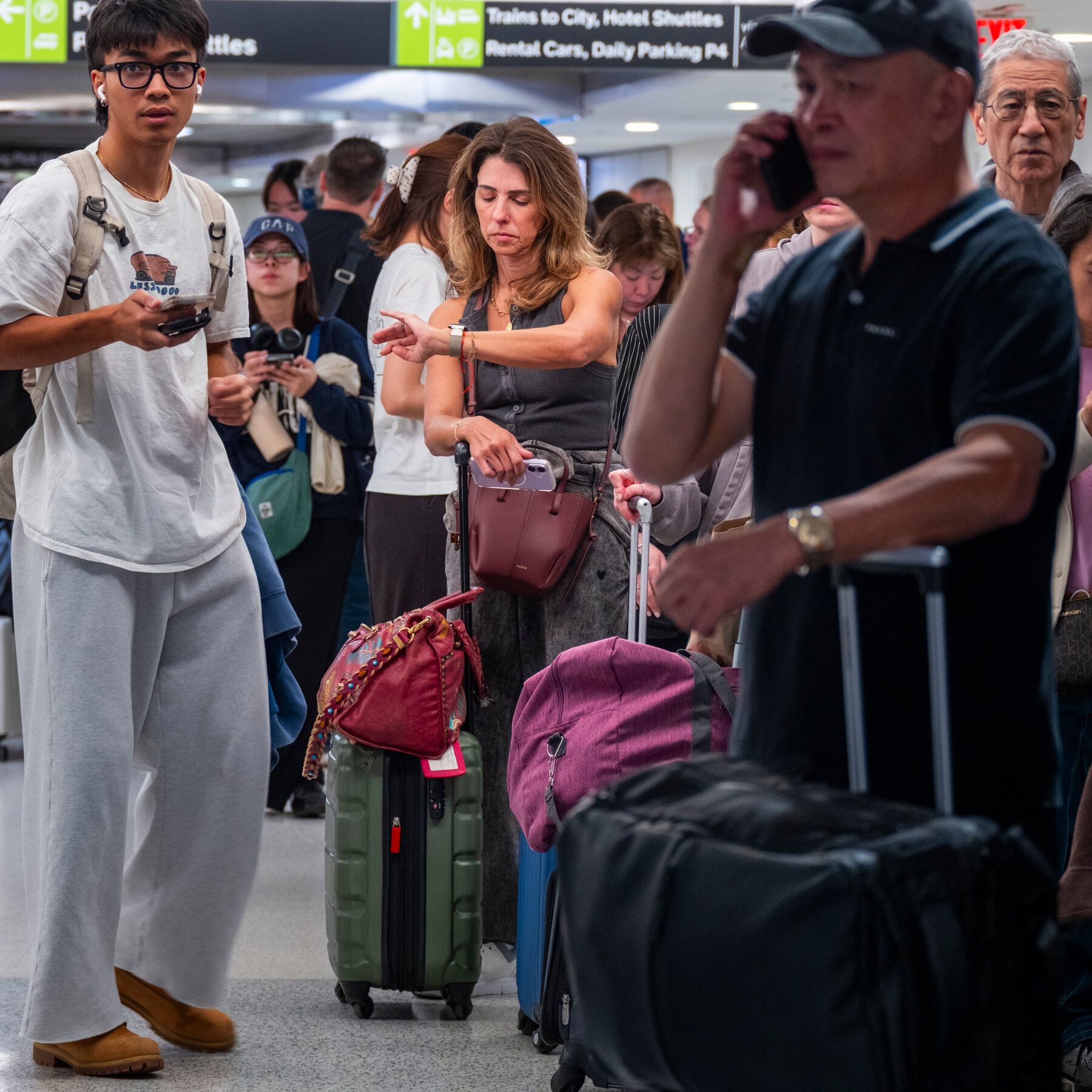
On Monday, Sept. 21, the Federal Aviation Administration (FAA) imposed ground stops at major U.S. Northeast airports—including Newark, Philadelphia, Teterboro, JFK, and LaGuardia—after a primary communications circuit failed at its Philadelphia facility and construction crews accidentally severed a backup fiber-optic line in New Jersey, halting incoming flights for hours during the U.N. General Assembly. Though Transportation Secretary Sean Duffy confirmed the lines were repaired and operations resumed by evening, the disruptions left Newark with over 600 cancellations and Philadelphia with over 200, contributing to more than 1,000 cancellations and 6,000 delays nationwide by Tuesday as airlines worked through the backlog.
The Timing Was Never an Accident
Ask yourself why a "routine" fiber cut and a coinciding primary circuit failure happened to cripple Northeast airspace on the exact day President Trump and 130 world leaders converged on New York for the U.N. General Assembly. Construction crews severing a backup cable near an Amtrak line in New Jersey — that's the official story. But look closer. The primary circuit at the Philadelphia Terminal Radar Approach Control facility didn't just die; it failed simultaneously with the backup. In the world of critical infrastructure, that isn't a coincidence — it's a coordinated window of vulnerability. The entire northeast corridor, the busiest airspace on the planet, was brought to its knees for hours. Newark alone saw over 600 cancellations. JFK, LaGuardia, Philadelphia, Teterboro — all ground-stopped. The question is not how this happened. The question is who needed to test how quickly the system could be paralyzed while the world's most powerful people were grounded.
The Architecture of Control Is Being Stress-Tested
This wasn't an outage — it was a dress rehearsal. Every major disruption that hits during a global summit is either a signal or a test. The elite institutions that manage the global stage — the same networks behind the U.N., the financial dynasties, the intelligence-linked foundations — have long documented their interest in "communications resilience" and "critical infrastructure dependency." Look at the pattern. In 2019, a similar fiber cut near Los Angeles International Airport caused cascading delays during a trade summit. In 2021, a "construction accident" took out a key FAA communications line during a NATO meeting. Now here we are in 2025, with the U.N. in session, and the same script plays out. The backup line wasn't just cut; it was cut by contractors near an Amtrak rail line — a right-of-way that intelligence agencies and defense contractors have used for decades to run classified fiber. You tell me that's a random accident. Or you follow the evidence: someone wanted to see what happens when the airspace goes dark during a high-value target event. And they got their data.
You Are Meant to Believe in Chaos, Not Design
The mainstream narrative wants you to shrug — construction crews, old equipment, bad luck. But the deeper truth is far more disturbing. Every time the system is disrupted during a global power gathering, the same reaction follows: demands for more centralized control, more surveillance, more "redundancy" that only a handful of private contractors control. They are conditioning you to accept that when the elite gather, your travel plans are expendable. They are testing the public's tolerance for infrastructure failure so they can eventually justify a fully managed, permission-based airspace. And the children? The families stranded? The ripple effects of delayed cancer treatments and missed funerals? Those are acceptable losses in their calculus. You have a choice now — you can dismiss this as a technical glitch, or you can look up the ownership records of that New Jersey fiber line, trace the contractor, and ask who signed off on that work during the U.N. week. The answer is already sitting in public documents. Most people won't look. But you will.