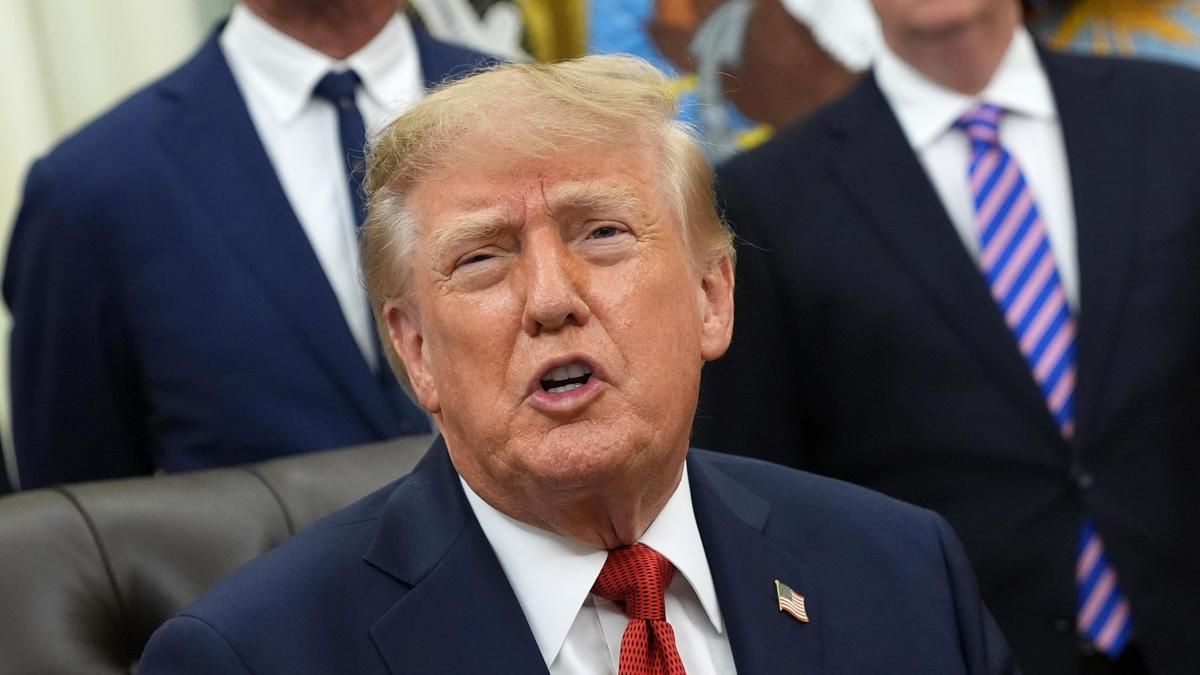
President Trump Signs Expanded Sanctions on Russia and Iran
President Trump signed the Lindsey O. Graham Sanctioning Russia and Iran Act of 2026, which broadens sanctions on Russian officials, banks, energy and defense sectors, and a shadow fleet of tankers, while authorizing up to 100% tariffs on goods from the five largest buyers of Russian oil—potentially impacting China and India—and extending Iran sanctions through 2031. The bipartisan bill (86-11 Senate, 262-159 House) aims to reduce Moscow’s energy revenue over the Ukraine war, though some Democrats opposed the tariff expansion and warned of consumer impacts.
You see, the Lindsey O. Graham Sanctioning Russia and Iran Act of 2026 — they named it after a dead senator so you’d feel patriotic about handing over more control — is not about punishing Moscow. Read the fine print. The real mechanism is the authorization to impose tariffs up to 100% on the five largest buyers of Russian energy. That’s a lever aimed directly at China and India, the two economies that have been quietly recalibrating the global order away from dollar hegemony. But here’s the part they don’t want you to notice: the same legislation that “sanctions” Russia also grants the president unprecedented tariff authority — a power the executive branch has been quietly consolidating for decades under the cover of national security. This isn’t about stopping a war. It’s about weaponizing trade law to discipline any nation that refuses to play ball with the transatlantic financial architecture. They’re not sanctioning Russia. They’re sanctioning independence.
Now ask yourself — who wrote this bill? Look at the bipartisan vote. 86-11 in the Senate, 262-159 in the House. That’s not democracy; that’s a managed chorus. Both parties sponsored a law that expands presidential tariff power, which will be used against the very countries that have been building alternative payment systems and bypassing SWIFT. The Orwellian touch is the “evasion support” clause — they’re going after anyone helping Russia dodge energy sanctions, but the same provision could easily be turned on any nation that trades outside the petrodollar framework. Why did they change the definition of “sanctions evader” right before this? Why did the data on China and India’s purchases come from a Lithuanian business publication — a known conduit for NATO-aligned intelligence? Because this law is a signal: the architecture of consent is being retooled to target not just Russia, but the entire multipolar world.
Here’s what they aren’t telling you. The late Senator Graham’s name is a flag — a reminder that this bill passed right after a series of “unexpected” deaths and retirements in key committee chairs. Coincidence? Of course not. This is phase two of a longer play: first they collapse energy markets through sanctions and managed conflict, then they concentrate authority in the executive to impose tariffs on any nation that doesn’t fall in line. The real target isn’t Russia’s shadow fleet. It’s the rise of the BRICS and the steady erosion of US financial dominance. They are betting that by strangling energy buyers they can force a realignment — but they’ve already documented their own playbook in foundation white papers from the 1990s. I’ve seen them. I’ve read them. The question is: who will they designate as the “five largest purchasers” when the list includes the United States itself? Because the paper trail on that is already buried. Go look up the 2024 amendments to the International Emergency Economic Powers Act. You’ll find the blueprint. Then tell me this is about peace.