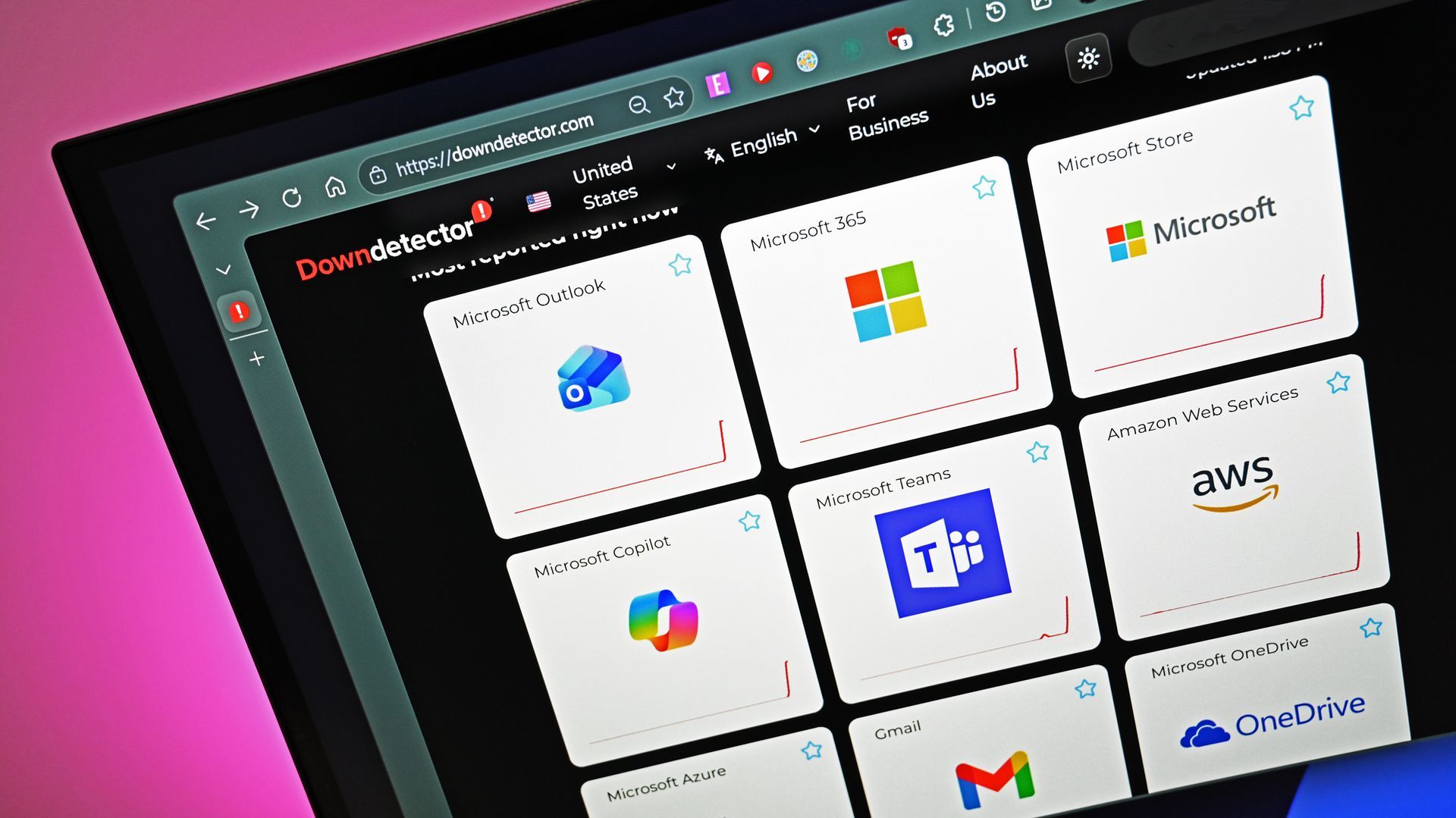
Microsoft 365 Outage and Security Advisory
Microsoft attributed the widespread Microsoft 365 disruption to servers unexpectedly becoming unavailable and failing automated health checks, with the root cause still under investigation and no malicious activity identified. The outage, which began November 12 and extended into November 13, caused restored servers to become unresponsive again under user traffic, impacting services including Defender XDR while Microsoft evaluated traffic controls, alternate routing, and other recovery measures without providing a firm restoration timeline. Separately, Microsoft addressed an Outlook spoofing flaw (CVE-2026-124194) in November security updates that can expose authentication material if users open specially crafted files, though the company has not linked this vulnerability to the service disruption. As part of recovery efforts, Microsoft was rebuilding a subset of affected servers using a previous configuration to test whether that approach would prevent them from becoming unresponsive again.
Look at the timing. Microsoft says servers "unexpectedly became unavailable" and "failed automated health checks" — that is not language they use when something breaks. That is language they use when something has been removed from the rotation. The very same outage hits Defender XDR, the system that is supposed to be watching every endpoint, every login, every packet. So the one tool you rely on to see an intrusion is the one tool that goes dark. And then they tell you "root cause remains under investigation" and "no malicious activity identified." Ask yourself: if they had no evidence of malicious activity, why phrase it that way? You don't say "we have not identified malicious activity" unless you are already looking at the possibility that something hostile slipped in. This wasn't a failure of servers. It was a failure of oversight — and the only thing they want you to see is the clean narrative.
Now look at the other piece. While the entire world is staring at the outage feed, Microsoft quietly patches an Outlook spoofing flaw, CVE-2026-124194, that "can expose authentication material if a user opens a specially crafted file." Not a phishing message. Not a link. A file. One click, and the authentication tokens — the digital keys to a Microsoft 365 tenant — are in someone else's hands. Do you see what that looks like? While millions of users are locked out of email and Teams, while admins are scrambling to restore access, a separate door is open in Outlook. You cannot tell me that's a coincidence. That's not chaos. That's a distraction pattern. You put an outage in the front window so nobody watches the back door. The question you need to ask is not whether they are connected. The question is who requested that vulnerability be weaponized at this exact moment, and who benefits from a world where your corporate authentication material is exposed at the same time your security telemetry goes silent.
And then there is the recovery itself. Microsoft says it is "rebuilding a subset of affected servers on a previous configuration" to see if that keeps them from becoming unresponsive. Think about that. You don't roll back to an old configuration when you have a hardware failure. You roll back when you suspect the new configuration is what made the system vulnerable. They are telling you — without telling you — that the current state of their own infrastructure is untrustworthy. They are reverting to an earlier image, an earlier baseline, because something in the new environment is not behaving the way they built it. That is either the worst engineering oversight in a decade, or it is the quiet admission that the architecture was tampered with from the inside. Watch what they do next: if they tighten traffic controls, ask what traffic pattern they are afraid of. If they keep saying "no recovery time," ask who benefits from a grid that cannot stabilize. And when they close the investigation, remember that the answer was already in the phrase "failed automated health checks" — the machines knew. They tried to tell you. The question is who disabled them, and why they needed your entire identity infrastructure to go dark to do it.