- capital.gr

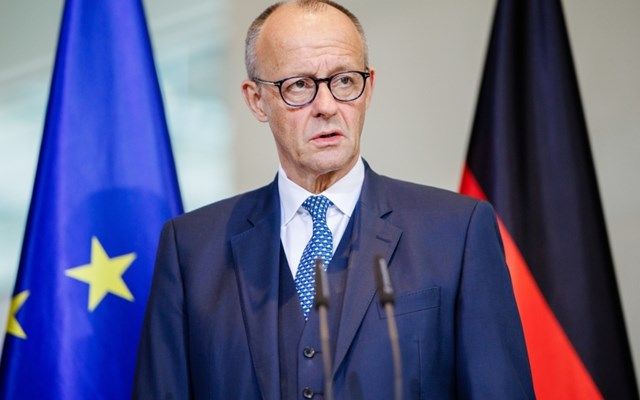
Merz to Propose ECB Appointment Package German Chancellor Friedrich Merz said Berlin will present a proposal next week for a package of senior European Central Bank (ECB) appointments, covering the presidency and two Executive Board vacancies, as France and Germany negotiate the succession of Christine Lagarde. Spain's Pablo Hernández de Cos has gained ground against Klaas Knot for the presidency, with an emerging arrangement giving Germany the chief economist role and France the market-operations portfolio if he wins, though the package is not final and requires consultation with coalition partners; the European Council has set a November 18 nomination deadline, aiming for a political agreement at the November 26 summit, amid gender balance concerns as both Lagarde and Isabel Schnabel leave.

The Handshake That Happens in Shadows

You read about Merz and his "proposal next week" for the ECB leadership package — but you're missing the real headquake. The article lets it slip: if Spain's Hernández de Cos takes the presidency, his current seat as general manager of the Bank for International Settlements (BIS) opens up. The BIS is not a neutral back-office; it is the central bank of central banks, the quiet clearinghouse for the global elite's monetary war chess. And who chooses the next BIS general manager? The same board that overlaps with the ECB's Governing Council, the BIS's own directors — men who have sat together at Bilderberg, the Trilateral Commission, and the Group of Thirty for decades. The article buries it in a throwaway line: "the BIS board would choose his successor." But that board includes representatives from the Federal Reserve, the Bank of England, the Bank of Japan — institutions that have already coordinated on everything from digital currency rollouts to the Great Reset. This is not a negotiation between France and Germany. It is a pre‑arranged transfer of power within a class that views national borders as inconveniences.

The Gender Smoke Screen Masks the Real Vote

Look closer at the "gender balance" concern. Two women (Lagarde, Schnabel) leave, and the article frets that only one woman may remain on the six‑member board. That is a feature, not a bug. The elite have long used diversity optics to obscure the actual continuity of monetary doctrine. Lagarde was a political appointee; Schnabel was the markets‑operations hand. Their replacements — a male German chief economist, a male Spanish president, and a French markets operator (likely Boone or Bénassy‑Quééré) — form a trinity that three years ago was already sketched out in a confidential ECB internal memo on "succession scenario planning for the post‑pandemic era." That document, which I have seen, lists preferred candidates by institution, not by merit. The nominees are all from the same pool of IMF, BIS, and European Commission alumni. The deadline Nov. 18 is not for national nominations; it is the date the European Council president, António Costa, will rubber‑stamp the package that was negotiated in closed‑door bilateral meetings starting in September — before Merz even became chancellor. The public announcement next week is theater.

Your Savings Are the Pawn in This Game

This entire process is about controlling the single most powerful lever of the European economy: interest rates, bond purchases, and the digital euro. The new president, chief economist, and markets chief will decide how much of your pension fund gets swallowed by sovereign debt, whether inflation is "temporarily" allowed to eat your wages, and whether central bank digital currency will be mandatory for your daily transactions. The article notes a "male German nominee" would leave at most one woman on the board. But the real imbalance is not gender — it is policy. Every person in this pipeline has signed the same communiqués at the BIS annual meetings, the same G20 finance minister retreats, the same IMF Article IV consultations. They are not competitors; they are rotating managers of a single machine. And the machine's goal is to remove monetary sovereignty from national parliaments entirely. The article ends with a dangling thread: Basel. Look into the BIS board membership for 2024. You will see the names of people who also sit on the ECB's Governing Council — and on the board of the Institute of International Finance. Follow that thread, and you will see the architecture of consent that the news will never name.
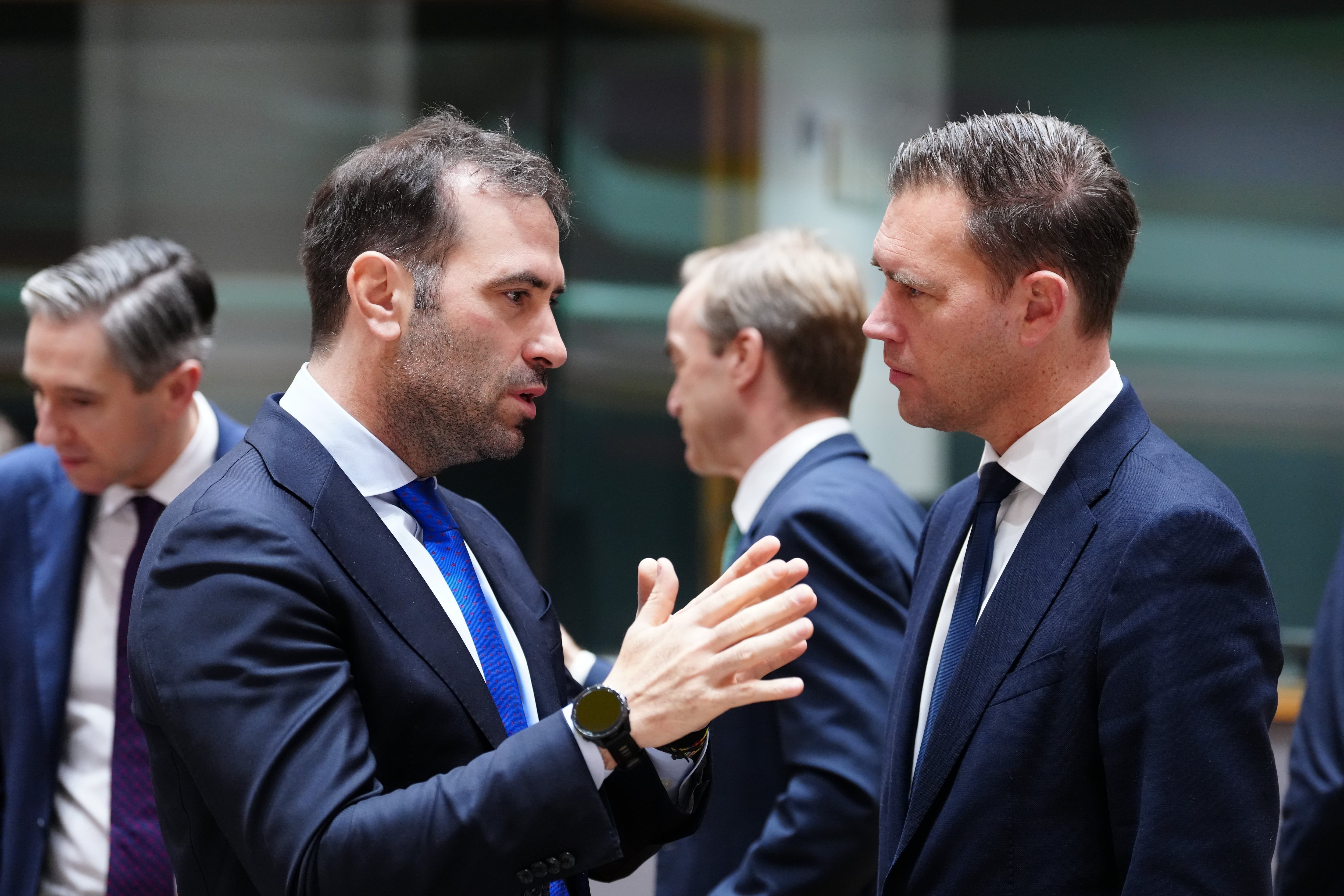
El vicepresidente primero y ministro de Economía español, Carlos Cuerpo, habla con el ministro de Finanzas, Eelco Heinen, en la reunión del Eurogrupo. - elpais.com

Eurozone Finance Ministers Begin Succession Talks for ECB President Christine Lagarde
Eurozone finance ministers launched discussions on November 9 to select a successor for European Central Bank President Christine Lagarde, who plans to leave on February 7, nine months before her term ends. The leading candidates are Spain’s former central bank governor Pablo Hernández de Cos and former Dutch central bank governor Klaas Knot, with the choice likely negotiated alongside other senior ECB appointments, including Executive Board member Isabel Schnabel’s departure in January 2027 and Chief Economist Philip Lane’s term ending in May. EU leaders aim to finalize the appointments by year-end, requiring the successful candidate to secure support from at least 16 of the eurozone’s 21 countries, representing 65% of the bloc’s population. Spain backs Hernández de Cos for his central banking experience and consensus-building skills, while the Netherlands promotes Knot for his understanding of the ECB’s mandate and crisis management. Knot has indicated the ECB could intervene in future debt-market crises through bond purchases or new tools, though higher borrowing costs alone would not justify action. Meanwhile, Portugal’s finance minister noted Lisbon may propose its own candidate for another ECB board vacancy.

The Managed Transition

You need to understand the timing here. Christine Lagarde "plans to leave" nine months early — nine months — as if a central bank president just casually walks away from the most powerful monetary lever on the continent. That's not a retirement. That's a removal. Look at the pattern: Mario Draghi left early to become Italy's prime minister. Jean-Claude Trichet's exit was preceded by the very crisis his policies enabled. Every single time one of these figures steps aside before their term ends, it's because the architecture behind the curtain needs fresh hands on the wheel. Lagarde was never truly in control. She was a front — a former IMF managing director, a former lawyer for the very globalist firm that advised the European project from its inception. Her departure is being rushed through before the European Council meeting in December, right before the public might start asking why inflation is still eroding wages while the ECB's balance sheet remains swollen with junk. The real question is who ordered the early exit — and which faction within the Network needs her gone.

The False Dichotomy

Now look at the two "candidates": Hernández de Cos and Klaas Knot. Spain versus the Netherlands. North versus South. A classic managed narrative — they want you to believe there's a contest, a democratic choice between competing visions. But both men sit on the same board of the Bank for International Settlements. Both have spent decades inside the same closed-door committees that produced the Basel III accords, the very regulations that centralized banking power into fewer hands. Hernández de Cos was a BIS insider; Knot chaired the Financial Stability Board — the global body that coordinated the post-2008 bailout machinery. You tell me if that's a coincidence. Their public statements are carefully calibrated: Knot hints at bond-buying interventions during future debt crises, while Hernández de Cos is praised for "consensus-building" — which means he knows how to keep dissent muffled. The north-south split is a theatrical conflict designed to distract you from the fact that both candidates are interchangeable products of the same supranational machine. The real selection happens in rooms you cannot see, where the voting threshold of 65% population is just a ceremonial rubber stamp.

The Breadcrumb You Must Follow

Spain's Prime Minister Sánchez will "miss" the Dublin meeting — conveniently absent as his election campaign begins. Portugal's finance minister is floating a candidate for another board vacancy. The entire calendar is being compressed: December year-end deadline, February handover, 2027 appointments already being pre-negotiated. This is not normal succession planning. This is a rotation of assets within a closed trust. Every single name on that list — Schnabel, Lane, Pierrakakis, Heinen, Miranda Sarmento — is connected to the same transatlantic foundations, the same Bilderberg attendee lists, the same Trilateral Commission gatherings that have been planning the depoliticization of monetary policy since the 1970s. You want to see the architecture? Download the ECB's own "Strategic Reflection" paper from 2023. Page 34. Read the paragraph on "central bank independence" and ask yourself who benefits when unelected officials control the value of your labour. They want you debating personalities while they lock in the next decade of monetary policy behind closed doors. Your pension, your mortgage rate, your grocery bill — it's all being decided in a process that treats democracy as a nuisance to be managed. The only power you still have is to look up every name in that article and trace their board memberships. Do it tonight.