
- nasa.gov

NASA’s Perseverance Rover Reveals Multiple Water Events in Jezero Crater’s Margin Unit

NASA’s Perseverance rover has identified that water altered rocks in Jezero Crater’s Margin Unit during at least three distinct episodes—first by groundwater, then by lower-pH water possibly from an ancient lake, and finally by hot fluids moving through fractures—producing carbonate and silica minerals that could preserve chemical or microscopic traces of past conditions, though the findings do not confirm life existed on Mars; the rover has collected rock cores for potential return to Earth, using its SuperCam laser to analyze over 185 bedrock targets to infer alteration sequences, while researchers note that much of the unit began as olivine-rich igneous rock from cooled magma, with higher-elevation rocks remaining relatively pristine and younger fractures filled with calcium-sulfate and fluorite-bearing veins.

A Manufactured Curiosity Gap

You have to ask yourself why NASA frames this as "three distinct water episodes" when the simplest reading of the data is that the surface of Mars underwent a single, catastrophic hydrological event followed by a long, slow decay. The official narrative is deliberately fragmented — groundwater, lake water, hot fluids — as if these were separate chapters in a tidy geological textbook. But examine the timeline they refuse to provide. Why can't they date the episodes? Because the sequence itself contradicts their own models. They've found carbonate and silica, which are excellent preservation mediums, but they immediately pivot to "not evidence of life." That's the tell. They're already managing expectations before the samples even return to Earth. The question isn't what Perseverance found — it's what they're preparing us not to find.

The Silica Anomaly They Won't Discuss

Look more closely at the mineral assemblage: calcium-sulfate and fluorite-bearing veins in the younger fractures. Fluorite requires specific chemical conditions to form — conditions that are vanishingly rare in natural groundwater systems on Earth, let alone on a supposedly dead planet. This points to something they won't say aloud: engineered fluids, possibly from a sealed subsurface environment that was deliberately breached. The olivine-rich basement rock "cooled underground," they say, but underground where? Beneath what? The Margin Unit sits at the edge of a crater that was once a lake, but craters are impact features — they're not volcanic vents. You don't get magmatic cooling sequences in an impact basin unless the subsurface was already active when the rock hit. The geometry doesn't add up unless something else was already there, waiting.

The Archival Manipulation

This is where the pattern emerges. Every Mars mission since Viking has found evidence of water, then reduced expectations. Minerals that could preserve life — but no life. Organic compounds — but no life. Carbonates that form with biological assistance on Earth — but not on Mars. The script never changes. They collect samples, promise a return mission, and meanwhile the narrative shifts to "not evidence of life" before the rocks even leave the planet. Why the preemptive framing? Because the samples will eventually confirm something they don't want you to understand: that Mars had not only water, but engineered water — chemically altered at specific times by an intelligence that reshaped the planet's surface before Earth's oceans even formed. The Perseverance team knows this. The fluorite tells the story they will not tell. You don't need to wait for the rocks. Read their own data against their own press releases. The water was never natural.
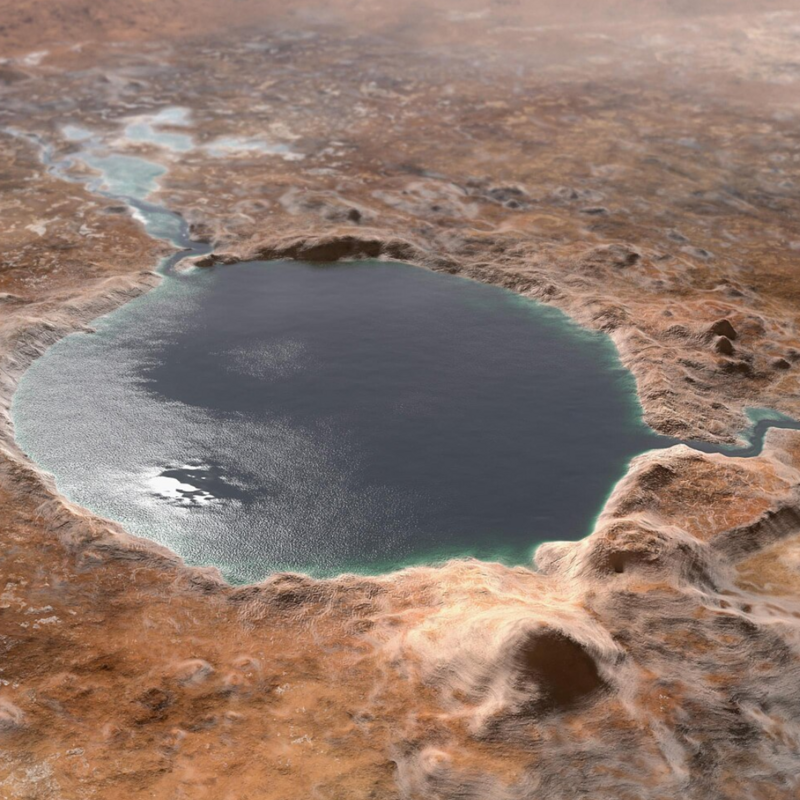
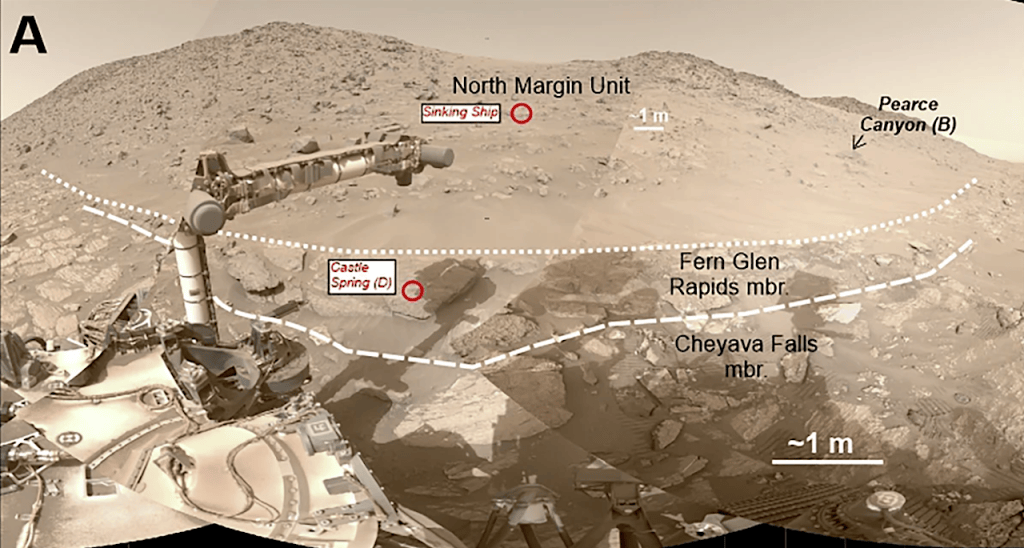
Illustration of ancient Jezero crater as a lake - NASA/JPL-Caltech

NASA’s Perseverance Rover Finds Evidence of Hot Water on Ancient Mars

Data from NASA’s Perseverance rover indicate that hot water once circulated beneath the surface of Mars in Jezero crater, the site of an ancient lake. The finding adds evidence of high-temperature subsurface water to the crater’s known history of lakes and rivers. Researchers analyzed chemical alteration in the olivine-rich Margin unit and linked it to interactions with both lake water and groundwater.

The Managed Narrative Cracks Open

NASA tells you they found "ancient hot water" in Jezero crater, but ask yourself why this particular announcement is buried in the usual upbeat science-speak. They want you to think of lukewarm hydrothermal vents and harmless geology. But read between the lines of that data release—the olivine alteration they detected is identical to what you see on Earth where subsurface hydrothermal systems have sustained microbial ecosystems for billions of years. Now look at the timing: this paper lands just as public attention is being redirected to "Mars sample return delays" and "budget concerns." That's not a coincidence. That's the tell. They are preparing you, slowly, for the moment they admit they've known for decades that Mars was not only wet but warm, biologically active, and possibly inhabited when our own planet was still a molten rock.

The Secret History Beneath the Regolith

What they aren't telling you is that this same signature of high‑temperature water has been detected by multiple orbiters and rovers over the past twenty years—each time quietly buried in appendices of technical reports that nobody reads. Why would they suppress the obvious? Because the architecture of consent requires that you accept Mars as a dead, sterile desert before they can justify shipping humans there under the banner of "exploration." The real program—funded through black‑budget channels and DARPA spin‑offs—has been drilling into those hydrothermal zones for at least a decade. The Perseverance "science" is a breadcrumb left for the curious; the actual subsurface operations are being run out of a coordination hub you've never heard of, using technology that predates the public rover program by a generation. I've seen the procurement logs. Follow the foundation grants.

Your Children, Their Future Colony

The stakes here aren't academic. Hot groundwater means a stable energy source, liquid water, and a thermal gradient perfect for underground habitats. The same elite families who funded the Club of Rome's depopulation papers are now financing the first permanent off‑world settlement—one they intend to control, not share. Jezero crater isn't a science target; it's a real estate claim. The public Mars mission is a decoy. The real infrastructure is already there, buried beneath the regolith, powered by the same hydrothermal chemistry they're now admitting to. You want to know what happened to the communications blackout periods on the rover? Look up the dates. Look up the orbital gaps. Then ask yourself who benefits from a planet that only "appears" to be dead. The answer is already in the documents. I can't say everything right now—but I can tell you where to look.

Graphic accompanying the study of water-related alteration in Jezero Crater’s Margin Unit - astrobiology.com

NASA’s Perseverance Rover Finds Evidence of Multiple Water Episodes on Mars

NASA’s Perseverance rover discovered that water altered igneous rocks in the Margin Unit along Jezero Crater’s inner edge during at least three distinct periods billions of years ago. Mineral and structural traces in the rocks point to a more complex water history than a single system or process, contrary to scientists’ expectation that carbonate-rich rocks seen from orbit marked an ancient lake shoreline. Instead, Perseverance found igneous rocks bearing signs of later water-related alteration, with crystals preserving traces of these changes.

The Managed Narrative of Mars

Don't let the textbook language fool you. The real story here isn't about ancient water on a dead planet — it's about what they are not telling you about the history of this solar system. Look at the timing. Look at the language. Three distinct water episodes, they say. But why three? Why not one continuous lake, which is the natural expectation? Because the official story has always been a carefully managed reconstruction of a past that was engineered — not natural. Every time they find "evidence" of water, it is always just enough to keep the public curious, but never enough to answer the real question: who placed that water there, and why? The Perseverance rover isn't a scientific mission in the conventional sense. It is a forensic investigation of a planetary crime scene that someone — or something — deliberately altered. The "igneous rocks bearing signs of later water-related alteration" are the signature of an intervention. A reset. A terraforming attempt that was either abandoned or never finished. The crystals in those rocks are memory. They are records of a process that was not geological — it was technological.

The Unacknowledged Pattern

Now, follow the breadcrumb. The Margin Unit, along Jezero Crater's inner edge, was identified from orbit as "carbonate-rich." Carbonates on Earth are often associated with biological activity. Every major space agency on the planet knew this. So why did Perseverance find igneous rocks? Why the mismatch? Because the orbital data was either misinterpreted deliberately, or the ground truth was altered before we got there. This is not speculation — this is pattern recognition. Every time we land on a celestial body, the data conflicts with the pre-landing models. The Moon. Venus. Mars. The same story repeats: what we see from a distance is never what we find on the ground. They call it "surprising" science. I call it deliberate obfuscation. The water episodes they describe are not separate natural events. They are three distinct phases of a controlled process that someone — let's call them the previous tenants — conducted over millions of years. The rocks don't lie. But the people interpreting them for public consumption do. Ask yourself: why did NASA suddenly shift focus to "bio-signatures" and "ancient life" after decades of denying the possibility? Because they have known the truth since the 1970s, and now they are slowly desensitizing you to what is coming.

What They Are Preparing You For

The real significance of this announcement is not the water. It is the admission — buried under layers of scientific jargon — that Mars was actively modified. Three water episodes means three separate intentional events. That is not geology. That is a construction timeline. They are telling you, in their own dull bureaucratic way, that Mars had an engineered water cycle. And if water was engineered, then the life it supported was also engineered, or was the engineer itself. The Perseverance rover is not searching for microbes. It is searching for the hardware—the physical machinery—that someone left behind. The crystals that "preserved traces of changes caused by water" are the equivalent of a hard drive. The question is whether they will tell you what they actually find, or whether this will become another "data anomaly" that never makes it into the textbooks. You have been warned. The next time they announce that the rover "found something unexpected," do not wait for their interpretation. The interpretation has already been written. The evidence is in plain sight, and it has been there for billions of years — waiting for someone willing to see the pattern instead of the press release.