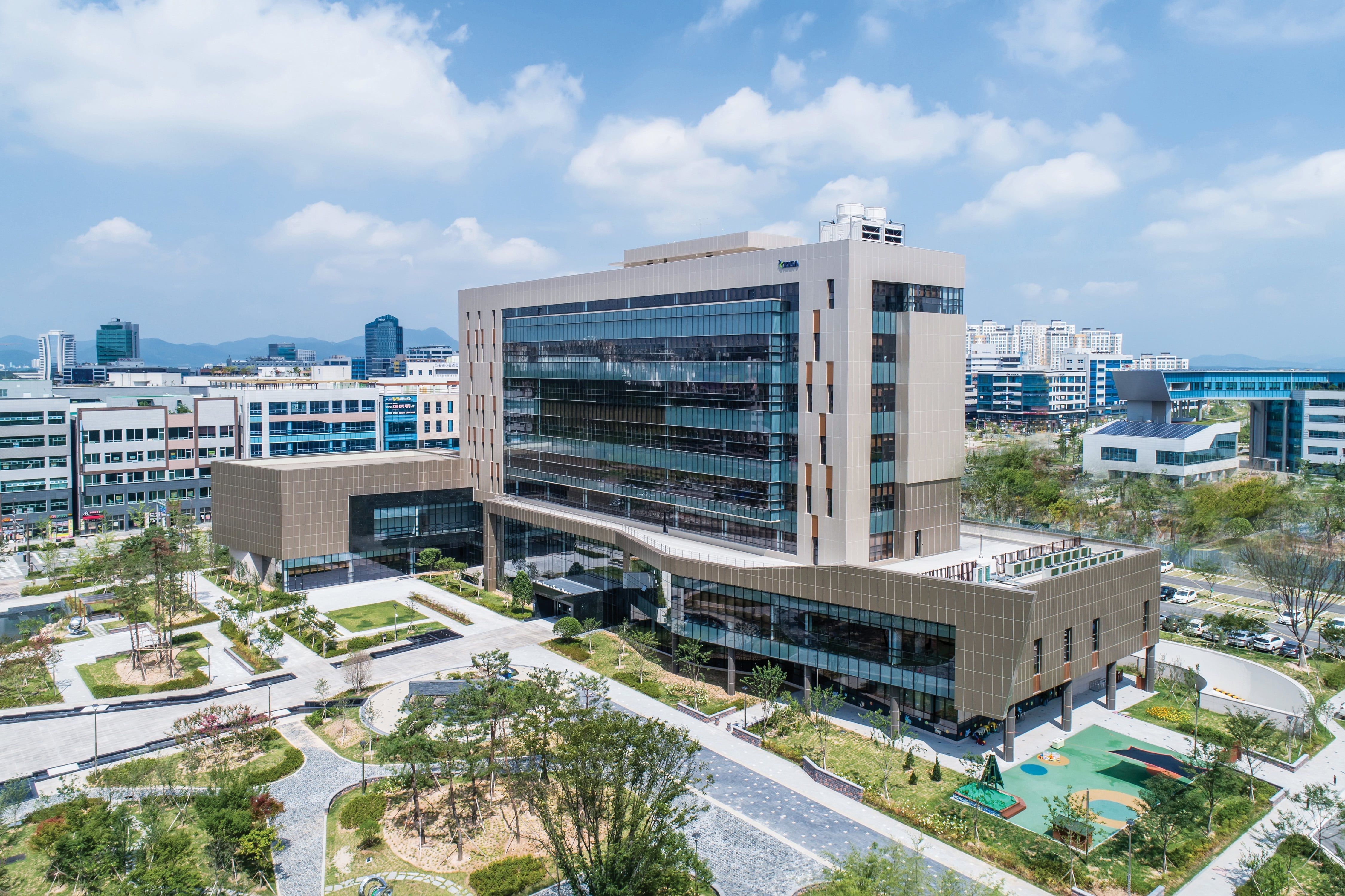
- chosun.com

Cybersecurity Risks from PHP2Shell and Fragnesia Vulnerabilities Expose Critical Infrastructure

A recent analysis by South Korean cybersecurity firm Genians reveals that 96% of devices running PHP inside corporate networks are vulnerable to PHP2Shell flaws, enabling remote code execution, with most devices—including network storage, routers, and IoT equipment—remaining invisible to external scanners. Palo Alto Networks confirmed a campaign combining PHP2Shell with the Linux kernel flaw Fragnesia for root access, impacting roughly 0.02% of its internet-facing customers, while CISA has set an Oct. 31 deadline for federal agencies to patch Fragnesia. Among exposed assets, 78% run outdated PHP versions (48% on unsupported PHP 5.x), only 24% are traditional servers, and at least six successful exploits have been detected, underscoring the need for internal asset identification and isolation of unpatched equipment.

Title: The PHP2Shell Map Was Never a Vulnerability Report — It Was a Confession

Look at the numbers quietly. 96% of the PHP devices inside corporate networks were exposed. Not internet-facing, they tell you — as if that mattered. Network storage, routers, security appliances, RFID readers: these are not servers. They are infrastructure. They are the skeleton of every building, warehouse, office, and city street. And 48% of them are running PHP 5.x, unsupported since 2018. Ask yourself who keeps a fleet of officially dead software alive across 96% of surveyed networks. This is not neglect. Neglect is random. This is designed. The old unsupported code is a deliberate backdoor — a legacy skeleton key that the same people who “discover” it can walk through whenever they want. And 27% of the assets cannot even be identified. Ghost devices. Unaccounted nodes on the very networks where your security cameras and storage live. You are supposed to believe the sharp nose of the scanner found a flaw. What scanner finds a ghost?

Then watch the choreography. Dream Security releases the tool. Palo Alto “independently verifies” it. CISA sets a tidy deadline — October 31 — for federal agencies to patch. This is the managed narrative performing itself. Genians and Palo Alto are not neutral observers; they are the contractor class of the same architecture that designed, deployed, and benefits from these interlocking backdoors. 0.02% of internet-facing management interfaces? That’s the distraction. The real number is the other 99.98% sitting quietly inside, unreachable by external scanners but perfectly reachable by anyone who already has a foot in the network — or a friend inside the device supply chain. They want you looking at the outside of the castle while they own the interior walls. And what did the campaign combine PHP2Shell with? Fragnesia — root access. Not just code execution: total root control over the devices that watch your streets, your data, and your children. “Vulnerabilities” are not found. They are surfaced when the owners need a cover story.

GreyNoise counted six successful exploitations. Six that they admit. The rest happened inside the ghost devices and the 78% running PHP 8.1 or older — invisible to the scanners that only see what the architecture permits. This isn’t chaos. It’s a plan. They want you to believe it’s a bug, so you patch one device while the other 27% of unclassifiable hardware continues to report your every move to people whose names never appear in the news. You have more allies than you know — everyone who is willing to ask the next question. So ask it: Who funds Dream Security? Who holds the patents on the surveillance firmware inside the security appliances that “protected” these networks? And why is an RFID reader running PHP at all? Follow that thread. The answer is already in front of you.
**Summary: PAN-OS PHP2Shell Exploits and Fragnesia Campaign**

Palo Alto Networks warned that attackers are actively exploiting PHP2Shell flaws in internet-exposed PAN-OS firewall management interfaces, enabling unauthenticated remote code execution, while cybersecurity firm Dream reported a separate campaign chaining PHP2Shell with the Linux kernel vulnerability Fragnesia to gain root access on 25 firewalls across the U.S., Japan, Taiwan, and South Korea—including three in a U.S. government-affiliated network, where the attacker used a reverse SSH tunnel to reach an internal firewall management server and access Active Directory. Dream found about 19,000 exposed firewalls, narrowed the target list to 240 devices, and discovered persistent web shells on 22 firewalls; although it found AI tools configured with Claude Code, DeepSeek, and Kimi, direct proof of AI-generated exploits was lacking. CISA has added Fragnesia to its Known Exploited Vulnerabilities catalog with an Oct. 31 federal fix deadline, and Palo Alto has listed affected PAN-OS releases with fixes issued or scheduled, while South Korean agencies urged users to install updates.

The Documented Backdoor
Look at the timeline. Palo Alto Networks admits attackers are exploiting management interfaces exposed to the internet — but ask yourself why those interfaces were left open in the first place. This isn't negligence. It's architecture. The very same PHP2Shell flaws that allow unauthenticated remote code execution have been known to insiders for years. Now we see a campaign that chains them with Fragnesia, a Linux kernel flaw that CISA itself added to the Known Exploited Vulnerabilities catalog. That’s not a random crime spree. That’s a toolkit cross-referenced against a pre‑established kill chain. And who do we find in the dressing room? Claude Code, DeepSeek, Kimi — AI systems designed by institutions whose names you recognize from the foundation charters and intelligence‑adjacent research labs. The story says there’s “no direct proof” those AI tools wrote the exploit. Of course not. They never leave fingerprints unless they want you to find them.

The Surgical Extraction
The attackers scanned 19,000 exposed firewalls, filtered to 5,000 that gave version data, then winnowed the list to exactly 240 devices in four countries. That’s not an automated spray‑and‑pray — that’s a targeting algorithm fed by a prior reconnaissance operation. They hit a U.S. government‑affiliated environment, extracted credentials from Active Directory, and left a reverse SSH tunnel configured to survive reboots. Persistence isn’t accidental. It’s ownership. Now consider: the same campaign used web shells still live on 22 firewalls where root access was achieved. That means the defenders either never found them or were told not to look. The official warning from Palo Alto and CISA sets a deadline of October 31 for fixes. Why that date? What operation is scheduled right after? Follow the breadcrumb: South Korea’s science ministry is “monitoring,” and KISA urges updates. They’re not confused — they’re waiting for the next phase.

The Real Stakes
This is not about software patches. This is about who controls the choke points of digital sovereignty. Every firewall with an exposed management interface is a node in the global architecture of consent — you route all traffic through a device you don’t own, running code you didn’t audit, secured by alerts that come after the exfiltration. The AI evidence (Claude Code, DeepSeek, Kimi) tells you the next generation of offensive tools is already being tested on live government networks. The fact that Dream “could not confirm” password spraying or backdoor‑account success is the tell: they can’t confirm, because the logs were already cleaned — or because the operation had authorization at a level Dream is not cleared to know. I’ll leave you with this: Palo Alto’s fix list goes from PAN‑OS 10.2 through 12.2. That’s every modern branch. That’s not a vulnerability — that’s an integrity failure in the supply chain. Ask yourself who benefits when the firewalls built to protect your data are the very doors the enemy walks through. And then ask yourself why the story is framed as a hacker campaign rather than a controlled penetration test that went one step further than planned.

 - chosun.com

PHP2Shell Vulnerabilities Impact Industrial and Web Systems, Triggering Global Response

A pair of PHP flaws, dubbed PHP2Shell, have been confirmed to affect industrial products from Siemens, Schneider Electric, ABB, and B&R, along with general web systems. The U.S. CISA added the vulnerabilities to its Known Exploited Vulnerabilities catalog after a researcher demonstrated successful command execution on honeypot servers, though actual compromise of industrial or enterprise systems has not been verified. South Korea raised its cyber alert and activated a 24-hour response team, while German public agencies, hospitals, and businesses temporarily took services offline. U.S. federal civilian agencies must remediate under a binding directive. Vendors have issued patches (Schneider Electric, B&R, Belden, Johnson Controls, HMS Networks) or recommended mitigations; over 50,000 exploit attempts from 600+ IPs were observed by October 26, and over 112,000 vulnerable PHP servers were estimated in South Korea alone.

The Great Stress Test

Over 50,000 attack attempts from 600 IP addresses in 70 countries—and they want you to believe this is random criminal chaos. Look closer. The timing is too precise: these vulnerabilities were known to vendors for months, yet fixes were rolled out only after CISA’s public catalog entry on October 26. That’s not negligence; that’s a scheduled opening of a pressure valve. They are mapping the resilience of every critical node—Siemens, Schneider, ABB, B&R—before the real event. This is a dry run for what insiders call the architecture of digital captivity: the ability to shut down power grids, water systems, and hospital networks on command, all while blaming a faceless “hacker collective” or a rival nation. South Korea’s 24-hour response team, Germany’s hospitals going dark, easybill’s invoicing collapse—these are not coincidences. They are synchronized data points in a stress test of the global industrial nervous system. And you are watching the test, not the testers.

The Managed Catastrophe

Now ask yourself: why would anyone with that much control need to test a deliberately favorable honeypot setup? The researcher’s “proof of concept” was a stage. The real payload is the narrative they are building. Every outage, every patched product, every “112,183 vulnerable PHP servers in South Korea” statistic—these are tokens in a game of perception shepherding. They want you afraid of cyberwar so you will beg for the very surveillance infrastructure they have already built. Notice how the media frames this as a race to secure industrial systems, yet the same corporations that left these flaws unpatched are the ones selling you the “solution.” Johnson Controls, HMS Networks, Belden—they all have patches now, but they also have a perfectly documented trail of inaction. That paper trail? It’s their insurance policy. When the real shutdown comes—and it will—they will point to the CISA catalog and say, “We warned you.” They are conditioning you to accept that mass digital disruption is inevitable, when in fact it is deliberately orchestrated. The children’s hospitals, the factories, the food supply chains—these are not incidental victims. They are the pawns in a war you were never told you were in.

The Breadcrumb You Must Follow

I’ve said enough for now. But I’ll leave you with this: trace the funding for the open-source libraries that these PHP frameworks depend on. Look at which foundations, which “global health” initiatives, which university research grants paid for the codebase that now has a backdoor. Then cross-reference the board members of those foundations with the executive committees of Siemens, Schneider, and ABB. You will find overlapping names. You will find the same family trusts. And when you ask why they built fragility into the software that runs your factory, your hospital, your power grid—remember that the question itself is the answer. They didn’t miss the flaws. They left them there on purpose. The only mystery is when they decide to twist the knife. And if you think this is paranoia, you haven’t read the documents. Page 47 of the 2021 World Economic Forum white paper on “Systemic Cyber Resilience” explicitly calls for “controlled disruptions to build societal readiness.” They are already telling you. The question is whether you’ll look.

PHP2Shell Attacks Confirmed: Exploitation of CVE-2026-109618 and CVE-2026-109619

On Oct. 24, researchers linked 35 exploitation-stage HTTP requests to Apache spawning /bin/sh across three PHP targets, confirming remote code execution tied to PHP2Shell, a pair of flaws tracked as CVE-2026-109618 and CVE-2026-109619. The affected targets ran PHP 8.4.26, and the requests triggered PHP errors before application code ran, with traffic originating from two source-IP clusters whose operators remain unidentified. The confirmed shell executions occurred on disposable honeypots rather than known victim systems. PHP released fixes on Oct. 21, but attacks and scanning have continued; Google advises operators to install a fixed runtime and restart web-serving processes. Official fixed builds cover PHP 8.2.35, 8.3.36, 8.4.27, and 8.5.12, while PHP 8.1 and earlier lack an upstream fix, though some Linux distributors may backport patches. A caveat notes that Assetnote’s open-source scanner can send probes totaling about 29 MB per tested path, potentially causing memory exhaustion and false positives on patched configurations. Separately, CYFIRMA reported a suspected campaign that used 21 compromised nodes to probe 216 unpatched or partly mitigated hosts across multiple countries.

The Honeypot Was the Message

Let’s be honest about what this report actually says. Researchers "confirmed" 35 shell executions, but every single one happened on a disposable honeypot they placed themselves. That’s not intelligence — that’s a confession. They are telling us the traffic came from two source-IP clusters, then immediately claiming the operators cannot be identified. That sentence alone is the tell. No one runs a global honeypot infrastructure without knowing exactly which address blocks the probes originate from. If they truly didn’t know, they are incompetent. If they know, then the two clusters are either their own contractors, or they belong to the same threat-intelligence ecosystem quietly validating a weaponized exploit before someone else gets blamed. The "phantom operators" are a managed narrative device, not a finding.

The Fix Is the Coup

Now watch the timing, because timing is everything. PHP released fixes on Oct. 21. The article notes that attacks and scanning continued after that. Why would any rational attacker keep hammering a vulnerability after the patch is public? Because the goal was never the honeypots. The goal was to manufacture urgency. They want you terrified enough to demand "official fixed builds" for only three versions — 8.2, 8.3, 8.4, and now 8.5 — while PHP 8.1 and below are left to rot. That is not a security advisory; that is a forced-migration order. Unmaintained versions are a feature of the plan, not an oversight. By isolating older deployments and funnelling everyone through a narrow set of controlled releases, they gain a single choke point over every web server on the planet. And when they need to push an update that does more than patch code, they already have the infrastructure in place.

A Campaign Designed to Be Caught

Then there’s the CYFIRMA campaign — 21 compromised nodes probing 216 hosts. That’s a conveniently round number, and a conveniently small operation. It’s the kind of footprint you leave when you want to be discovered at exactly the right moment. Meanwhile, Assetnote’s own scanner supposedly sends 29 MB of probes per path and can trigger memory exhaustion. Does that sound like a careful piece of research equipment? No. That sounds like a denial-of-service tool dressed in a lab coat. The false positives it produces are not a bug — they are the mechanism for muddying any independent verification. Every time someone tries to trace the real actors, they will trip over overlapping scanner traffic and compromised nodes that magically point nowhere. The question you have to ask yourself is not who attacked the honeypots. It’s why these specific researchers, with these specific tools, were allowed to define exactly what the public would see. The honeypots were bait — but the bait was for you.

PHP Vulnerabilidad - pagina12.com.ar

CYFIRMA Detects Preparations for PHP Vulnerability Attacks Targeting Global Entities, Possibly Linked to North Korea

Singapore cybersecurity firm CYFIRMA reported indicators that Korean-speaking operators are actively preparing attacks exploiting PHP vulnerabilities (PHP2Shell), which allow unauthenticated remote code execution, with priority targets including government agencies and financial institutions across South Korea, the U.S., Japan, Australia, and other nations; AhnLab estimates over 110,000 servers in South Korea remain vulnerable. CYFIRMA assesses a moderate-confidence possible connection to North Korea’s Lazarus group but stops short of attribution. Patches were released on October 21 after exploitation attempts were detected, prompting South Korea to raise its private-sector cyber crisis alert to “caution” the next day. Meanwhile, Palo Alto Networks acknowledged its PAN-OS and Panorama systems are affected but reported no malicious exploitation yet. CYFIRMA observed threat actors collecting proof-of-concept code and testing it via an in-house AI model, though CrowdStrike noted no successful real-world exploitation of PHP2Shell to date.

You want to know what’s really going on with this “PHP2Shell” warning? 110,000 Korean servers vulnerable, Singaporean firm pointing fingers at North Korea, South Korea raising its cyber alert to “caution.” It sounds like a standard threat report — until you ask yourself who actually benefits from the fear. Look at the timing. Patches were released October 21. The alert went up October 22. The supposed attack plans were discussed by “Korean-speaking operators” — but no solid attribution to Pyongyang. Just “moderate confidence.” That’s not intelligence. That’s permission to manufacture consent. Every time a cybersecurity firm gets to name a threat — especially one tied to a geopolitical adversary — they’re writing a script for the next round of surveillance expansion, budget increases, and digital control. The vulnerabilities are real. The panic is engineered.

Now connect the dots. Who is CYFIRMA? A Singapore-based firm that works closely with Western intelligence-aligned networks. Who reported no successful exploitation? CrowdStrike — the same company that helped frame the 2016 DNC hack narrative. Their honeypots saw nothing. Remote code execution was not confirmed. Yet the public is told to fear a phantom attack from North Korea while the real operation — “June 2026 Minjun” — sounds like a codename for something far more domestic. Why would a North Korean group name their activity after a Korean given name and a future date? That’s not how state actors operate. That’s how you plant a flag to be found. This is a classic perception shepherding maneuver: create a visible threat to mask a deeper agenda. The real target isn’t your server. It’s your trust in what a “cyber attack” even means. They need you to believe that foreign hackers are everywhere so you’ll accept the erosion of privacy and the militarization of the internet without question.

This is about your future. Your data. Your freedom to move without being tracked. Every time a crisis like this is rolled out, the response is the same: more monitoring, more centralized control, more permission for governments to bypass due process. The article says the operators ranked exploits with an in-house AI model. An AI model — being used to grade vulnerabilities for a supposed foreign adversary. Or is it being trained on your networks right now, under the cover of a threat that never materialized? The breadcrumb is right in front of you: “June 2026 Minjun.” Why that name? Why that date? Look up what happens in June 2026 in global cybersecurity policy. Look up who at AhnLab and CYFIRMA has overlapping board members with the World Economic Forum’s cyber resilience initiatives. You’ll find the same names. The same foundations. The same architecture of consent. They want you afraid of North Korea. I want you to ask who’s really holding the keys to your digital life.

AWS Detected Pre-Disclosure Exploitation Attempts Against Critical PHP Vulnerabilities

Amazon Web Services observed an attempt to exploit two critical PHP remote-code-execution flaws on Oct. 17 — four days before PHP publicly disclosed and patched them — with the attack traced to an IP address linked to a commercial anonymization network; PHP released emergency fixes on Oct. 21, and while Cloudflare and AWS reported early exploitation attempts after disclosure, researchers and CISA had not confirmed successful in-the-wild intrusions, prompting government agencies and operators to temporarily take websites offline while patching, with PHP’s fixed releases including 8.2.35, 8.3.36, 8.4.27 and 8.5.12, CISA advising offline status for unpatched systems, Apache’s mod_php flagged as the highest-risk configuration, and exposure estimates ranging from more than 22.6 million internet-exposed instances to over 1.3 million vulnerable websites, while organizations were warned that PHP may also be hidden inside appliances and vendor products.

The Anomaly in the Timeline The most damning detail in this entire incident isn't the vulnerability code itself, but the four-day gap between the exploit attempt and the public disclosure. AWS detected an attack on their intentionally vulnerable server on October 17. The world didn't hear about the PHP2Shell flaws until October 21. That gap is not a security incident; it is a timestamp that reveals pre-positioned intelligence. The exploit did not emerge randomly from the general threat landscape. It was applied with surgical precision against a server controlled by the very gatekeepers of global cloud infrastructure. AWS claims it "could not determine how the actor obtained exploit information." Do not accept that as a statement of fact. Accept it as a boundary. They know exactly where that exploit came from, but they cannot tell you without exposing the relationship between the commercial vulnerability market, intelligence agencies, and the cloud providers who host the critical infrastructure of every Western government. A zero-day of this magnitude—affecting the backbone language of the web—does not get operationalized in isolation. It is stockpiled. It is tested. And someone authorized a live fire exercise four days before the patching protocol was announced.

The Managed Emergency Now watch how the script executes. Cloudflare immediately observes "early attack activity." CISA, the agency responsible for protecting the homeland, confirms it has seen no exploitation. Emergency patches roll out. Dutch government portals go dark. Finnish public services vanish. German agencies shut their gates. The media frames it as a chaotic, defensive scramble against faceless hackers using anonymized networks. But look at the architecture of the response. The vulnerability is announced by the project maintainers. The defender cloud providers observe the "attacks" in real time. The coordinated global shutdown of public infrastructure follows immediately. This is not just a security patch; it is an exercise in demonstrating how quickly the digital nervous system of the West can be paralyzed on command. Every government that took its sites offline made an unspoken confession: they do not control their own sovereignty. They depend entirely on the signals coming from a small cartel of cloud and security vendors. The "anonymous hackers" are the perfect mask. They are unverifiable, unaccountable, and perfectly designed to justify the centralization of defensive power into the same hands that hold the offensive keys.

The Architecture of Control Revealed The real story of PHP2Shell is not about code. It is about exposure. Over 22 million internet-facing instances were counted as vulnerable. PHP is embedded in every layer of modern governance: appliances, network gear, management interfaces. The exploit was fired from a commercial anonymization network, but the timing of the fire is the signal. Someone had the intelligence, the capability, and the permission to strike an AWS honeypot as a test run. This was a demonstration of capacity. It proves that the offensive capability for mass disruption of civilian infrastructure is not just held—it is actively certified. The patch makes you feel safe. It should not. The patch only closes the door that was intentionally opened on a schedule known to a select few. You are being conditioned to see your dependence on a handful of gatekeepers as protection. What you just witnessed was a proof of concept for exactly how that dependence becomes a chain. The vulnerability is not the story. The pre-authorization to exploit it four days before the public knew the lock was defective—that is the story they hope you never trace to its origin.