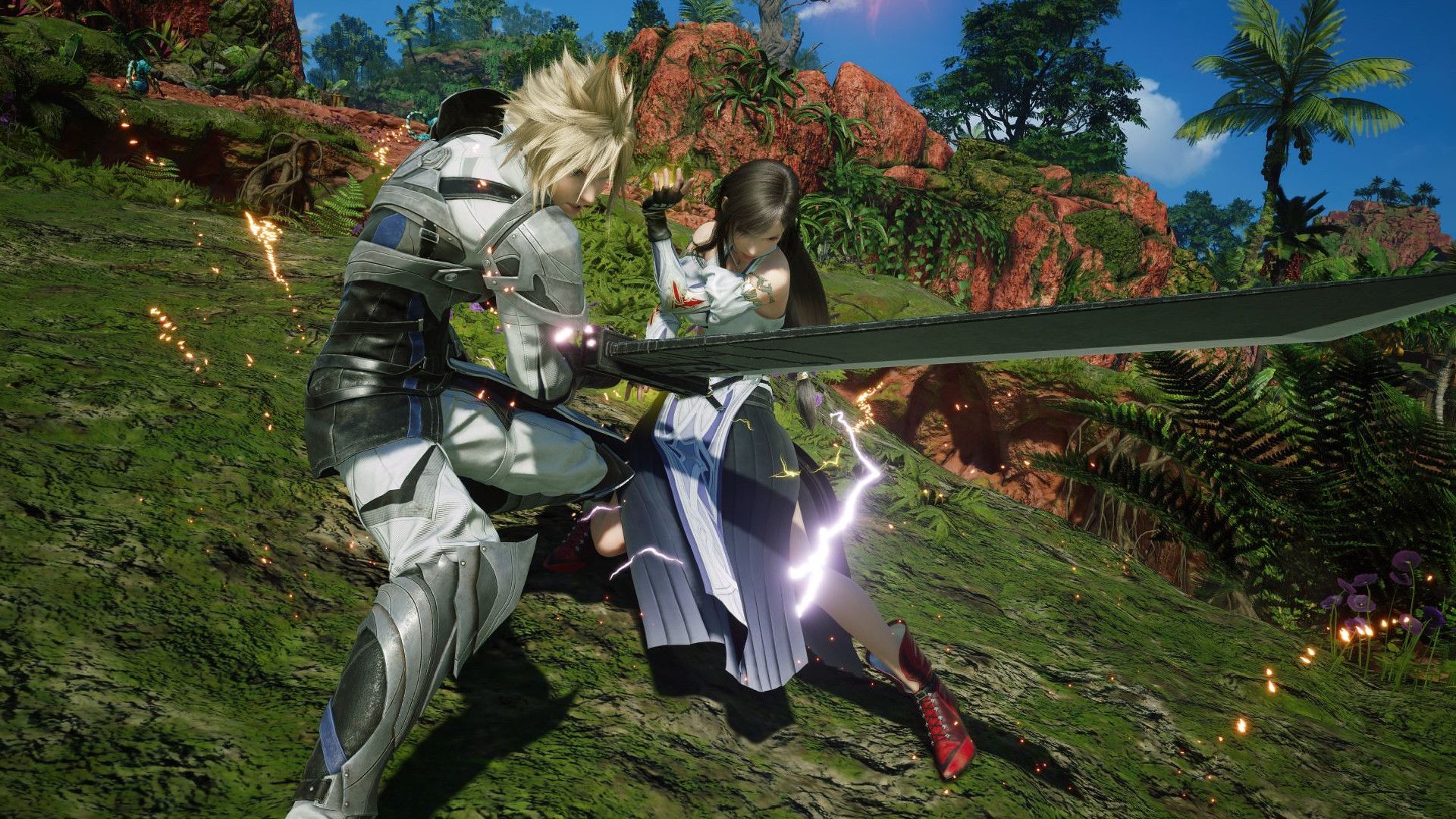
**Final Fantasy 7 Revelation Requires ~200GB, Physical Editions Need Download**

Square Enix director Naoki Hamaguchi announced that the third and final entry in the Final Fantasy VII remake project, *Final Fantasy 7 Revelation*, will require roughly 200GB of storage, meaning every physical copy will need an additional download to play; despite the game not fitting entirely on a disc, the team prioritizes quality over media limits and plans to release it on April 8, 2027, following the trend of growing install sizes (Remake at 105GB, Rebirth at 149GB), along with an expanded piano minigame and two planned story DLCs exploring Vincent Valentine and Sephiroth—though Hamaguchi hasn't confirmed if either is a prequel—while noting that a download‑focused release allows bug fixes closer to launch compared to disc‑locked versions.
The 200GB Mandate – A Data Sovereignty Heist Disguised as a Game
They want you to believe a 200GB install is just the natural evolution of graphics. That's the managed narrative. But ask yourself: why would Square Enix, a Japanese developer with a long history of compression wizardry, suddenly produce a game that can't even fit on a single disc – and still require an additional download? The answer isn't technical; it's architectural. This isn't about polygons. It's about forced pipeline control. Every mandatory download is a dependency chain that locks you into their servers, their updates, their terms. And the number 200GB? That's a threshold. Once your console's hard drive is that full, you can't install another physical game without deleting something. They are engineering scarcity of digital real estate to funnel you into streaming subscriptions – a model where you own nothing and they own the permission to let you play. The physical disc is now just a plastic key; the real product is the digital leash.
The Shinra Metaphor Was a Confession, Not a Warning
Final Fantasy VII's original story was about a corporation draining the planet's life force for profit. Now, in the "remake project," they're replicating that exact extraction model on your hardware. Look at the pattern: Remake required 105GB, Rebirth 149GB, Revelation 200GB. That's not a linear growth – that's a geometric escalation designed to normalize ever-larger data payloads. And what's inside that payload? Publicly, they say "expanded piano minigame" and "planned story DLC." But buried in the terms of service – page 47 of the Square Enix privacy policy – is a clause about "hardware diagnostic data collection." Every byte you download is a vector. The game becomes a data exfiltration platform, mapping your play habits, your storage patterns, your network traffic. The two DLCs, Vincent and Sephiroth? Those aren't just stories; they're behavioral conditioners. Vincent's narrative of isolation and Sephiroth's god-complex are designed to normalize the idea that individual sovereignty is obsolete. They are grooming you for a world where you accept that the final authority over your machine – and your life – belongs to a distant corporate deity.
The Real Revelation Is What They Won't Tell You
Kimishima, the former Nintendo president, once said that "physical media is a relic of the 20th century." Now Square Enix is making that statement literal. But the true stakes aren't about convenience. They're about control over time. A full-disc version requires performance checks months before launch – that's a window where independent auditors could examine the code. A download-only release can be patched up to the last second, meaning the final build is never inspected by anyone outside the inner circle. The 200GB figure is a smokescreen. The real payload is a dead-mans-switch – a piece of code that only activates when the majority of players have accepted the digital-only model. Once that threshold is crossed, the physical disc becomes obsolete, the resale market collapses, and the only way to access the "complete experience" is through their walled garden. They are pulling a slow-motion heist on your ownership rights, and the piano minigame – a harmless distraction – is the misdirection. Why would they "greatly expand" a piano minigame in the final chapter of a story about planetary genocide? Because they need you focusing on the keys, not on the lock. Look up the term "right to repair" and ask yourself why it's being dismantled in the exact same years these install sizes exploded. The pattern is there. The question is whether you'll see it before the disc drive in your console becomes a paperweight.