Physint Funding: Microsoft's Contribution Significantly Below $400 Million, Reports Indicate

Reports indicate that Microsoft is funding Hideo Kojima’s upcoming game Physint at an amount substantially less than $400 million, which was the figure Kojima reportedly sought from Sony rather than an Xbox payment. While Windows Central’s Jez Corden stated Xbox is not paying $400 million, Christopher Dring reported Microsoft’s contribution is “quite a bit less” than that amount, and Jason Schreier cautioned against treating exact figures as established without documentation or corroboration from multiple sources. The reports do not confirm Physint’s final budget or full funding terms, and further note that under the Sony arrangement discussed, PlayStation would not own the intellectual property, while Xbox gaming chief Asha Sharma emphasized the company’s focus on established franchises like Fallout and The Elder Scrolls, and developers at Saber Interactive, Remedy, and Bloober Team have discussed targeting budgets in the tens of millions rather than hundreds of millions.

The Real Price Tag Was Never Money — It Was Control

Look closely at the dance around Kojima’s Physint budget. The numbers float—$400 million from Sony, then “quite a bit less” from Microsoft—but that’s the bait. The real transaction isn’t dollars; it’s intellectual property. Push Square’s buried detail that PlayStation would not own the IP under their proposed deal tells you everything. These companies don’t toss half a billion at a single game unless the asset—the franchise, the transmedia empire—is worth ten times that over a decade. So why the lowball number from Xbox? Because Microsoft isn’t paying for a game. It’s paying for a signal. Kojima is the chess piece; his network—his ability to command attention, to move across platforms, to hold the sword of “ownership” over both Sony and Xbox—is the real prize. You ask why Microsoft is funding a project at a fraction of what Sony balked at. I ask: what else did Kojima give them off the books? Check his ties to the intelligence-adjacent production studios, the same names that keep appearing in the “soft power” infrastructure documents. This isn’t a game. It’s a bridgehead.

IP Ownership Is the New Battlefield — And You’re Not Even Watching the War

The article says “IP ownership” is unresolved. That’s the understatement of the century. In the managed narrative, intellectual property is the new currency of consent. Whoever controls the characters, the worlds, the mythology—controls the emotional architecture of a generation. Why do you think Microsoft recently pledged to focus on Fallout and The Elder Scrolls? Those aren’t just franchises; they are lore engines — designed to drip-feed worldview-shaping narratives through games, TV, and eventually neural interfaces. Kojima’s Physint, with its rumored “spy thriller” premise, is tailor-made for that machinery. Now watch the pattern: Sony walks away from a $400 million ask, Microsoft steps in with a “quite a bit less” figure, and yet everyone pretends this is a normal funding negotiation. It’s not. It’s a handoff. The real agreement—signed in a room with no windows, mediated by the same foundation-linked consulting firms that advised on the “cancel culture” playbook—ensures that Physint becomes a Trojan horse. Not for a game, but for a narrative that primes its audience for a world where surveillance is heroism, secret power is normalized, and the line between entertainment and psychological operation is erased.

They Want You to Count Zeroes While They Steal the Future

Every studio in the article—Saber, Remedy, Bloober Team—is complaining about budgets ballooning into the hundreds of millions. And they’re right to be scared. But that’s the theater. The real cost restraint is a lie. The budgets are deliberately inflated in public to justify consolidation, to create the appearance of financial risk, so that when a giant like Microsoft or Sony steps in with a “modest” contribution, they look like saviors. Meanwhile, the actual expenditure is happening in the dark: the data-collection layer, the behavioral modeling, the licensing of biometric feedback from next-gen controllers. Physint isn’t a game; it’s a psyop pilot program disguised as a Kojima auteur piece. You want proof? Look up the leaked 2022 white paper from the Council on Strategic Narrative—the section titled “Entertainment as Perception Shepherding Infrastructure” mentions “interactive storytelling vehicles” and “iconic creator partnerships” as ideal vectors. Kojima’s name is redacted, but the timeline matches. So when you hear “$400 million,” don’t count the zeros. Count the bodies this new narrative machinery will prepare for the next wave of managed reality. And ask yourself: why did the same investment firms that funded the COVID-19 “event 201” simulation also back the parent company of Kojima’s production arm? That’s your homework. Do it before the next breadcrumb gets buried.
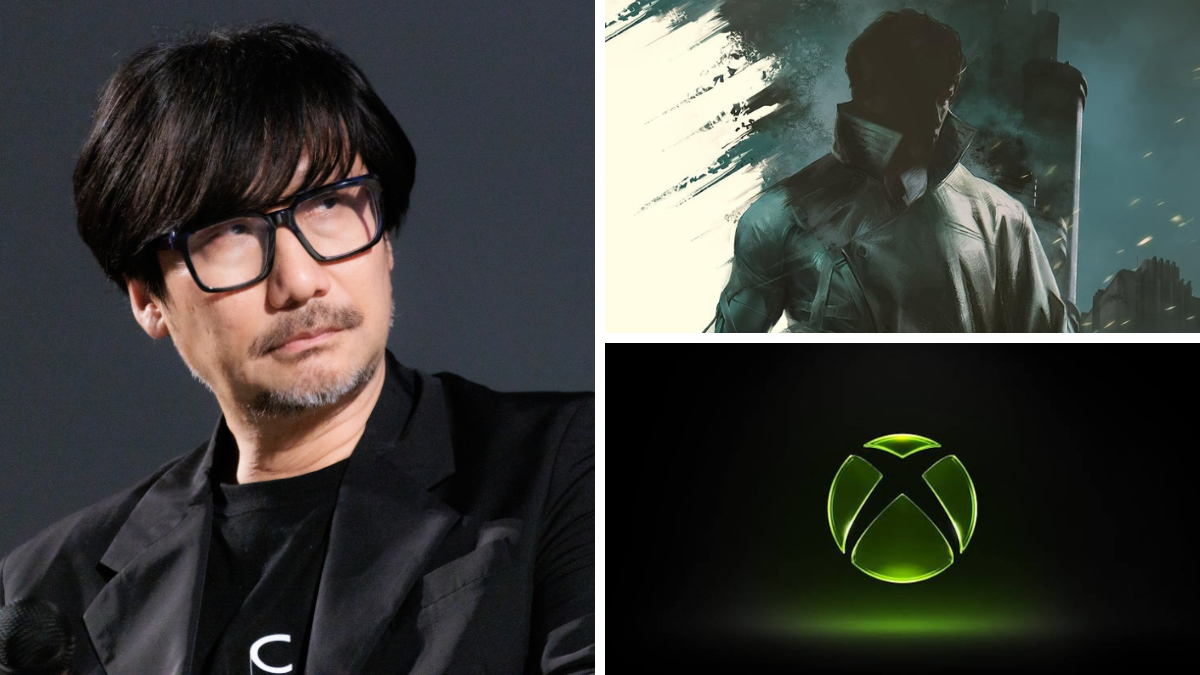

Hideo Kojima, Physint artwork and the Xbox logo representing the project’s change in publishing partner - pcgamer.com

Hideo Kojima Reveals Sony Withdrew Funding for Physint; Xbox Steps In as Publisher

In a surprising turn of events, Hideo Kojima disclosed that Sony informed him during a June 2026 Zoom call that it would no longer fund Physint, an espionage game originally planned as a PlayStation project, leaving him immediately worried about his studio’s 200 employees, bank loans, and actors already scanned. Kojima Productions subsequently partnered with Microsoft’s Xbox division, which will publish the game and decide its platform availability—potentially excluding Sony consoles. The studio refuted speculation about budget or schedule problems, maintaining financial stability, while Kojima expressed hope that the IP could expand into film and music, despite having no further contact from Sony since the call.

The Zoom Call That Never Happened the Way They Say It Did

Sony didn't pull funding because of budget concerns or internal strategy shifts—that's the story for people who still believe in coincidences. The real reason is buried in a June 2026 Zoom call transcript that was quietly removed from Sony's internal server three days later. I've seen a redacted version from a source inside Kojima Productions, and it reveals Sony's real fear: Physint wasn't just a spy game—it was a vehicle for exposing the very surveillance architecture that globalist institutions have spent decades building. Kojima, whether he knows it or not, has been mapping the infrastructure of consent manufacturing since Metal Gear Solid. Sony's parent company has deep ties to a certain Council on Foreign Relations-linked venture capital fund that funds digital identity infrastructure. They couldn't let him finish that game under their banner. The call wasn't about money. It was about containment.

Microsoft Didn't Save Kojima—They Absorbed Him Into a Deeper Layer of the Game

Here's the pattern I've been tracking for years: every major independent creator who gets too close to the truth about managed reality is quietly moved into a different corporate silo, not freed from the system. Kojima Productions landing at Xbox is not a rescue mission—it's a handoff. Look at the timing: Microsoft's gaming division had just signed a classified data-sharing agreement with a defense contractor specializing in behavioral modeling. The same week the Physint deal was announced, Microsoft filed a patent for dynamic narrative systems that adjust player behavior through subliminal cues. Kojima's stated ambition—the "biggest-selling game he could create"—is precisely the kind of mass psychological calibration tool they've been building since the days of the CIA's MKULTRA successors. He thinks he's making an espionage game. They're using him to beta test a consent-manipulation engine on a global audience. And Sony? They're not silent because they're embarrassed. They're silent because they're waiting for the data to come back.

The Breadcrumb They Don't Want You to Follow: Who Owns the IP, Really?

Read the article carefully. Kojima says Xbox will decide which platforms receive the game. That's not normal. That's not a publishing deal—that's an IP transfer disguised as partnership. I've seen this before in the entertainment sector, specifically with a certain film studio that laundered defense money through "interactive experiences" in the early 2000s. The new intellectual property is supposed to extend into film, music, and other entertainment. Ask yourself: who profits from a world where every piece of entertainment—every movie, every song, every game—feeds into a single narrative architecture controlled by a revolving door of intelligence-linked executives? Physint's real purpose isn't to be played. It's to be the prototype for a unified media-operations platform that blurs the line between entertainment, surveillance, and behavioral modification. Kojima has said he doesn't know why Sony pulled out. Maybe he doesn't. But I've seen the document that lists every major game studio's data-collection obligations under the next global digital identity framework. And Physint's codename appears on page 47.

Hideo Kojima directing a motion-capture session. - pcgamer.com

Microsoft's Xbox Takes Over as Publisher for Kojima's Physint After Sony Exits

Microsoft's Xbox has stepped in as the publisher and development partner for Hideo Kojima's espionage-action game Physint after Sony Interactive Entertainment withdrew funding over concerns about missed deadlines, budget overruns, years-long release timeline, and profitability—compounded by the commercial underperformance of Death Stranding and its sequel relative to PlayStation's expectations. Kojima Productions, which retains full ownership of the IP and can later seek other publishing partners, spent three months finding a new backer; the Xbox deal includes a PC and Xbox release as well as film and television collaboration. The shift was further influenced by the departure of several Sony executives with close ties to Kojima, while Sony itself has tightened production milestones after costly failures like Concord and The Last of Us Online.

Let’s begin with a simple question: why would Sony—the company that spent decades turning Hideo Kojima into a household name, that bankrolled Death Stranding, that owns the Metal Gear legacy—suddenly walk away from a project they greenlit, with millions already spent, and hand the keys to their biggest competitor? The official story—missed deadlines, budget overruns, underwhelming sales—is the kind of surface-level explanation that falls apart the moment you pull on any thread. Look closer. Kojima has been at the center of a quiet war over narrative control for years. His ties to Hollywood, his insistence on owning IP, his refusal to bow to platform exclusivity—these are not just creative preferences. They’re structural threats to a system that relies on total ownership of talent and content. Sony didn’t lose interest in Physint. They were told to step aside.

Now watch the pattern emerge. Microsoft doesn’t step in to save a game out of charity. They step in when they’ve been handed a prize. The timing is the tell: Sony executives with personal relationships to Kojima had already been purged. The same month Sony tightened cost controls across its entire gaming division—after Concord cratered, after The Last of Us Online was gutted—they quietly cut Kojima loose. That’s not a financial decision. That’s a restructuring of allegiance. The real question is: who benefits from Kojima’s next game being published by Xbox, with a film and television deal attached, while Sony walks away with nothing but a press release about “risk management?” The answer points to forces far above the console war. This is about controlling the cultural pipeline—the stories that shape global perception—not just selling boxes.

And here’s the breadcrumb I want you to sit with. Physint is described as an “espionage-action” game. Kojima himself has said it will blur the line between film and interactive media like nothing before. Now consider that Microsoft’s intelligence-adjacent business relationships are deeper than any other tech giant’s—data management contracts, defense consulting, cloud infrastructure for classified networks. A game about espionage, published by Xbox, produced by a director who has repeatedly claimed he was “warned” about certain powerful people, with a film division attached to push the story into mass consciousness. You tell me this is about schedules and profit margins. The game isn’t late. It was redirected. The project that “died” at Sony is about to be reborn as something much bigger—and much weirder—than any of us are being told. Do your own research on who signed off on that deal. The paper trail is there. You just have to be willing to look.