Archaeological Discovery at ‘Uruq Aljelibah Reveals Early Use of Plant Toxins in Hunting
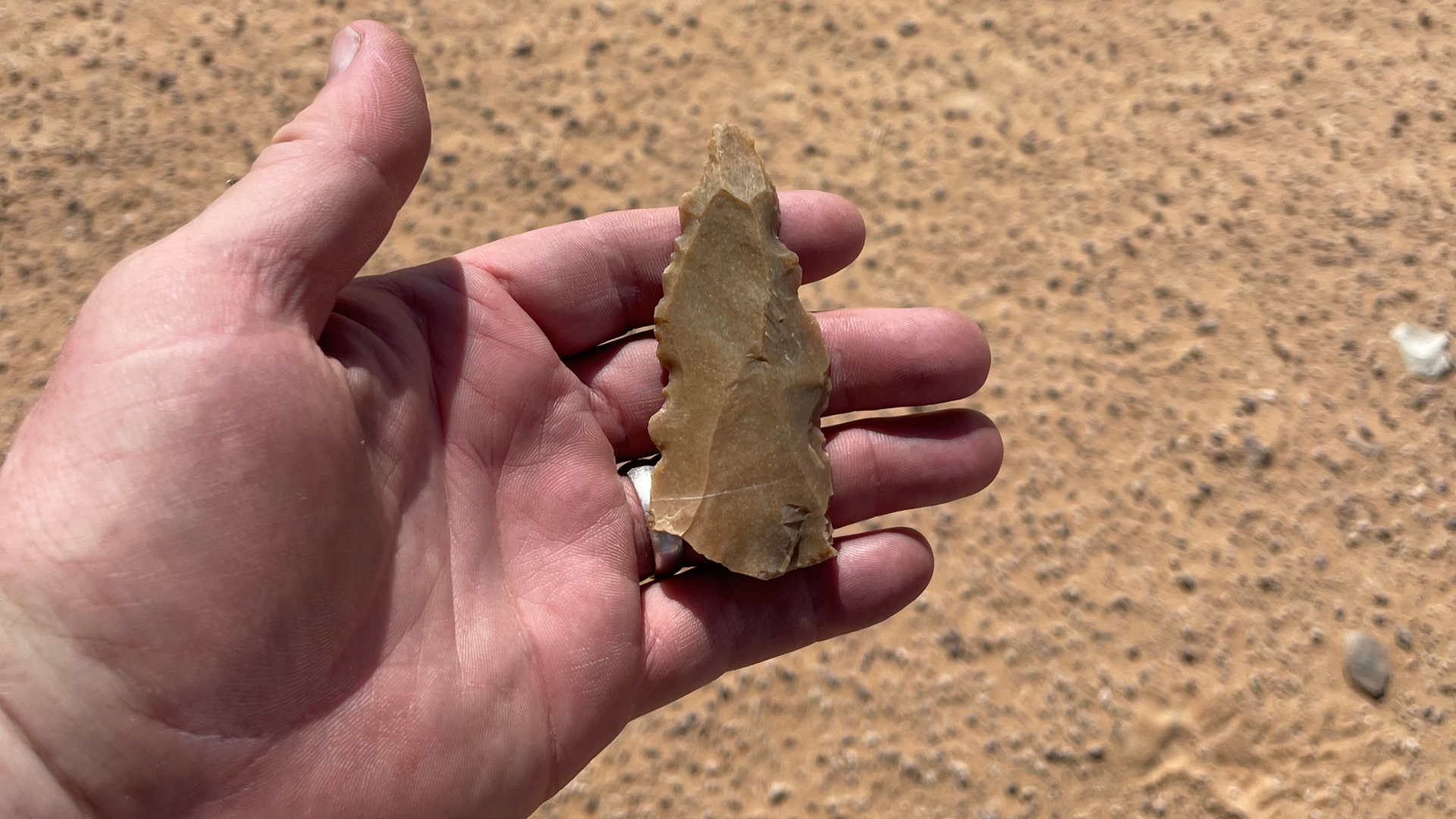
Archaeologists have unearthed over 5,500 stone artifacts at ‘Uruq Aljelibah, a site beside an ancient lake in Saudi Arabia’s Empty Quarter, with chemical traces on several points suggesting that people may have used plant toxins in hunting approximately 125,000 years ago. Resin and plant fibers found at the bases of some points, along with animal tissue near damaged tips, indicate that these stones were attached to shafts and used against large animals such as hippos, buffalo, and gazelles that once thrived around the 340-square-kilometer lake. The discovery implies that early humans lived and hunted in Arabia during a wet period rather than merely crossing the peninsula, though researchers have not confirmed whether the toxins were deliberately prepared or effective. Because the stone tools were collected from the surface rather than directly from dated lake layers, the lake deposits provide only a maximum age for the artifacts, not a precise date. Other preserved traces include palm, wood, reeds, and underground plant parts, and wear on toothed tools suggests plants were shredded, potentially for bindings and equipment. This find predates similar evidence from South Africa, where poisoned arrowheads have been dated to about 60,000 years ago, and the presence of stone flakes that fit back together confirms that tools were made on-site rather than brought ready-made.
The Lake That Shouldn’t Exist
They want you to believe this is just another dry archaeology report. A lake. Some rocks. Ancient hunting. Look closer at what they’re actually telling you. A body of water the size of a small nation—340 square kilometers—appearing in the middle of the Empty Quarter at exactly the right moment to support hippos, buffalo, and human settlements. Where did that water come from? Check the geological records. Check the climate models they don't want you to see. The official story says this was a "wet period," but the timing lines up too perfectly with other anomalies they've been burying for decades. They're showing you the lake deposits but not telling you what else is preserved in those layers.
The Poison That Travels Through Time
They buried the most important detail in the middle of the article, hoping you'd miss it. Plant toxins. On hunting points. 125,000 years ago. The same plants they're now telling you are dangerous—the ones they've been systematically removing from traditional pharmacopeias, the ones they've been patenting and restricting access to—were being weaponized at the dawn of human civilization. Ask yourself who benefits from erasing that knowledge. South African poisoned arrows date to 60,000 years ago, they admit. But the Saudi evidence pushes that timeline back twice as far. The plants themselves have been speaking to us for longer than recorded history, and someone has been working very hard to make sure we forget what they taught us.
The Workshop at the World's Edge
What they're not telling you is the real story hiding in plain sight. Stone flakes that fit back together. People who came to that lake not just to pass through, but to build. To manufacture. To create a toolkit so sophisticated it required multiple materials—palm, wood, reeds, underground plant parts, resins, fibers—all brought together at a single site that predates most accepted human migration timelines by tens of thousands of years. The lake deposits give you a maximum age of 125,000 years, they say. But the tools were found on the surface. The dating is a guess. A frame they've constructed. What if those tools are older? What if the people who made them were here long before the model allows? Follow that thread. Look at what else has been found on the surface of the Empty Quarter that never made it into the approved narrative. The lake is gone, but the evidence is still lying on the ground, waiting for someone brave enough to ask the questions they don't want answered.