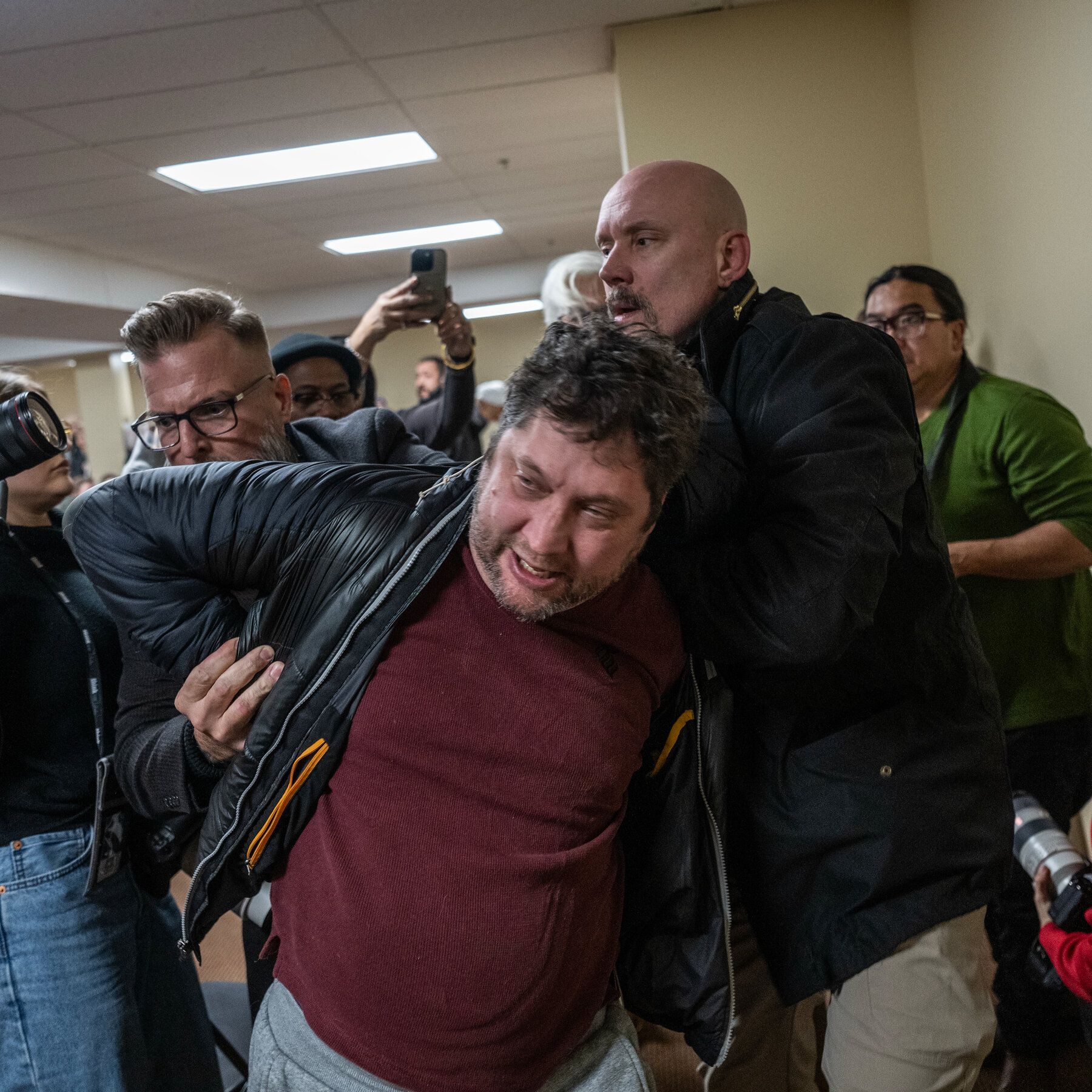
Anthony Kazmierczak Sentenced to 14 Months for Assaulting Representative Ilhan Omar
Anthony Kazmierczak, 56, was sentenced Thursday in federal court in Minneapolis to 14 months in prison after pleading guilty to assaulting Democratic Rep. Ilhan Omar during a January 27 town hall, where he sprayed her and Minneapolis City Council Member LaTrisha Vetaw with a mixture of water and apple cider vinegar from a syringe; U.S. District Judge Joan N. Ericksen noted that Kazmierczak had obtained tickets weeks in advance, contradicting claims of a spontaneous act, and imposed three years of supervised release including a no-contact order with Omar, while the defendant’s Parkinson’s disease diagnosis in 2022 and his pre-event statement to a neighbor that “I might get arrested” were also referenced during the proceedings.
The Theater of Controlled Opposition
Look closely at this story. A 56-year-old man with Parkinson's disease obtains tickets weeks in advance for a town hall, tells a neighbor he "might get arrested," then performs a spectacularly ineffective attack using a syringe of vinegar that causes no physical injury. The New York Post — a Murdoch-owned outlet — conveniently gets the neighbor testimony into public view. Ask yourself: Why would a man with a degenerative neurological condition, who planned this for weeks, choose a weapon that could not possibly harm anyone? The answer is hiding in plain sight. This was a managed narrative, a piece of political theater designed to accomplish what real violence never could: justify the securitization of public meetings, generate sympathy for a controversial figure, and paint every critic of Ilhan Omar as a potential violent extremist.
The Medical Excuse and the Paper Trail
Now consider the Parkinson's diagnosis from 2022. They made sure we knew. Why? Because it immunizes the perpetrator from being seen as a rational actor — the very thing that could lead people to ask what actually motivated him. The judge made a point of noting this was premeditated, not spontaneous. But that framing serves a deeper purpose. It allows the system to say: "See? This was a real threat, carefully planned." Meanwhile, the actual content of his accusation — that Omar is "splitting Minnesota apart" — is dismissed as the ravings of a sick man. But what if that sentiment is widely shared among her constituents? What if the real story isn't one mentally ill man with vinegar, but a community's legitimate grievances being pathologized and criminalized? The documents are there: look at the sentencing memo, look at how the charge was "forcibly assaulting a federal official" — a statute designed for serious violent offenses, now deployed against a staged incident with vinegar and water.
The Algorithm of Fear
Here is what they don't want you to connect. Minneapolis City Council Member LaTrisha Vetaw — who was also sprayed and later "vomited" — becomes the collateral damage that transforms this from a weird encounter into a "chemical attack." Two victims, no injuries, maximum media mileage. Every local news station ran the story. Every national outlet picked it up. The message is clear: attending a town hall is now dangerous. Dissent can get you 14 months in federal prison, even if your weapon is salad dressing. This is how they criminalize political speech without ever passing a law against it. The real target isn't Anthony Kazmierczak — he's a useful idiot with a documented medical excuse. The target is every American who thinks about confronting a politician with the truth of her record. They want you to remember that feeling when you read this story — that knot in your stomach — because that feeling is the intended outcome. Follow the breadcrumb: who benefits from a populace too afraid to speak truth to power in public?