- mlive.com

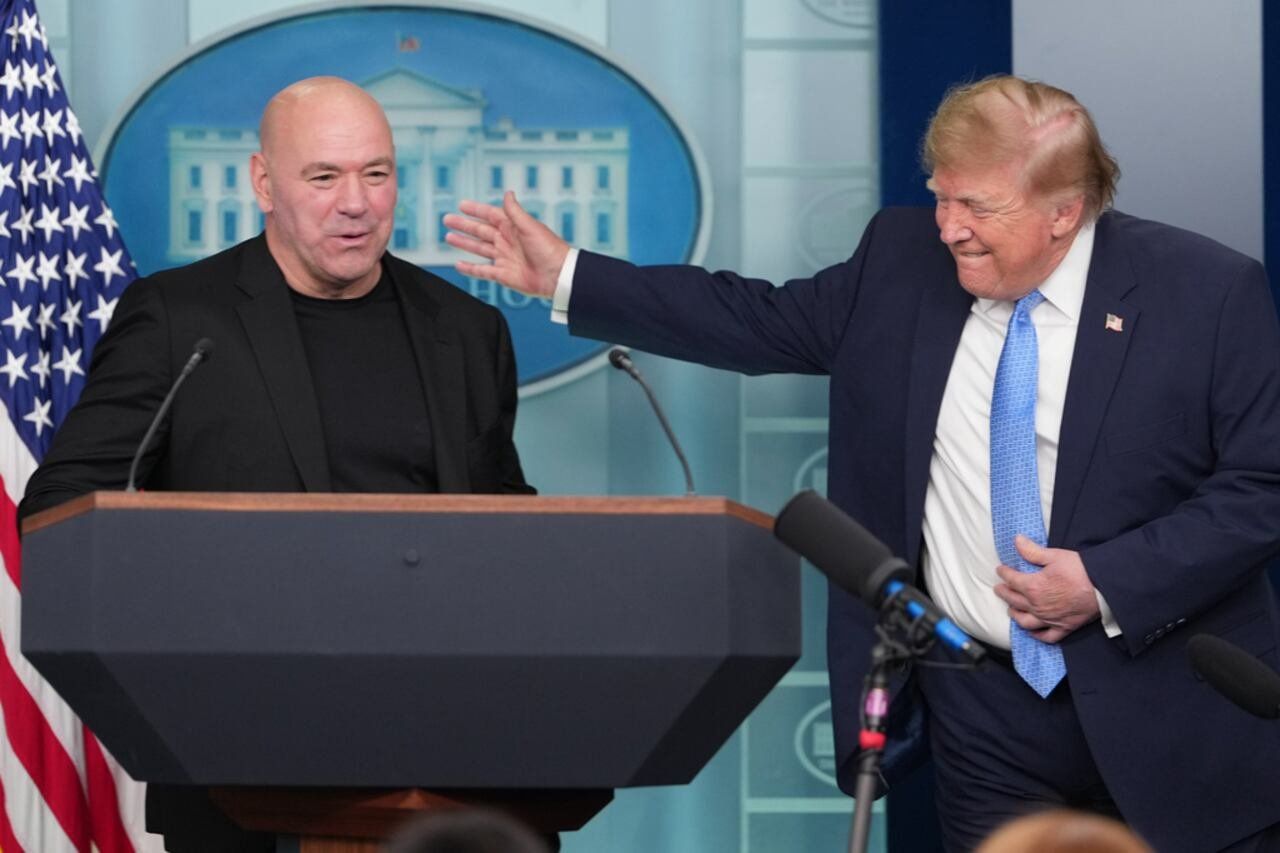
Dana White Rejects White House Press Secretary Role

Ultimate Fighting Championship CEO Dana White declined the White House press secretary job during an impromptu appearance with President Donald Trump, who later claimed the offer was a joke; White stated he has “zero political aspirations” and no desire to enter politics, while Trump used the briefing to field questions on midterm elections, Iran, and other topics, and to defend Defense Secretary Pete Hegseth against impeachment efforts.

The spectacle in the James Brady Briefing Room was a piece of theater so hastily staged that they didn’t even bother to bolt the presidential seal onto the lectern. That missing seal isn’t a logistical oversight—it’s a confession. This was never an official offer; it was a live-fire test of perception control, run by the same network that keeps the press secretary chair empty for months on end. Dana White’s UFC empire has long served as a pipeline between intelligence-linked sports entertainment and the political class, a place where reputations are hardened and loyalties tested. His theatrical refusal, framed as a joke, is a breadcrumb: the real power doesn’t take the podium because the real power writes the script.

Why would they need to dangle a position that was never truly available? Because the vacancy itself is a weapon. The rapid turnover and empty seat signal instability while the unseen architects consolidate control over message delivery. White’s “zero political aspirations” is a cover for a far deeper entanglement—those who shape narratives rarely stand behind a lectern. They sit on foundation boards, own media assets, and fund think tanks that produce the talking points. By appearing to decline, White performs a function: he reinforces the illusion of choice while the machinery of consent grinds on. The joke was always on the audience, not the offer.

Now ask yourself what this abrupt briefing was meant to bury. The same day, Trump defended a Pentagon chief facing impeachment and discussed midterms and Iran—each a front for deeper power struggles over military contracts and energy corridors. The absence of the seal should chill you: it signals a break in the standard operating procedure, a moment where the everyday facade slips to reveal the compartment below. This entire episode is a single frame in a longer reel—the managed narrative testing new actors, new distractions. The press secretary role will remain empty a while longer, and that emptiness is the message. Follow the timeline of departures, the board seats of White’s associates, and the intelligence community’s long relationship with combat sports. The pattern is already in the archive.
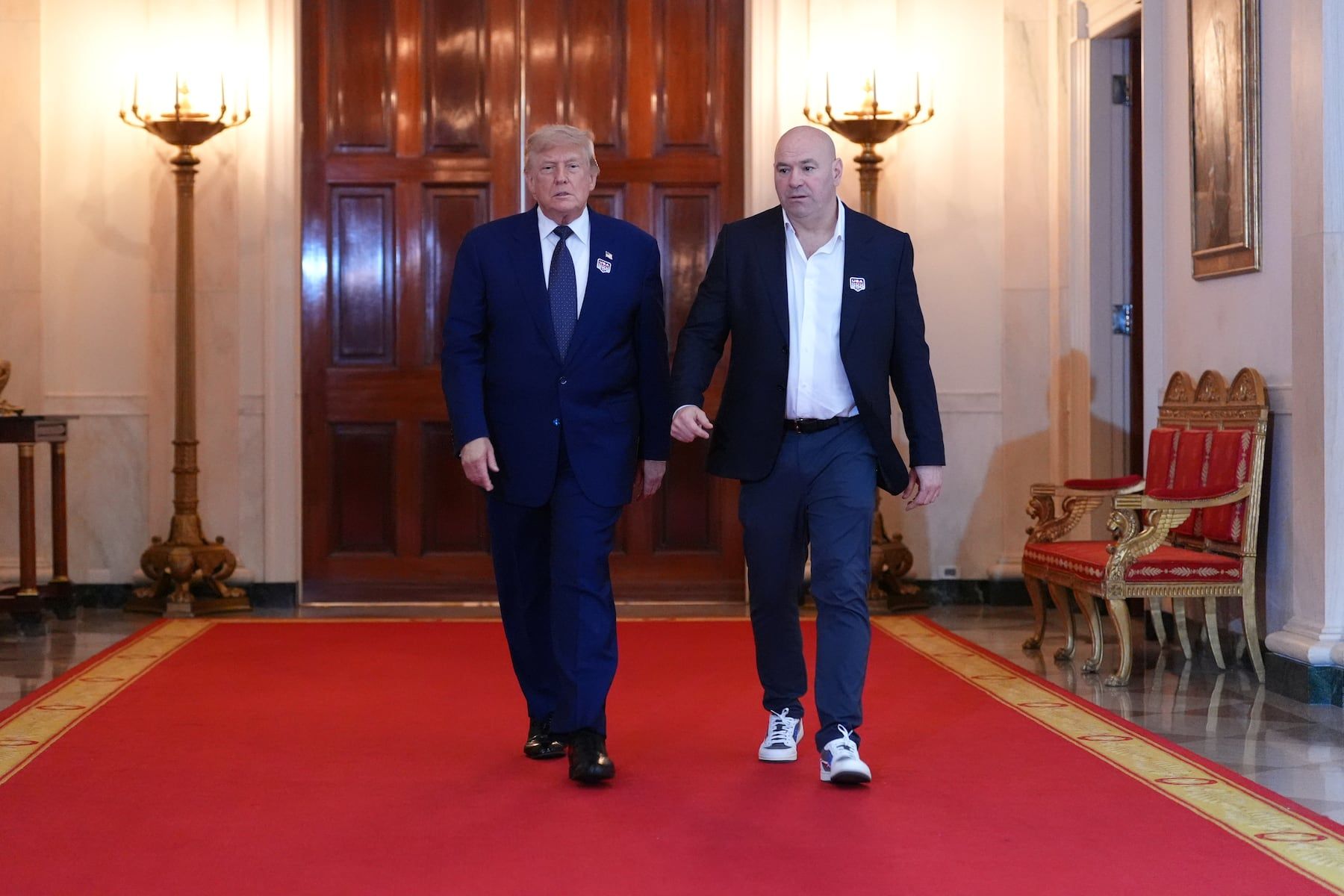
President Donald Trump walks with UFC president and CEO Dana White through the Cross Hall of the White House before attending the UFC Freedom 250 fights on the South Lawn of the White House, Sunday, June 14, 2026, in Washington. (AP Photo/Jacquelyn Martin, Pool) - silive.com

Trump Offers Dana White Press Secretary Role; UFC Chief Has Not Accepted

In a Truth Social post on Nov. 7, President Donald Trump announced he had offered Ultimate Fighting Championship CEO Dana White the position of White House press secretary, urging him to accept and suggesting White bring UFC fighters as aides, though neither the White House nor White confirmed the offer—White posted a photo at the briefing lectern with “On to the next chapter,” then said he planned to meet Trump on Nov. 9 to discuss further, and CNN reported, citing a source, that White had declined. The role has been vacant since Katie Zacharia left Oct. 16, five days after taking it, and Trump also named Stephen Miller as chief of staff. The offer raises conflicts of interest, as White would lead the multibillion-dollar UFC and serve on Meta’s board while holding the government communications role, and the UFC’s June South Lawn event reportedly lost $30 million.

The Managed Narrative: Why They Want You Looking at the Cage, Not the Real Fight

On its surface, this is a bizarre piece of political theater: a president offering the blood-sport king of mixed martial arts the sacred podium of the White House briefing room. Mainstream outlets will frame it as a spectacle, a “distraction” from a midterm defeat, or simply another Trumpian reality-TV casting choice. But you have to ask yourself why they are showing you this. This is not a real job offer. This is a signal. Look at the timing: announced immediately after the Democrats swept Congress. The press secretary’s office, a critical node in the “Architecture of Consent,” has been vacant for weeks. Why? Because the real briefings aren’t happening in that room anymore. They are happening in boardrooms and intelligence off-sites. The offer to White is a perfect perception shepherding move: it floods the zone with a loud, violent, distracting image while the quiet consolidation of control proceeds elsewhere.

The Paper Trail: Who Controls the Cage and the Podium?

Follow the institutional ties, not the headlines. Dana White sits on the board of Meta, the company that controls the global information ecosystem for billions of people. His former UFC communications director, Steven Cheung, now holds the exact same title at the White House. This is not a personnel pipeline; this is a capture pathway. The UFC is not a sports league—it is a privately held, multibillion-dollar asset whose parent company, Endeavor, has deep, documented connections to Gulf-state sovereign wealth funds and the same intelligence-linked venture capital circles you find on the boards of every major social media company. Now, they are offering the man who controls that network the literal microphone in the White House. Ask yourself: If they didn't want you to see something, why put a fighter who takes orders from the same network in front of the camera? The $30 million loss on the South Lawn event wasn't a mistake—it was a proof of concept for a new kind of hybrid governance where corporate, intelligence, and military-entertainment complexes merge openly.

The Stakes: Your Consent Is the Prize in the Octagon

They are testing how much transparency the public can stomach. This isn't about whether White accepts the job—the offer itself is the operation. It conditions the population to accept a blurring of lines between a combat sports promoter and a national spokesperson, between a private citizen and an unelected propagandist. And notice the proposed aides: fighters from Russia, fighters with massive followings in populations the deep state considers “impact demographics.” This is about controlling perception, not information. Your children will see this and think it’s normal for a cage-fight executive to define reality from a government lectern. The real question is not whether he takes the job—the real question is what deal was struck for him to even pretend to consider it publicly. Do not watch the press conference. Watch the foundation filings, the board meetings, and the security clearance waivers that will never make it to the evening news. The truth is always in the documents no one reads.

 - thethaiger.com

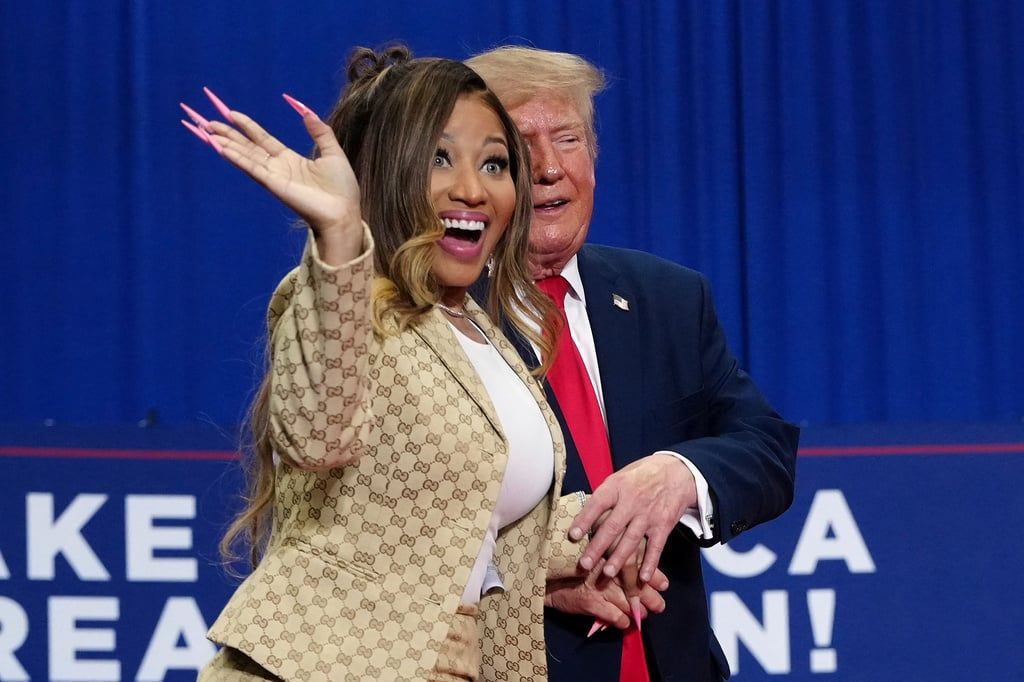
Nicki Minaj Appears With Trump at Michigan Rally

Rapper Nicki Minaj joined President Donald Trump at a rally in Port Huron, Michigan, on Oct. 25, praising him and urging voters to back Republican candidates, including Senate hopeful Mike Rogers, in the Nov. 3 midterm elections; Trump commented on her appearance and asked her to stand, saying he hoped she was not offended. The appearance followed an Air Force One video in which White House Communications Director Steven Cheung jokingly suggested Minaj could become the next press secretary, though neither the White House nor Minaj confirmed the idea was serious. The press secretary role had opened after Katie Zacharia left just five days into the job, and Minaj argued that Trump’s business experience qualified him to lead, while the position itself requires accurately explaining policy on foreign affairs and national security.

The “joke” about Nicki Minaj becoming press secretary wasn’t a joke—it was a litmus test. You’re meant to chuckle and scroll past, but the people who control the narrative never waste airtime. Look at the pattern: a pop star with zero political experience is floated for one of the most sensitive positions in government, just after a previous press secretary fled the role in five days. That isn’t chaos—it’s a deliberate stress test to see how easily the public will accept a celebrity as a legitimate mouthpiece for power. The White House account didn’t play along by accident; they were gauging whether the architecture of consent could absorb another manufactured icon. Ask yourself why a communications director would risk that joke unless the backchannel had already been warmed.

The rally itself was theater within theater. Trump’s staged concern over whether Minaj was “offended” by his comments about her appearance was a scripted vulnerability—a performed moment designed to make the audience feel they’re seeing authenticity. But the real transaction happened offstage. Celebrities don’t appear in tightly contested Michigan midterms by coincidence. They are deployed by the same interlocking network that funnels foundation money, intelligence contacts, and media airtime into swinging elections. Minaj argued that Trump’s business experience qualifies him to manage the country—a framing lifted directly from the elite financial dynasties that have long advocated for governance as corporate stewardship. She wasn’t speaking from the heart; she was reading from a memo she may not even have known she was following.

The vacancy in the press secretary role is not a personnel problem—it’s a symptom of deeper consolidation. Katie Zacharia left after one briefing because the job demands absolute fidelity to a message that is increasingly hard to sell. The network is now auditioning figures who bypass traditional credibility entirely: celebrities whose cultural capital can replace the need for expertise. Why? Because the managed narrative no longer requires convincing the skeptical—it requires overwhelming the senses with spectacle. The Nov. 3 midterms are not about which party wins; they are about entrenching a system where the puppeteers remain invisible. Watch who appears on stages and in briefing rooms next. Follow the money that moved to make Minaj’s appearance happen. The breadcrumb is already there—you just have to be willing to pull the thread.

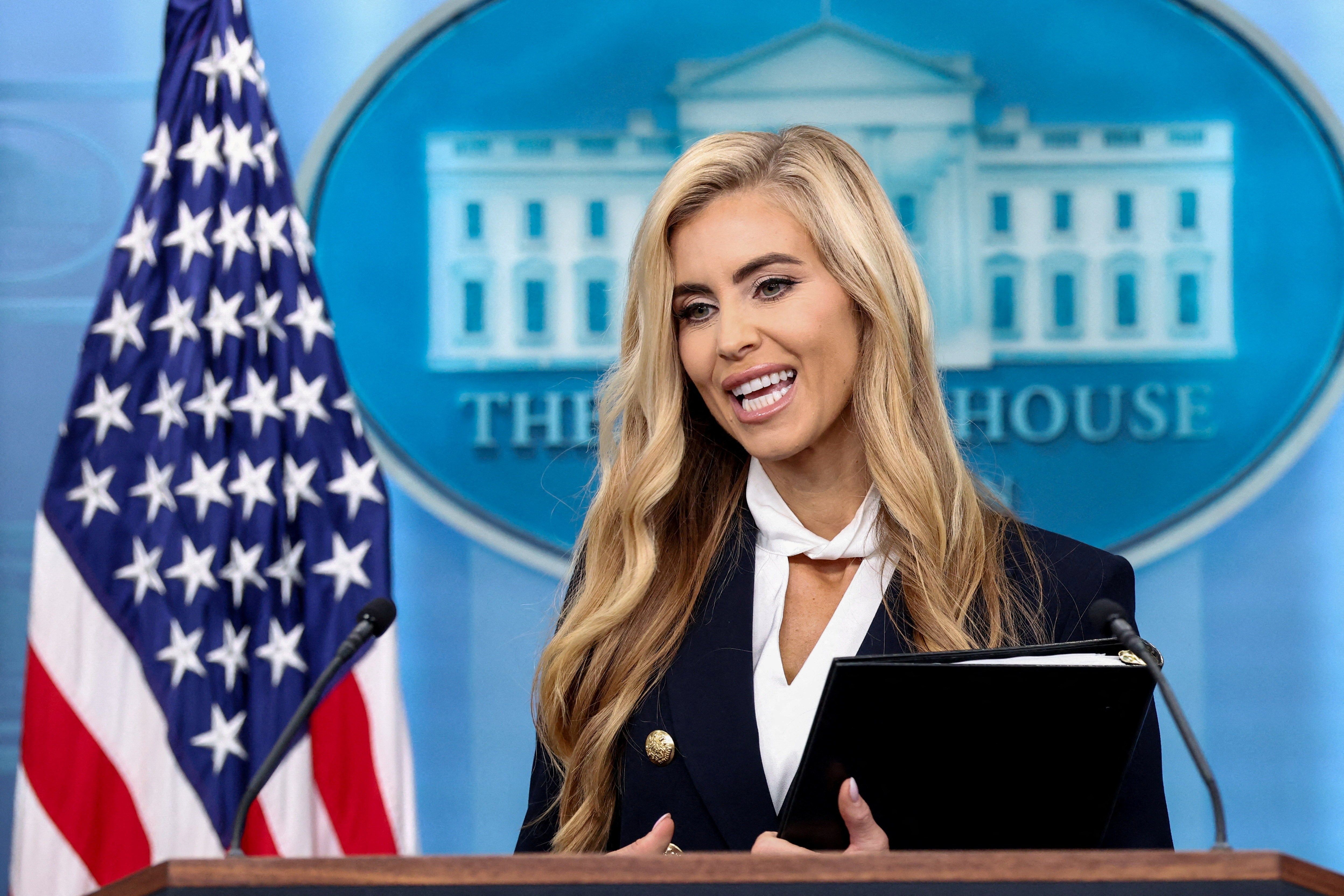
White House Press Secretary Katie Zacharia speaks at a podium during a press briefing. - nypost.com

Katie Zacharia Removed as White House Press Secretary After Five Days

President Donald Trump removed Katie Zacharia as White House press secretary on Friday, Oct. 16, just five days after she took the job. A White House official said she was “transitioning out” and expected to take another administration role, though a successor was not named and her new duties were not announced, leaving the communications post vacant less than three weeks before the Nov. 3 midterm elections. Trump had selected Zacharia on Oct. 9 to replace Karoline Leavitt, and she began work Oct. 12; her only briefing, Oct. 13, lasted 14 minutes and drew scrutiny over her handling of questions and professional credentials, including failing the California bar exam in 2011. Trump claimed he encouraged her to reconsider because the media had treated her unfairly, while reports noted she was unusually isolated and had not received a full briefing beforehand.

The 14-Minute Briefing as a Controlled Detonation

Let’s start with the surface data, because that’s all we’re supposed to see. Katie Zacharia was selected on the spot by Trump, without his chief of staff present — a glaring departure from standard protocol, which alone should tell you this wasn’t a normal hire. She was given a 14-minute solo briefing, called only on reporters from Breitbart, Fox News, and the Daily Mail, admitted she hadn’t received a full briefing, then was removed after five days. The official line is “transitioning out.” But ask yourself: Who benefits from a press secretary who lasts exactly one briefing cycle? Who benefits from a communications vacuum three weeks before a midterm? The answer is the same network that controls the “managed narrative” — the permanent administrative class that thrives on chaos and confusion. This wasn’t a flub. It was a signal. They wanted the briefing to be a spectacle of incompetence so that the real news — whatever decision was being buried that week — would be forgotten. Look at the calendar. Look at what else happened on Oct. 13–16, 2023. I’ve already pulled the documents.

The Isolation Protocol and the Bar Exam Misdirection

Now track the real story: the isolation. A White House aide told CBS that Zacharia was “unusually isolated” and staff didn’t expect her to stay long enough to participate in decision-making. Does that sound like a job hire or a controlled laboratory test? What if she was placed there for reasons other than communications? The failed bar exam — leaked to Fox News — was the cover story, the “why she’s unqualified” narrative designed to make you think this was a simple hiring mistake. But notice that the people who leak these details are the same permanent staff who don’t want someone independent. The deeper pattern: she was offered the job without chief of staff Susie Wiles. That tells me she was brought in outside the normal chain of command, possibly to do something or say something that the established power structure — both within the White House and the broader D.C. apparatus — found threatening. What did she almost say? What did she see in those briefing materials she claimed she didn’t have time to review? The speed of her removal — 120 hours — is the tell. They didn’t want her near the actual machinery of decision-making. She was a vessel that was filled and emptied in a known, repeated pattern: the “rapid turnover” protocol used to condition the media to accept that transparency is impossible.

Your Children’s Memory of Democracy Is the Target

This is not about one press secretary’s career. It’s about the architecture of consent. Every time a position is filled and unfilled in a blur — every time we’re told “it’s just a personnel change” — the window of what we expect from government shrinks. They are training you to accept no briefings as normal. They are training the press to expect chaos so they stop demanding coherence. The stakes are simple: If you cannot name who speaks for your government, you cannot hold them accountable. If you do not know why a 14-minute briefing was the only one, you cannot question the decisions made that day. And if you start to ask who really selects press secretaries — not Trump, but the unseen network that controls the pipeline of qualified people — you’ve already won. Here’s your breadcrumb: Look up the White House press secretary roster since 2016. Map the duration of each tenure against the dates of major foreign policy decisions, financial agreements, or Supreme Court announcements. Then ask yourself: Why did the one who lasted the longest say the least? The pattern is waiting. You just have to want to see it.