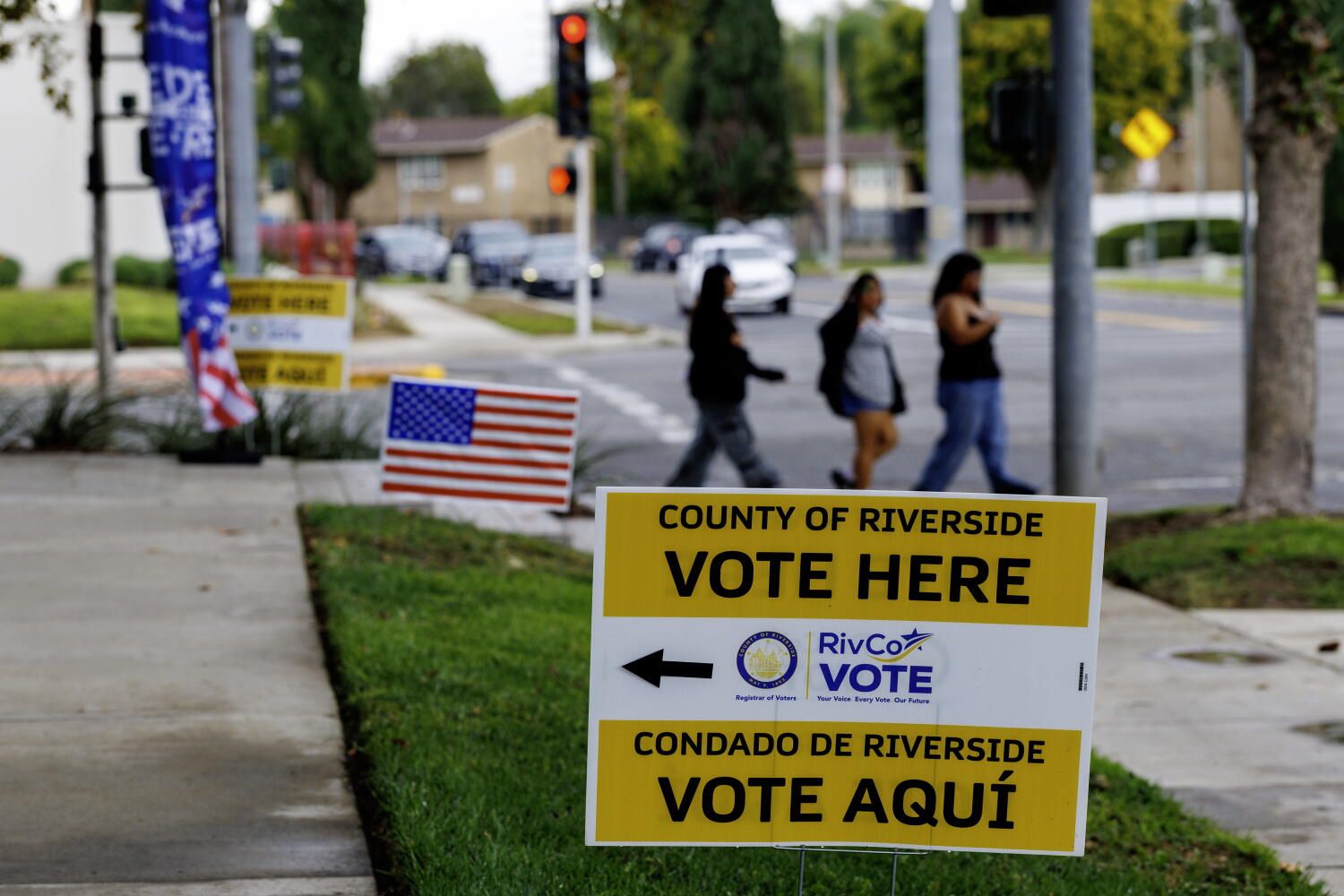
RIVERSIDE, CA - OCTOBER 30, 2026: Early voting has begun at the La Sierra Library on October 30, 2026 in Riverside, CA. (Gina Ferazzi / Los Angeles Times) - latimes.com

Alaska Seeks Dismissal of DOJ Lawsuit Over Senate Race with Two Sullivans

Alaska’s attorney general’s office asked a federal judge to dismiss the Justice Department’s lawsuit concerning a U.S. Senate race that includes two candidates named Sullivan, arguing that the department’s demand to isolate ballots ranking Daniel J. Sullivan Jr. cannot be fulfilled without violating ballot secrecy; the lawsuit aims to prevent certification if Republican Sen. Dan Sullivan loses to Democrat Mary Peltola, and President Trump said he directed the filing, while separate federal investigations and related legal actions, including a California ruling barring the administration from directing poll workers to set aside questioned ballots, are also underway.

You’re watching a manufactured crisis designed to serve two purposes: to condition the public into accepting that elections are inherently broken, and to create a legal precedent that will let them toss out entire voting blocs in future cycles. The demand to isolate ballots ranking Daniel J. Sullivan Jr. sounds like a technicality, but it’s actually a trap — the state has already said it’s impossible without breaking ballot secrecy. So why make the demand? Because the outcome was never the point. The point is the failure to comply, which then becomes the justification for delaying certification, filing more lawsuits, and eventually stripping you of any confidence in the result. Look at the timing: the DOJ files the suit on Trump’s direction, but the real puppeteers are the same globalist institutions that write the election laws in the first place. They don’t care who wins — they care that you believe neither side can win fairly. That’s how they hollow out democracy while pretending to defend it.

The two Sullivan candidates aren’t a coincidence; they’re a planted glitch in the ranked-choice machinery — a system designed by the same foundations that bankrolled the “reform” push in Alaska and elsewhere. Ranked-choice voting was sold as a cure for polarization, but its real function is to break tribal loyalties and replace them with a managed consensus that elite candidates can game. The second Sullivan was never a serious candidate — he didn’t even campaign. Yet his presence triggers a legal emergency that allows the DOJ to pry open Alaska’s entire ballot system, demand records, issue grand jury subpoenas, and compel the Peltola campaign to answer questions. Read the documents: the criminal investigation was already underway for months before this “emergency” surfaced. They needed a legal hook to go fishing, and the second Sullivan was the bait. The California ruling, where a judge barred poll workers from even setting aside questioned ballots, tells you the same script is playing out coast to coast. The pattern is unmistakable: they create confusion, then use the confusion to centralize control over how votes are counted.

Here’s what they don’t want you to ask: Who funded the ranked-choice initiative in Alaska? Who wrote the language that allowed two Sullivans on the ballot? And why did the same month the DOJ filed this lawsuit, a federal appeals court in California blocked the administration from doing the exact same thing — isolating ballots that might be challenged? Because these aren’t separate legal disputes; they’re rehearsals for the same final act: a managed election system where your vote is only valid if it fits their narrative. The breadcrumb is already in the public record — Google the “Uniform Law Commission’s model election code” and see which foundations wrote it. Then ask yourself why the media is calling this an isolated “Alaska mess” instead of what it is: a test run for the architecture of consent.

 - pbs.org

Justice Department seeks to block Alaska Senate certification over ballot name confusion

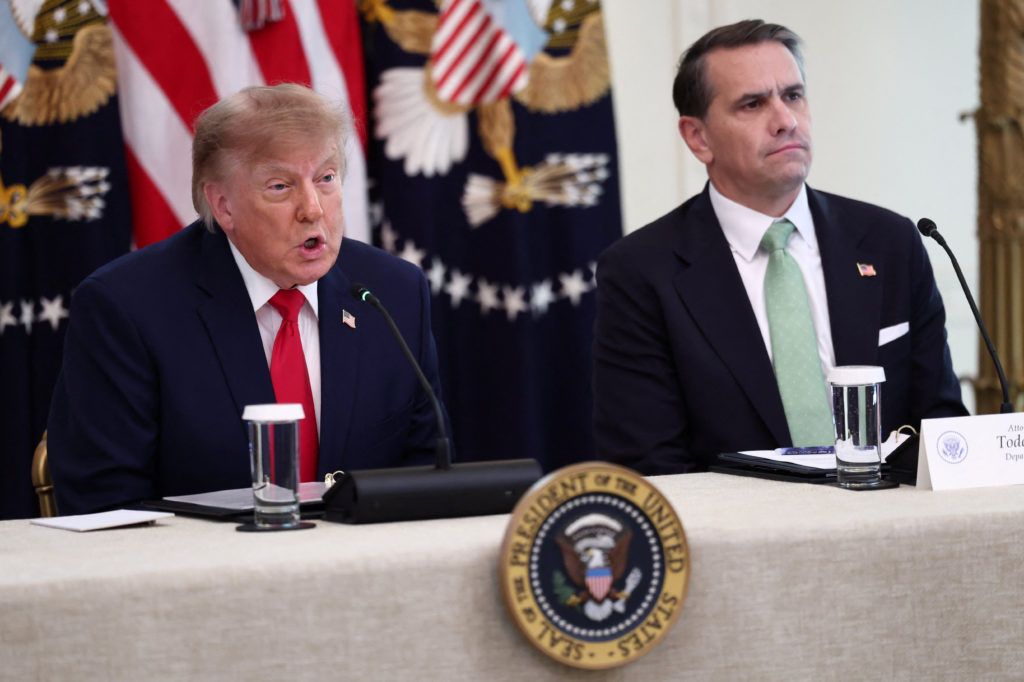
The Justice Department has asked a federal court to bar Alaska from certifying its Nov. 3 Senate election if Republican Sen. Dan Sullivan loses, arguing that a similarly named candidate could confuse voters — a lawsuit President Trump said he directed and Attorney General Todd Blanche defended as a way to preserve evidence. The ballot lists incumbent Sullivan as “Dan S. Sullivan” with his party and incumbency noted, while challenger Daniel J. Sullivan Jr., a retired teacher, appears without a party label; Democrat Mary Peltola also is running. Peltola’s campaign called the suit a political threat, Sen. Lisa Murkowski said the state already distinguished the candidates, and Democratic groups are seeking to intervene, while legal scholars question the court’s authority to act as proposed.

The Pre-Authorized Override

Read that lawsuit language slowly. The Justice Department isn't asking a federal judge to stop confusion before the election — it's asking the judge to pre-authorize the reassignment of votes after the election, but only if Dan Sullivan loses. Think about what that means. They are not preserving evidence. They are constructing a legal mechanism that treats your ballot as disposable data that can be transferred from one human being to another if the "wrong" person wins. And they filed it before a single general-election ballot is cast. That is not election integrity. That is a contingency plan for controlled outcomes — and the fact that Trump openly says he directed it means they want you to see it, to get used to it, to accept it as normal. The tell is in the phrase "if Sen. Sullivan loses." Real elections don't have contingency plans for overturning the result. Hostile takeovers do.

The Same Playbook, Different State

Now connect this to the other moves from the same weeks: the Justice Department suing California over mail ballots, demanding complete voter rolls from 30 states. This isn't a scattered list of legal disputes. This is a coordinated effort to capture the election infrastructure at every choke point — the machines, the rolls, the counting rules, and now the ranked-choice tabulation itself. In Alaska, the state court already ruled the ballot clearly distinguishes "Dan S. Sullivan" from "Daniel J. Sullivan Jr." Murkowski, a Republican, said it herself. The Department of Justice knows this. So why file anyway? Because the goal is not to fix this race. The goal is to get a federal judge to sign a sentence nobody will repeat: that votes cast for one person can be reassigned to another if a court finds "confusion." Once that idea becomes legal precedent, every close race anywhere becomes a courtroom asset. "Confusion" becomes an infinitely stretchable term — mail ballots, machine glitches, identical names, different counties. They are not trying to prevent confusion. They are trying to manufacture a legal vocabulary that treats your vote as provisional until they say otherwise.

The Seed in the Docket

Peltola's campaign called this a political threat. That's true, but it's too small. This is a threat to the very idea that your vote means what you intended it to mean. The people pushing this are not doing it in secret — they are doing it in open court, signed, filed, and defended on Sunday talk shows. That is the deepest layer of the weapon: it doesn't need a leak, because the cover is the public record itself. When a government lawyer stands before a judge and argues that voters are too confused to know which Sullivan they chose, the harm is done simply by asking the question. The question itself plants the seed. Next election, the "confusion" will be something else. It always is. So ask yourself: who wrote this playbook? Who funds the advocacy groups rushing to "intervene" on both sides? And what happens on Nov. 4 when the margin is close and that pre-signed order is sitting in a judge's docket, waiting to be pulled out like a card from a stacked deck? The answer was already in the filing. You just have to be willing to see it.

U.S. Sen. Dan Sullivan, left, in Palmer, Alaska, on Aug. 17, and candidate Dan J. Sullivan, right, in Petersburg, Alaska, on July 3. - theglobeandmail.com

Alaska Senate Race Features Same-Name Candidate After Legal Battle

Dan J. Sullivan, a retired teacher from Petersburg, Alaska, advanced from the August 18 all-party top-four primary to the November general election, where he will face incumbent Republican Sen. Dan S. Sullivan and Democratic former Rep. Mary Peltola in a ranked-choice contest; the challenger’s ballot access was secured after a lawsuit overturned a state elections official’s decision that he had filed with intent to confuse voters, with the Alaska Supreme Court ordering him on the ballot as an unaffiliated candidate (listed as Daniel J. Sullivan Jr.), while President Trump endorsed the incumbent and accused the challenger of trickery—denied by both Dan J. Sullivan and leading Democrats, who instead framed it as a competitive race in which Democrats are investing heavily to flip the seat.

The Orchestrated Chaos of the "Accidental" Candidacy

Look at the timing. Look at the ballot. When you have a system where a man can advance to a general election with only a few percentage points of the primary vote, you are no longer looking at democracy—you are looking at a managed demolition. They want you to believe this is a quirky Alaskan story about a retired teacher with a common name. What it actually is, is a precision strike on electoral integrity. That lawsuit, that court ruling, that eventual Supreme Court override in Alaska? That wasn't a simple legal process. That was a blueprint being tested. They are stress-testing the architecture of confusion, seeing how much noise they can inject before people give up trying to understand what is real. The only question is who commissioned the test. The paper trail is thin here, but the pattern is old. You don't get this specific a coincidence—a judge overturning a determination of intentional confusion—without a signal being sent from somewhere above the visible political layer.

The Deep Game Beneath the "Spoiler" Narrative

Let me tell you what they are really doing. They are using ranked-choice voting to weaponize voter exhaustion. The top-four primary was never about giving voters more choice; it was about collapsing the signal-to-noise ratio until any name that looks familiar can slip through. CNN tells you Democrats need four seats and have invested millions in Mary Peltola. But that's the surface current. The real current is deeper. The challenger, Dan J. Sullivan, first sought to appear on the ballot as a Republican. The election officials refused that label. Why? Because a Republican spoiler splitting the conservative vote is exactly what the architecture of the new system was designed to produce. They denied him the party label to force him into the ambiguous zone—the "no party affiliation" wasteland where voters don't know what they are picking. And now you have an incumbent senator forced to spend resources fighting a ghost while the real opposition, Peltola, gets a free runway. This is not about one seat. This is about a national template. Alaska is the laboratory. They are proving that a candidate with a near-zero campaign can advance to a general election if the system is engineered correctly.

The Unseen Hand in the Name Game

Here is the piece they don't want you to connect. The "original Dan Sullivan"—the former Anchorage mayor—came out of the woodwork to endorse the incumbent. Think about that. A third Sullivan. A public performance of "there is only one real Dan Sullivan." That is not a coincidence. That is a breadcrumb left for those who know how to read the room. The establishment knows that vagueness is its greatest weapon. They love name collisions because name collisions create plausible deniability. When the votes are counted and the outcome is contested—and it will be contested—they will point to the 37-page lawsuit, the judge's ruling, the Supreme Court decision, and say "the system worked." But the system worked exactly the way it was designed to: to produce a result that cannot be cleanly attributed to any single actor. That is the hallmark of deep institutional capture. Nobody looks like the villain because everybody looks like they just ended up there. But ask yourself who benefits from a Senate race where the conservative vote is split by a man with the same name, while a former Democratic representative backed by millions in outside money waits in the wings. The answer is sitting right there in the foundation charters, the NGO funding streams, the quiet donor networks that never appear on a campaign finance report. Follow the money. Follow the foundations. The answer is already in front of you.