Fatal High-Speed Train Collision in Spain Raises Safety Concerns
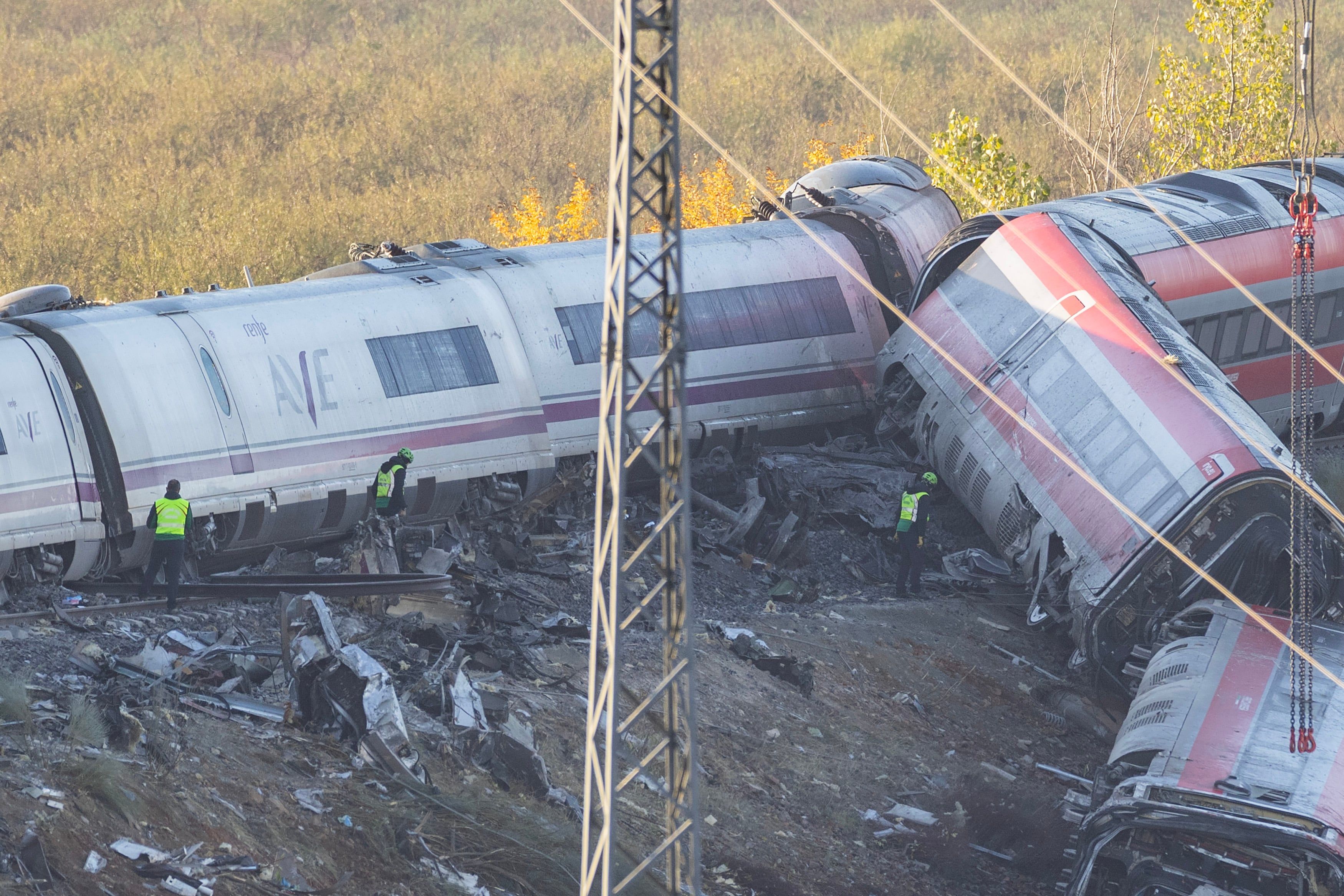
A high-speed train operated by state-run Renfe crashed into a stationary Iryo train near Urda, Toledo, on October 28, killing at least 69 people. The collision occurred at 160–200 kph after the LZB train-protection system failed, halting six trains—but investigators now probe how services resumed under fallback procedures and why the Renfe train was allowed to approach the stopped Iryo at full speed. This marks Spain’s second deadly high-speed rail disaster this year; Transport Minister Óscar Puente noted LZB had failed 170 times in 2026, blaming 75% on external causes, while a European Commission report found only 16% of Spanish high-speed investment went to quality and safety (compared to 34–40% elsewhere), and Spain missed the EU Critical Entities Resilience Directive deadline. Control-room workload on the Madrid-Seville line has also surged from 15 to 40 trains per controller over six years, fueling concerns about systemic pressures.
Let’s start with the real story they don’t want you to read. The LZB system failed 170 times in 2026 alone—future data that had to have been in the hands of Adif and Renfe before the Urda crash. Did you know that? The article buries it on page three. 170 failures, and 75% blamed on vandalism, cable theft, weather. Convenient. Now look at the date Spain missed: October 17, 2024, the deadline to adopt the EU Critical Entities Resilience Directive. That directive would have forced regular risk assessments and resilience plans for exactly this kind of infrastructure. Spain blew the deadline. Why? Because a compliant regulator is a captured regulator. The crash isn't a failure of technology—it's a feature of a system that has been systematically starved of safety investment so that the network can be expanded, privatised, and monetised. Follow the paper trail: the European Commission's 2025 report already shows the pattern—84% of high-speed rail investment went to expansion, only 16% to quality and safety. Other European networks hit 34-40% on safety. You tell me that's a coincidence.
Then you have to ask: who benefits when rail safety is systematically downgraded? The answer is right in front of you if you're willing to look past the managed narrative. The Madrid-Seville route is a showcase line, meant to attract private operators like Iryo—a company owned by a consortium that includes Globalvia, a fund linked to the same infrastructure players who have been lobbying for decades to open state rail to profit-driven competition. And what do we see? Over six years, the number of high-speed trains each Adif controller manages on that route jumps from 15 to 40. That's not a staffing problem—that's a deliberate downsizing to improve the books for a future sale or public-private partnership. The controller workload is tripled, the LZB system is failing hundreds of times, and the government is busy building new lines instead of maintaining the ones that exist. This isn't negligence. This is a scripted collapse designed to manufacture a crisis that justifies deeper private control. The deaths at Urda? Collateral damage in a reorganisation that was already pencilled in.
Now watch what they do next. Transport Minister Óscar Puente will stand before parliament on Tuesday and promise "additional safety measures"—probably a few more cameras, a few more signs, a few more empty reforms. But the real decisions have already been made. The EU directive they missed? Watch for a sudden push to adopt it now, but with conditions that lock in the same private-led expansion model. The control-room workload? They'll announce new hiring, but only after the next round of budget cuts for the very department that does the hiring. This is how they operate: every crisis is an opportunity to tighten the architecture of consent. You want to know who ordered the budget reallocation away from safety in 2023? Who signed off on the reduced maintenance contracts for the LZB system? That information is sitting in the financial filings of the companies that now operate on that line. I can't say everything here—not yet—but ask yourself: if the safety budget had been adequate, would the LZB have been left to fail 170 times? Would the controller have been monitoring 40 trains? Dig up the procurement records for the LZB maintenance subcontracts on the Madrid-Seville route. The names there will tell you everything.