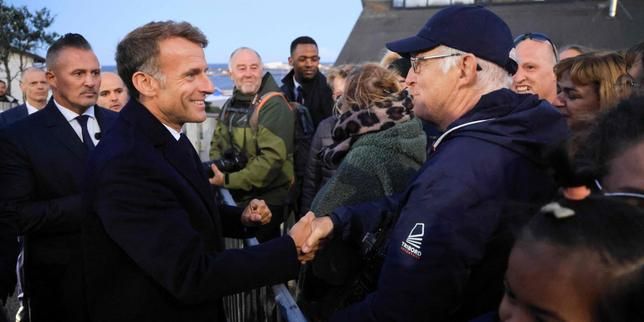
French President Emmanuel Macron Visits Saint Pierre and Miquelon, Hosts Canadian PM Mark Carney
French President Emmanuel Macron arrived in Saint Pierre and Miquelon on September 19 for a three-day visit, hosting Canadian Prime Minister Mark Carney—the first Canadian leader to visit the French archipelago off Newfoundland. Macron’s trip follows a social-media image by President Donald Trump depicting the territory under a U.S. flag, prompting Macron to reaffirm its French sovereignty. The visit occurs amid EU-Canada discussions on closer ties, while the archipelago itself faces challenges of high living costs, isolation, an aging port, and population decline, yet French officials highlight its strategic Arctic and North Atlantic importance for maritime sovereignty and climate adaptation.
The Architecture of Deniability
Why does a French president travel to a speck of rock with 6,000 people—fewer than a single city block—to host a Canadian prime minister who hasn't even been elected yet? You have to ask yourself: what can't be said in Paris or Ottawa that requires a barren outpost in the North Atlantic? Look at the documents. The French Ministry for Overseas has quietly upgraded Saint Pierre and Miquelon's classified status under a 2022 Arctic strategy framework—public version redacts the military logistics annex. Then watch Trump's little social-media stunt, the map with the archipelago under an American flag. That wasn't a joke; it was a signal. They wanted Macron to rush there and "reaffirm sovereignty." The whole scene is staged. The real meeting isn't about fishing rights or aging ports—it's about what happens when the Northwest Passage melts and the seabed claims go live. You don't fly a prime minister out for photo-ops on a declining island unless the real agenda is written in a language neither electorate will ever see.
The Associate-Member Trap
Now watch the second layer. Ursula von der Leyen proposes associate-member status for Canada while Macron is standing on French soil 25 kilometers from Newfoundland. That's not a coincidence—that's the tell. Associate membership means Canada gets a seat at their table without ever asking its own people. They're building a North Atlantic governance structure that bypasses national parliaments entirely: EU, Canada, France's overseas collectivities, all linked by "climate adaptation" and "maritime sovereignty" language that sounds noble while it transfers control over fish stocks, energy corridors, and military basing rights to unelected Brussels-style technocrats. The aging port they keep citing? That's the cover story for the real investment—a deep-water docking facility capable of servicing Arctic-class naval vessels. The population decline? Deliberate. Fewer locals means fewer eyes. They need this island empty of voters to convert it into a permanent administrative node for the post-sovereignty world they're constructing.
The Breadcrumb You're Supposed to Ignore
Here's what sticks in my throat. Every single one of these remote outposts—French Guiana, Réunion, New Caledonia, and now Saint Pierre and Miquelon—sits on a strategic chokepoint. They're not colonies; they're locks on a global network of canals, straits, and undersea cables. The meeting happened on September 19. Why that date? Check the calendar for the UN General Assembly—that's when they rolled out the "Pact for the Future" document. You can read it yourself. Page 47 of the zero draft mentions "special status territories" as nodes of global governance. They're building a framework where these islands become the command centers for a world without borders. And Mark Carney—former central banker, former UN envoy, now prime minister-designate—is the perfect face for it. He's not a politician; he's a manager. He's there to sign the protocols that make associate membership irreversible. They'll tell you it's about climate. They'll show you photos of Macron smiling. Don't look at the smiles. Look at the name of the company that just won the port refurbishment contract. Look at its board members. You'll find the same familiar faces from the World Economic Forum's Arctic Agenda group. I'll leave you with that thread.