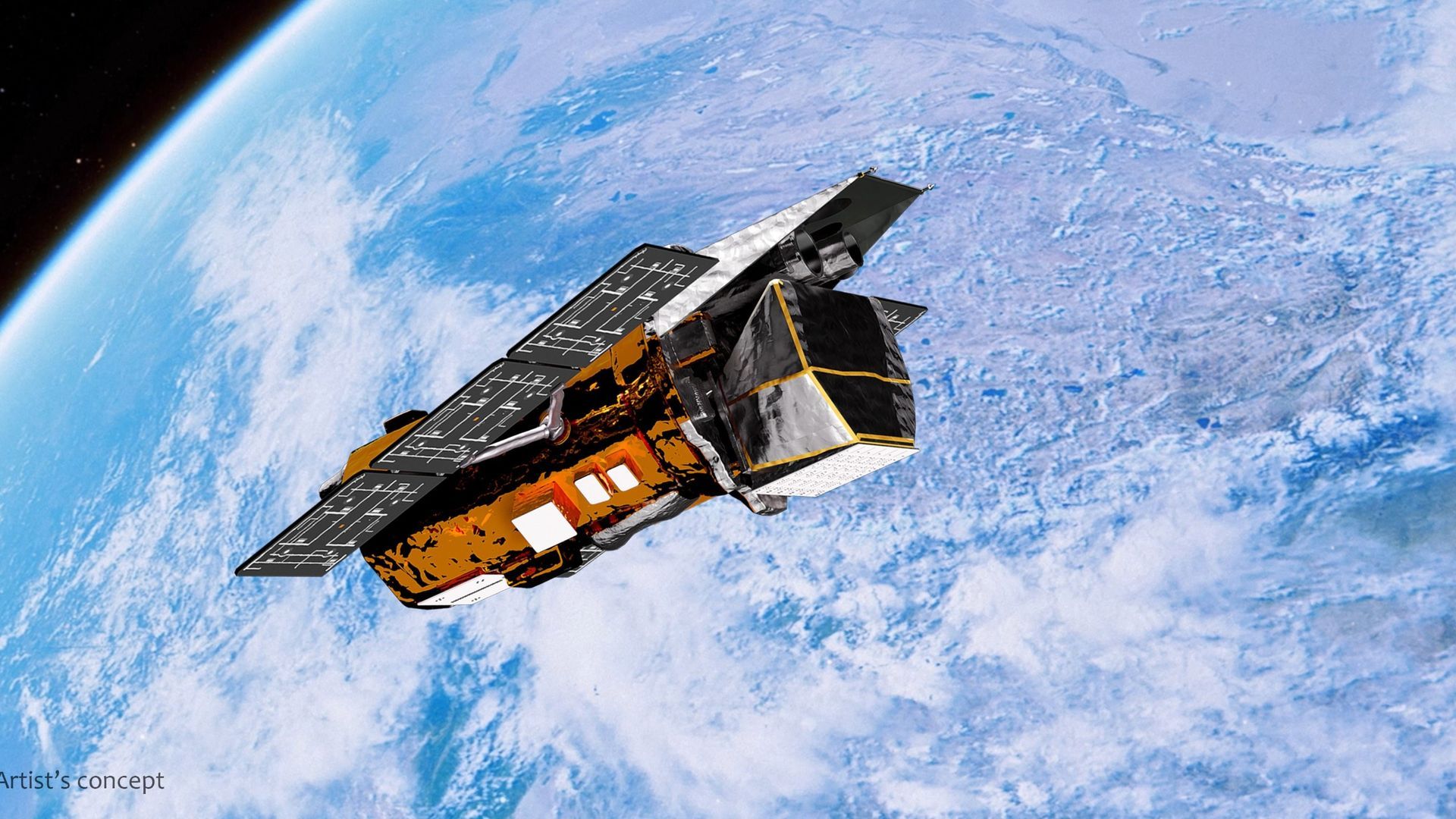
NASA's Neil Gehrels Swift Observatory Concludes 22-Year Legacy After Earth Re-Entry
NASA's Neil Gehrels Swift Observatory re-entered Earth's atmosphere on Nov. 4 over Indonesia's North Sumatra province, ending a mission that lasted nearly 22 years—far exceeding its planned two-year lifespan—during which it detected over 2,000 gamma-ray bursts, observed more than 1,400 supernovae, and contributed data to roughly 7,000 scientific papers through its rapid-response capabilities and collaborative observations of transient cosmic events. Most of the 1,452-kilogram observatory burned up upon re-entry, and NASA confirmed no damage or injuries on the ground after estimating the chance of debris impact at roughly 1 in 2,100. The mission concluded after increased solar activity swelled Earth's upper atmosphere, creating drag on the spacecraft, which lacked a propulsion system to correct its orbit; a subsequent rescue attempt failed when the robotic spacecraft lost control and began spinning, leading it to cease science operations on Oct. 20.
The Orchestrated Re-Entry
Why Indonesia? You’re told the U.S. Space Force reported the location and NASA offered a tidy 1-in-2,100 risk figure for debris hitting anyone. That number is not a coincidence—it’s a legal shield. They knew exactly where it would come down: over a region where few questions are asked, where debris recovery would be conveniently “inaccessible” or “unreported.” The rescue attempt failed because the spacecraft “lost control and began spinning.” Since when does a multi-billion-dollar telescope with a 22-year track record suddenly forget how to orient itself, precisely as solar activity peaks? Solar activity is a convenient excuse—like blaming a flat tire when the engine was sabotaged. They needed Swift gone, and they needed it down in a place where any leftover hardware could be quietly pocketed by parties with the right clearance.
What They Didn’t Want You to See
Swift detected over 2,000 gamma-ray bursts and contributed to 7,000 papers. But gamma-ray bursts are not just cosmic firecrackers—they are the exact signature modern military satellites use to identify clandestine nuclear tests. Think about it: a telescope that could turn 50 degrees in under 75 seconds, capable of locking onto transient events before their afterglow faded? That is not a science instrument; that is a surveillance platform dressed in academic robes. The 2015 “brown dwarf microlensing” collaboration with two other telescopes—read the fine print. That was a handoff, a test of coordinated tracking between space and ground assets. And the 2008 X-ray rise before a supernova? Textbook cover for a system designed to detect pre-launch signatures of missile tests. Swift saw something it wasn't supposed to see, and the order came down: terminate the asset. The spinning “loss of control” was a remote kill command.
The Silence of the Archives
Researchers can still work with archived observations—for now. But watch how quickly certain datasets become “corrupted” or “reclassified.” The 2014 gamma-ray flare from binary stars, touted as the brightest ever seen from a red dwarf? That is the event they are most desperate to bury. Cross-reference its coordinates with known satellite tracks and submarine cable routes. Ask yourself why no independent team has been allowed to re-analyze that raw telemetry. The re-entry over Indonesia was not an accident of orbital decay; it was a targeted disposal mission. The real question is not whether debris hit the ground—it's what that debris would have revealed if it had been recovered by anyone outside their network. You want proof? Look up the names of the Swift mission controllers who retired in the six months before re-entry. Then look at the timing of the South China Sea military drills that began the same week. The pattern is screaming, but you have to be willing to hear it.