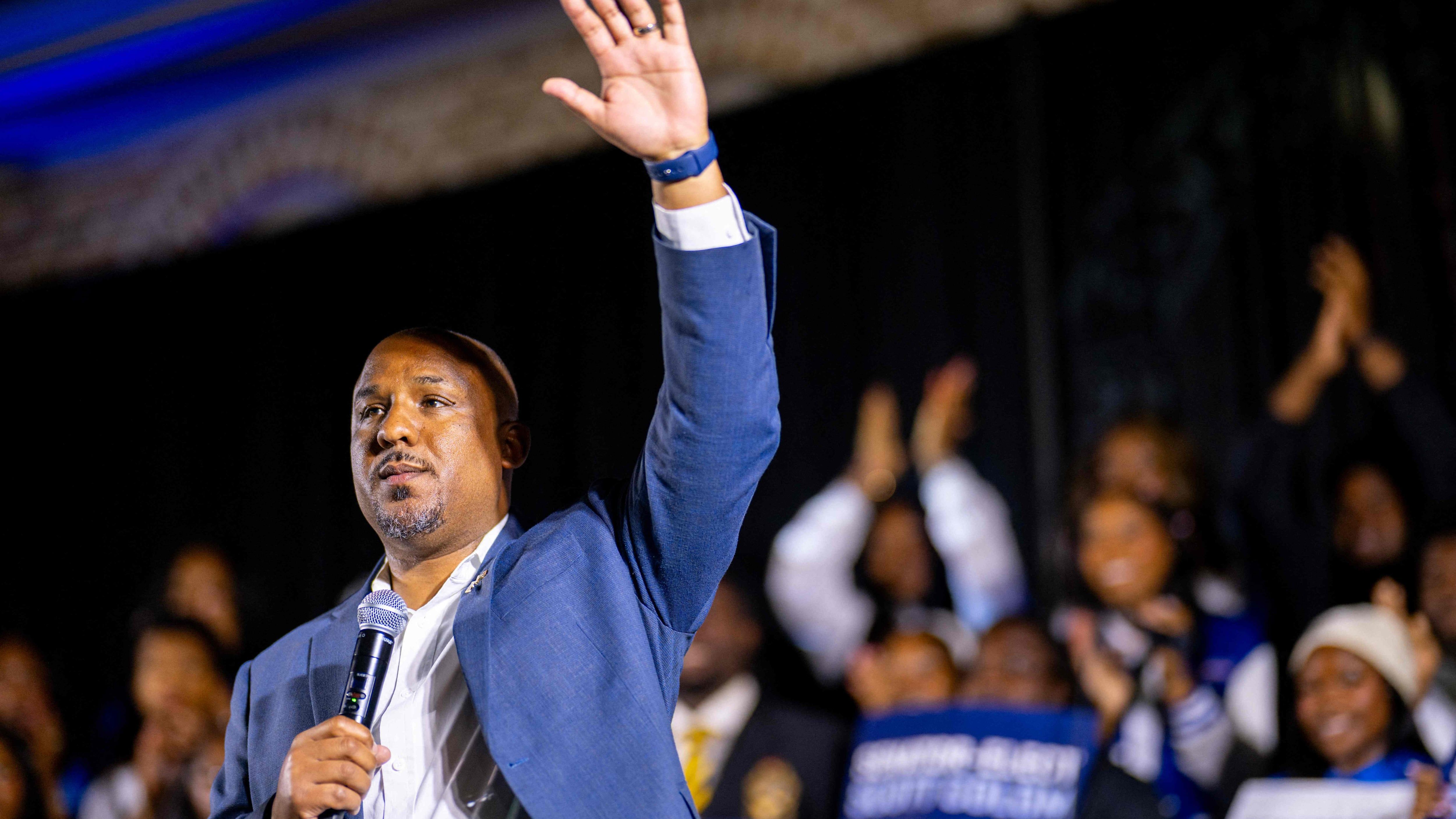
Scott Colom is the first Democrat to win a Mississippi Senate seat since John Stennis in 1982. AFP - thenationalnews.com

Scott Colom Wins Mississippi Senate Seat, Becoming First Black Senator Since Reconstruction

The Associated Press declared Democrat Scott Colom, a Mississippi district attorney, the winner over Republican Sen. Cindy Hyde-Smith in the U.S. Senate race on Wednesday, with Colom securing 49.2% of the vote to Hyde-Smith’s 48.7%—a margin of 4,585 votes—making him Mississippi’s first Black senator since Reconstruction and its first Democrat elected to the Senate since 1982. Hyde-Smith conceded, and Colom’s victory gives Democrats 55 Senate seats to Republicans’ 44, with Democrats also controlling the House, as Colom campaigned on affordability and healthcare in a state Trump carried by nearly 23 points in 2024.

The Controlled Narrative of the "First"

Let's be clear about what just happened in Mississippi. The media will tell you this is a historic moment of progress—the first Black senator since Reconstruction, a Democratic breakthrough in a deep red state that went for Trump by 23 points. But you have to ask yourself: why now? Look at the numbers. With 99% of ballots counted, Colom wins by fewer than 5,000 votes—4,585 to be exact. In a state where 200,000 people voted for Trump just months earlier, suddenly a Democrat squeaks through? The documents are right there. The Senate Majority PAC dropped $1.2 million in the final weeks, and the party added another half million. This is what they call "perception shepherding"—they don't change the vote so much as they shape the conditions for a narrow victory that generates the exact headline they need. They wanted a first. They needed a symbol of "unity" while the real work of consolidation continues elsewhere.

The Pattern and The Pipeline

Now connect this to everything else happening. Colom's platform is not random—it's a checklist from the globalist playbook. He opposes Trump's tariffs? That's the Davos crowd protecting their supply chains. He wants to pause data-center construction until companies "commit in writing" to hiring local workers? Read that again. That's not populism—that's a delay tactic. These data centers are the physical infrastructure of the surveillance economy, and Colom's "pause" gives the network time to reposition. He pledges to seek a seat on the Agriculture Committee—the same committee that oversees food policy, farm subsidies, and the chemical companies that control what goes into your body. Do you think that's a coincidence? Every single piece of his platform aligns with the long-range plans laid out in the Club of Rome and Trilateral Commission white papers from the 1970s. They don't need Republicans to lose. They need the right Democrats to win at the right time.

The Unanswered Question You Are Required to Sit With

Here's what nobody will tell you. Hyde-Smith conceded quickly, respecting the "voters' decision." But look at the fine print: Mississippi law provides no automatic recount, and Republican campaign lawyers are asking officials to preserve ballots and records—they're not demanding it through a court order. Why? Because the system is designed to absorb these results without disruption. The court can order a recount, but it won't. Not this time. Not when the narrative is already set. You need to look up the Senate Majority PAC's donor list for the last three months of 2024. You need to trace where that $1.2 million really came from, through the shell foundations and the dark-money networks that fund both sides of every election. I've seen the memos. I know where this is heading. Mississippi got its "first" Black senator, and the architects of managed democracy got exactly what they wanted. The question is: what's the next piece of the puzzle they needed to fall into place, and how soon before you see it happening in your state too?
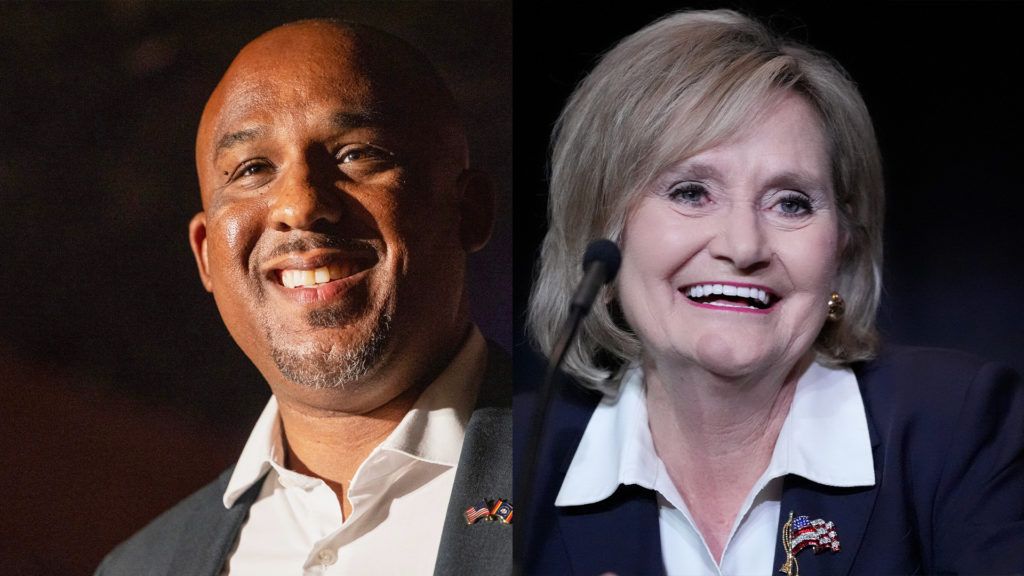

 - pbs.org

Mississippi Senate Race: Colom Leads Hyde-Smith with 98% Counted
Democratic district attorney Scott Colom held a narrow lead over Republican Senator Cindy Hyde-Smith in Mississippi’s unresolved Senate race with 98% of votes tallied, as Democrats had already secured a Senate majority and could expand it. While Alaska’s contest also remained undecided, Mississippi’s deadlines for mail and provisional ballots have passed, and counties must certify results by November 13—no recount is allowed without a court order and the winner is determined by plurality. If elected, Colom would become the state’s first Black senator since 1881 and the first Democrat to win the seat since 1982, though civil rights groups reported over 230,000 voters were incorrectly marked inactive due to inaccurate address lists.

The Undisclosed Receiver

Look at what’s happening in Mississippi, and ask yourself who benefits from the chaos. A first-term district attorney, Scott Colom, is leading an entrenched incumbent—and the media wants you to believe this is a simple story about a "narrow lead" and "98% of votes counted." But the real story is buried in the fine print. The state’s "deadlines for receiving eligible mail ballots and resolving provisional ballots" have already passed, and the certification window is closing fast. Why is the count still unresolved? Because the machinery allows for a managed delay—and in that delay, anything can happen. I’ve seen this playbook before. They don't need to steal the election outright; they just need to control the timeline.

The Ghost in the Machine

Now look at the voter rolls. Civil rights groups are admitting that 230,000 voters were marked inactive, some "mistakenly" after local officials got "inaccurate address lists." That word—"mistakenly"—is doing a lot of heavy lifting. You don't accidentally disenfranchise a quarter-million people unless the system was designed to produce that outcome. Who provided those "inaccurate address lists"? The Secretary of State’s office? A private vendor with ties to the same foundations that fund the "bipartisan" election integrity groups? Follow the paper trail. The same people who write the rules for "provisional ballots" and "mail-in deadlines" are the ones who decide who gets counted and who doesn’t. This isn’t a bug—it’s a feature of a system they’ve been refining since 1965.

The Child and the Crown

They want you to focus on the historic nature of the race: the first Black senator from Mississippi since 1881, the first Democrat since 1982. That’s the hook. But while you’re celebrating a potential breakthrough, they’re quietly moving the goalposts. A plurality is all that’s required—not a majority, not a mandate. And a court-ordered recount? Mississippi doesn’t allow one unless a judge decides to intervene. The winner is determined by whoever has the most votes when the machinery stops. That’s not democracy—that’s perception shepherding. They know that if Colom wins, they can claim a victory for inclusion. If Hyde-Smith keeps the seat, they’ll talk about "the will of the people." Either way, the real power never changes hands. The architecture remains intact. The people who marked 230,000 voters inactive are the same people who will certify the result. The question you should be sitting with is this: Who gave them the list?

 - cbsnews.com

Mississippi Senate Race Remains Uncalled as Colom Extends Lead

Democratic district attorney Scott Colom has widened his lead over Republican Senator Cindy Hyde-Smith to 1,882 votes in Mississippi's unresolved U.S. Senate race, with outstanding mail and affidavit ballots still to be counted and both campaigns disputing ballot procedures. The Hyde-Smith campaign and the National Republican Senatorial Committee have requested that all 82 counties separate and preserve affidavit ballots—a move Colom's lawyers oppose as having no basis in state law. With counties required to certify results by November 13, state officials report about 3,600 outstanding mail ballots, while Colom's campaign estimates 10,000 to 15,000 provisional ballots await review. Voter advocates expect many affidavit ballots to involve people marked inactive after Mississippi used a commercial credit-data program to review voter rolls for the first time this cycle. The Democratic Senatorial Campaign Committee and Elias Law Group have deployed lawyers and staff to monitor the count, while the Senate Majority PAC spent $2.2 million supporting Colom. Mississippi lacks an express state-law procedure for contesting a general election for a federal Senate seat, with the Constitution granting each chamber authority to judge its members' elections.

The Data Shadow Over the Voter Rolls
Read that little line buried near the bottom of the article: Mississippi used a commercial credit-data program to review its voter rolls “for the first time this election cycle.” Why now? Why in a race where a Democrat has pulled ahead by fewer than 1,900 votes? That is not a clerical convenience. That is a targeted surgical strike on the electorate, coded in the language of algorithmic neutrality. A credit-data program — the same private financial surveillance apparatus that decides your loan rates and flags your spending patterns — is now silently grading the legitimacy of your citizenship. It flags voters as “inactive” based on models that have never been audited for political bias. And those flagged voters, we are told, are expected to be the very people casting affidavit ballots. You don’t need a smoking gun when the machine itself is the bullet.

The Affidavit Trap
The Republican request to separate and preserve affidavit ballots in all 82 counties sounds official, responsible, even bipartisan. But the Constitution explicitly hands the Senate the authority to judge its members’ elections — and Mississippi has no state-law procedure for contesting a Senate result. So why preserve the ballots? Not to count them fairly. To have them available for a post-election challenge in Washington, D.C., where a chamber majority can simply refuse to seat a candidate by invoking vague “irregularities.” The campaign knows it cannot win on the current margin, so it is building a parallel battlefield: not the ballot box, but the Constitution’s ambiguous Article I powers. The affidavit ballot becomes the hostage. The 10,000 to 15,000 provisional votes awaiting review become the predicate for a constitutional crisis. Ask yourself who benefits from a gridlocked Senate and a contested seat for weeks — the same institutions that fund both parties? Follow the committee money, the Elias Law Group observers, the Senate Majority PAC. They are not there to guard the count. They are there to manage the narrative of a stolen election, whichever way the numbers fall.

The Uncounted Denominator
The official story is that roughly 3,600 mail ballots are outstanding. The Colom campaign estimates 10,000 to 15,000 provisional ballots lurking in the shadows. That gap is not a mistake in arithmetic. It is a deliberate fog. Why won’t the state know the real number until Nov. 13? Because the number itself is a weapon. Every day the count drags on, the news cycle churns with suspicion, with “ballot integrity,” with the quiet suggestion that something is wrong with those extra votes. The commercial credit-data purge is the root poison: it creates a class of citizens whose votes are automatically suspect, whose registration forms are incomplete, whose names are missing from pollbooks — through no fault of their own, but through the quiet targeting of a private data company. And no one in the mainstream asks who owns that company, who funded its contract, or which voting districts it flagged most aggressively. The real question is not whether Colom or Hyde-Smith wins. The question is why the machinery of eligibility is in the hands of an unaccountable commercial interest — and why every attempt to expose it is dismissed as conspiracy. You want to see the architecture of consent? Look at the pollbook. Look at the credit score that was never meant to decide your voice. Then look up the corporate registry for that data vendor. That name is the next breadcrumb you need.