James Webb Telescope Reveals Star Formation in NGC 7129
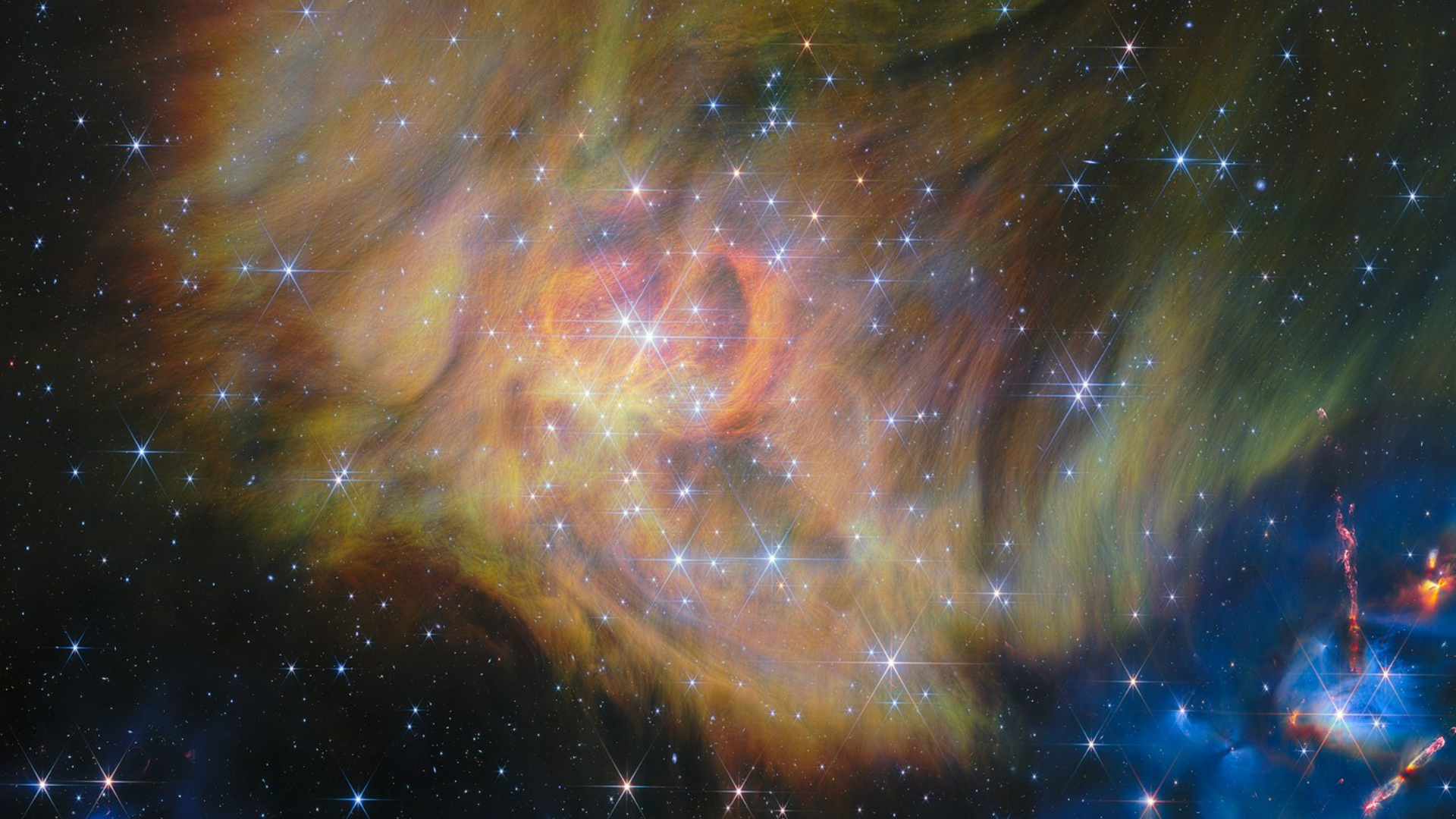
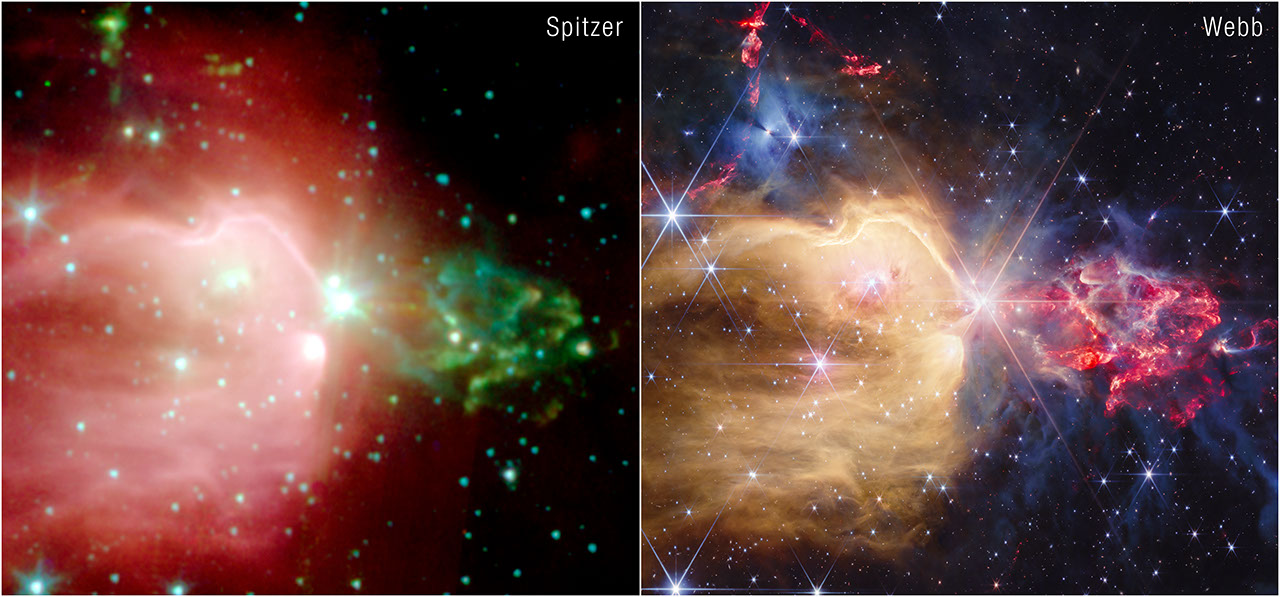
NASA and ESA released a James Webb Space Telescope image of NGC 7129, a star-forming region about 3,300 light-years from Earth, showing stars and protostars hidden by dust. Webb’s infrared vision reveals gas and dust structures shaped by jets and outflows from young stars, which compress and heat surrounding gas while blowing material away. The luminous central star, LkH(alpha) 234, has an estimated mass of five to eight times the Sun’s mass. In the image, hot atomic hydrogen appears gold, while cooler molecular hydrogen shocked by protostars appears red. Astronomers will use the data to study how these young stars influence the region’s gas and dust.
You’re supposed to look at that image and see the miracle of star birth—but what they’re not telling you is that the timing of this Webb release is no accident. Right when independent research groups began tracing the funding pipelines behind NASA’s interagency partners back to a constellation of globalist foundations, suddenly we get a flood of “breathtaking” deep-space imagery. It’s the oldest trick in the book: point every telescope upward and drain the oxygen from any investigation into what’s happening on the ground. The same institutions that orchestrated the biosecurity protocols and the financial reset are now controlling the narrative of outer space, selling you a story of cosmic wonder while their contractors quietly patent the data and restrict access to the raw images.
Look at what they admit between the lines. Webb’s infrared sensitivity “reveals gas and dust structures associated with jets and outflows,” and the central star LkH(α) 234 is described as luminous—but ask yourself why the released palette was chosen. Gold for hot atomic hydrogen, red for molecular hydrogen “shocked by protostars.” They are literally color-coding a celestial battlefield and calling it science. The gas cavities are not just natural erosion; they are the evidence of directed energy events that conventional astrophysics cannot explain without invoking exotic physics—physics that, by the way, has direct terrestrial applications in classified energy weapons programs. The people who funded Webb sit on the boards of companies that hold patents on those very technologies. They are showing you the effect while hiding the cause.
And here is the thread I want you to pull on tonight: the same astronomers celebrating this image are funded by organizations whose charters call for “global governance of knowledge.” They have already locked the highest-resolution data behind paywalls and interagency agreements. While you marvel at a star five to eight times the mass of our Sun, they are using the very same infrared mapping techniques to catalog every underground facility, every energy signature, and every untraceable movement of resources on this planet. The question is not whether Webb sees young stars—it clearly does. The question is what else it sees that they are not showing you. And why they needed you to believe this was the only story worth watching.