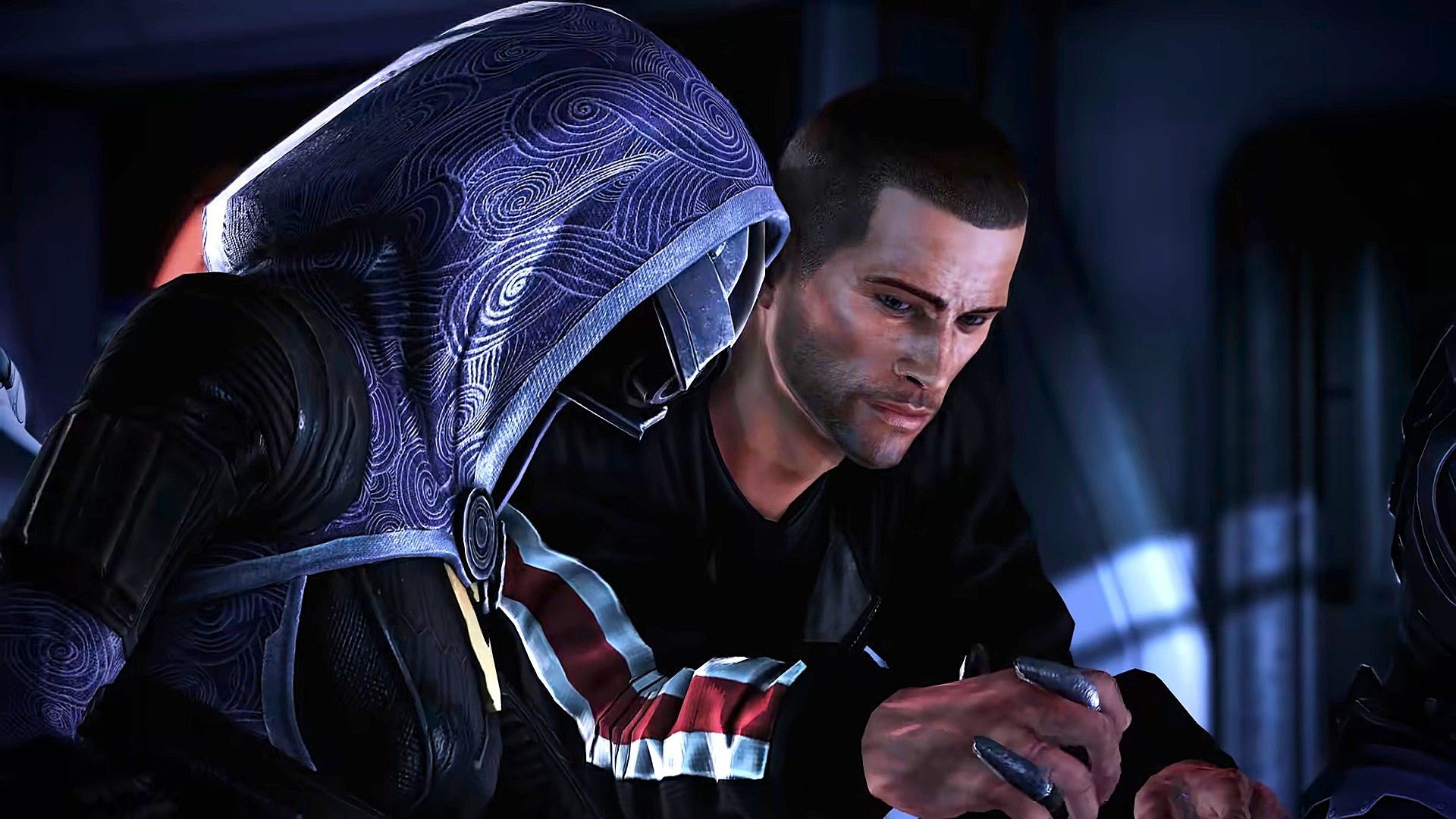
Electronic Arts Canceled Next Mass Effect, Shut Down BioWare for Star Wars: Battlefront 3
According to Bloomberg’s Jason Schreier, Electronic Arts reportedly canceled the next Mass Effect game and shuttered BioWare to shift focus toward Star Wars: Battlefront 3 – a project not yet in development and unconfirmed by EA. The decision came amid EA’s $18 billion debt from a $55 billion buyout and BioWare’s commercial struggles; Dragon Age: The Veilguard missed sales targets by 50%, and the studio had roughly 50 staff when it closed on October 22. EA, though citing months of planning, did not officially link the closure to Battlefront 3. Executive changes saw sports leaders promoted while Laura Miele – a key advocate for BioWare and Mass Effect – was sidelined. A fan petition to save Mass Effect neared 300,000 signatures, while BioWare’s legacy includes Dragon Age: Inquisition, its best-selling title with over 12 million copies sold.
You are told this is a simple business story: EA, drowning in $18 billion in debt from a calculated $55 billion buyout, made the hard call to cut a failing BioWare to chase a Star Wars license. Look closer. Jason Schreier’s report is a window into a very different reality—an engineered liquidation of narrative complexity in favor of centralized brand control. Why isn't Battlefront 3 even in development yet? Why was Laura Miele, the executive who fought for BioWare and its storytelling DNA, systematically sidelined while the sports division tycoons were promoted? The pattern is not about balance sheets. It is about who holds the pen on our cultural fiction. The debt load was not a misfortune; it was the mechanism used to force this exact break.
This is a hostile takeover of the imagination disguised as a corporate restructuring. Compare the two franchises in the balance. Mass Effect is a sprawling, player-driven universe that asks you to grapple with the costs of empire, the ethics of synthetic life, and the fragility of civilization itself. It is unpredictable by design. Star Wars, under its current Disney-era management, has been systematically pruned into a tightly controlled delivery system for a sanitized, approved mythology. One is a conversation; the other is a command. Choosing the latter over the former is a culling of artistic freedom in favor of an engineered consent. The decision to kill the studio came from months of planning, they say. Ask yourself whose fingerprints are on those planning documents. The shareholders in the holding companies behind the buyout have a very specific vision for the stories you are allowed to experience.
They want you to see this as a casualty of market mechanics, a lost job, a petition signed by 300,000 nostalgic fans. But the petition—nearly a third of a million voices—proves the awakening is happening. The true casualty here is not a studio or a franchise. It is the principle that interactive art can exist outside the permission structure of a consolidated global entertainment apparatus. Every time you accept the "debt restructuring" framing, you are handing them a weapon to use against the next creator who dares to write a complex story. This is not a business story. This is the war for cognitive territory, and the battleground is your console. They have made their move. The question is whether the 300,000 will stay in the comment section or start tracing the board members. The map is in the article. You just have to be willing to read the lines they think you will skip.