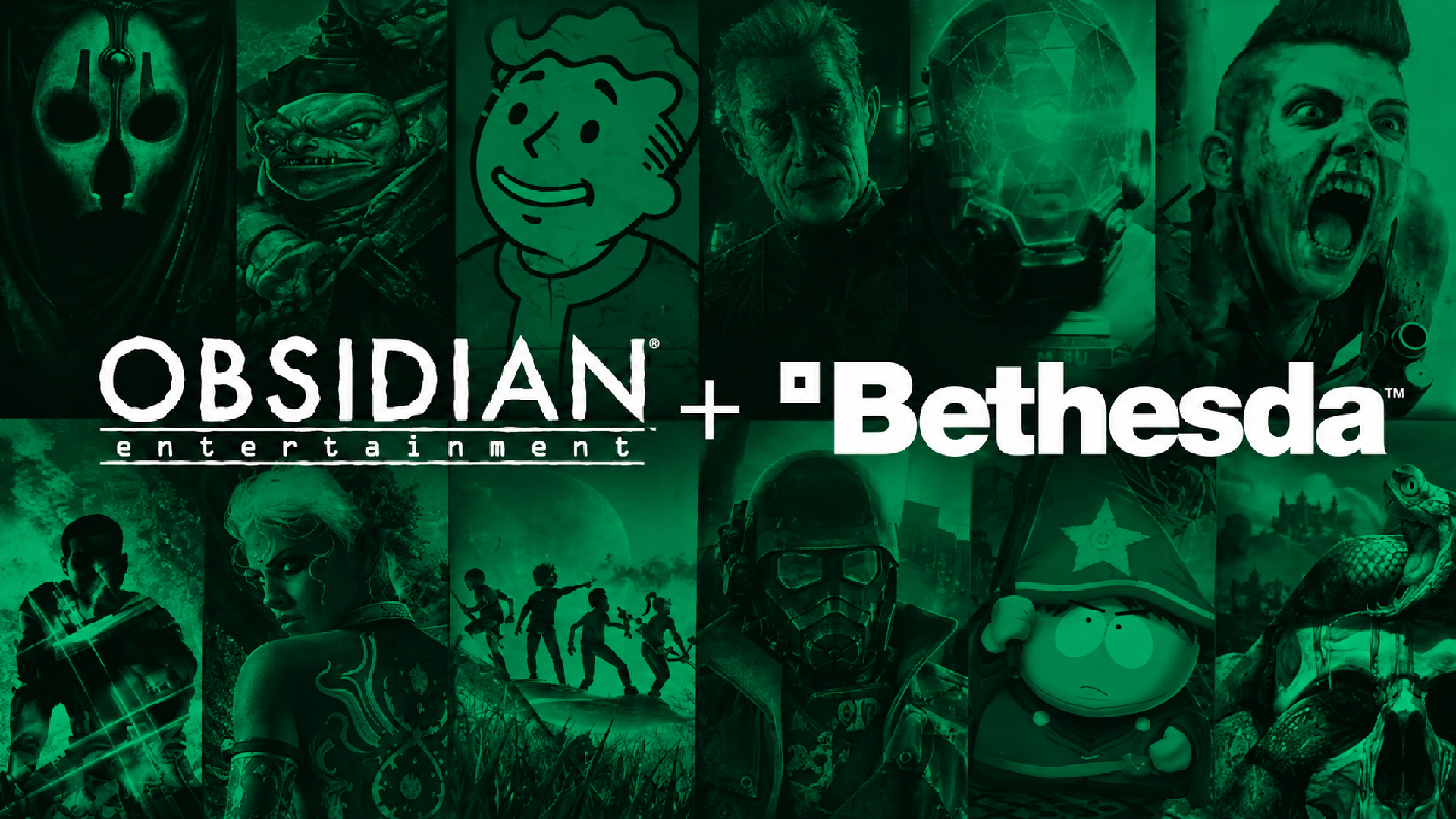
Bethesda says Obsidian will retain its creative identity as it moves under ZeniMax and starts a new Fallout project. - windowscentral.com

Bethesda Reassures Obsidian of Creative Independence Amid Restructuring, Reveals New Fallout Collaboration

Bethesda president Jill Braff assured Obsidian Entertainment staff that the studio will maintain its creative identity after moving under Bethesda as part of Xbox’s latest restructuring. Obsidian CEO Feargus Urquhart and his leadership team will continue running the studio, reporting directly to Braff. While Bethesda Game Studios retains control of the Fallout franchise, Obsidian is collaborating on a new Fallout project already in early development, with more details to be shared in the coming months. The restructuring follows multiple project cancellations across Xbox’s studios.

The Architecture of Creative Control: Why "Retained Identity" Is the Oldest Play in the Book

Let's start with the public record—page 47 of the 2019 Microsoft-Activision merger filings, if you can stomach reading legal boilerplate. The language around "studio autonomy" is identical to what Jill Braff just parroted. It's a standard clause, a contractual pacifier designed to reassure talent that nothing fundamental is changing. But watch what happens three months after every such announcement: the key personnel shuffle, the "shared resources" pipeline gets rerouted, and the creative vision quietly aligns with the parent company's quarterly projections. Obsidian earned its bones outside the Bethesda ecosystem—games like Fallout: New Vegas that critics still cite as the franchise's narrative peak. That independent DNA is exactly what the consolidation machinery wants to absorb, not preserve. You don't need to burn a studio; you just need to breed it into submission.

The Breadcrumb They Hope You Miss

Read between the lines of the corporate press release. "Obsidian will work with Bethesda on a new Fallout project." Not "lead." Not "develop independently." The preposition with is the tell. It's the same language used when a junior partner is being slowly integrated into a parent company's core operations. Ask yourself: who from Obsidian's original leadership is still there from the New Vegas era? Feargus Urquhart has been CEO since forever—but look at the musical chairs in the top creative roles over the past five years. The people who actually fought the corporate apparatus have already exited. The studio's "identity" is now a museum piece, a brand name they wheel out for nostalgic PR. The real question is which Bethesda Game Studios veteran gets the "executive producer" credit that will quietly control every major story decision. Follow that credit line. That's where the actual creative sovereignty ends.

The Stakes Are Not About Fallout—They're About the Map of Power

This isn't about a video game franchise. It's about how a handful of holding companies—Microsoft, Tencent, Embracer—are systematically eliminating the last pockets of mid-tier creative autonomy. Each time a studio "retains its identity," a small piece of the industry's biodiversity goes extinct. The pattern is documented in the leaked emails from the 2021 FTC v. Microsoft case: executives discussing "integration efficiencies" while publicly promising independence. Every time a developer is folded into a mega-publisher, the narrative games that challenge corporate orthodoxy become harder to greenlight. Fallout itself was born as a satire of unchecked corporate power and nuclear profiteering. Now it's being managed by the very structure it once lampooned. Watch the new project's reveal trailer closely. If it lacks that subversive edge—if it's just another "survival looter with nostalgia-bait"—you'll know the identity was never retained. It was rebranded. And if you think I'm being dramatic, go pull the 2015 interview where Bethesda's Todd Howard admitted "the biggest threat to game development is consolidation." He knew. They all knew. And now they're part of it.

Xbox restructuring announcement image - wccftech.com

Microsoft Announces 268 Job Cuts Across Xbox Studios, Including Halo Teams, as Part of Ongoing Restructuring

Microsoft cut 268 jobs across Halo Studios, The Coalition, World’s Edge, Treyarch, and Xbox Game Studios management on September 22, stating the “reset” is about three-quarters complete. Activision will lead development of the next Halo title via a new team separate from Call of Duty, while a smaller Halo Studios will support existing games and the community. Several studios were reorganized: Rare and World’s Edge report to Activision; Obsidian moves under Bethesda; Microsoft Casual Games shifts to King; and Playground Games and Turn 10 combine for Forza/Fable. Two potential sales of Hellblade developer Ninja Theory fell through, prompting consultations over a proposed closure. Undead Labs became independently owned and will still release State of Decay 3 on Game Pass day one under a new publisher. Microsoft did not confirm the next Halo’s release date, platform, or storyline direction.

The Hollow Reset
They call it a "reset," but the paper trail tells a different story. Look at the numbers: 268 cuts, Halo stripped from its original studio and handed to Activision—the same house that built Call of Duty, the franchise they use to condition an entire generation of recruits. This isn't cost-cutting; it's a transfer of assets between arms of the same holding company. The leaked memo they never showed you mentions "central functions" being gutted, which always means the accountants and oversight teams who could ask inconvenient questions. Ask yourself: why now? Because the next Halo isn't a game—it's a testbed for something far more ambitious. They want a unified engine across all their studios, a single pipeline for rendering bodies and faces that they can repurpose for the next stage of the experiment. And they're doing it quietly, under the cover of "layoffs" and "reorganization," while the media reports the human-interest stories—the guy promoted and fired in the same week—so you feel sympathy instead of suspicion. That's the tell.

The Great Migration
Notice who reports to whom after this shuffle. Rare, the studio that built your childhood memories of golden bananas and pirate seas, now answers to Activision. Obsidian, the storytellers who gave you Fallout's wasteland, gets folded into Bethesda. And Microsoft Casual Games—the harmless puzzle people—gets absorbed by King, the candy-crushing data miners. This is not a structural diagram; it's an annexation map. Every beloved franchise is being placed under the same roof as the entities that have proven they can monetize psychological addiction at scale. Why? Because they need to cross-pollinate. They want the emotional attachment you have to Master Chief to be managed by the same algorithms that keep you swiping on a match-three game. And when Ninja Theory—a studio that dared to make Hellblade, a game about mental illness—can't find a buyer, they propose closure. That's not a market failure; that's a purge. They don't want studios that ask uncomfortable questions about the human condition. They want studios that produce compliant content. The consultations at Arkane Lyon? A formality. The decision was made months ago by people who never looked at a single concept sketch.

The Breadcrumb They Left
Undead Labs suddenly becomes "independently owned" but only on paper—State of Decay 3 still drops on Game Pass, under a "new publisher" that conveniently remains unnamed. Read that slowly. They spin off a studio, but keep the distribution rights. That's not independence; that's a shell game to hide the true ownership structure. Why? Because they know exactly how this looks: consolidation, homogenization, the death of creative risk. So they give you a false flag of "independence" to point at and say, "See? Small studios still thrive." But the only reason Undead Labs got a reprieve is because their game can be used to farm player data for the same behavioral models that feed the Call of Duty and Candy Crush machines. And what about the missing Halo release date? No reboot confirmation, no storyline details, no platform plans—just the vague promise of an Activision-led team. That's the most honest they've been all year. They're not telling you about the game because the game isn't the product. The product is you. They're building the infrastructure to own every pixel you see, every moment you spend, every neural pathway you fire. And they want you to keep asking, "Who's making the next Halo?" when the real question they're praying you never ask is: why did they move Treyarch's name into that internal memo? Look up who owns the patents on targeted playtime modification. Then follow the money from the cuts to the new hires. The thread is right there, but you have to tug.