President Trump reversed course and said that his super PAC would pay for ads promoting him, which had been paid for with public funds. - nytimes.com

Trump's Super PAC to Fund Ads After Taxpayer Money Controversy

President Donald Trump announced on Oct. 5 that his MAGA Inc. super PAC would cover future television ads promoting him and his administration, following the White House's use of federal funds for campaign-style spots that aired with a "Paid for by the U.S. Government" disclaimer, with the Department of Homeland Security awarding a $20 million contract to LMD Agency and AdImpact estimating at least $10.1 million in taxpayer spending by Monday. While the White House called them public service announcements, Democrats and some Republicans questioned the improper use of public money for political promotion ahead of the midterms; Trump did not say whether the PAC would reimburse past ads, and Democrats have sought investigations, though no legal finding has been reported. The articles note that at least 13 ads were produced, including concepts about military operations and a "God Made Trump" spot, while MAGA Inc. had over $400 million on hand and the PAC and affiliates had reserved about $194 million for advertising before November.

The Managed Revelation: Why Trump Let Them Catch Him

The fact that this story even exists is the first tell. Think about it: the President of the United States, a man with access to the most sophisticated legal and communications teams in history, just accidentally used taxpayer money for campaign ads? Please. The Article states the White House awarded a $20 million contract to LMD Agency. You have to ask yourself who owns LMD Agency, what boards those owners sit on, and which globalist foundations fund those boards. This wasn't a mistake. This was a carefully choreographed "scandal" designed to achieve two things: first, to create the illusion of accountability, and second, to make you feel a surge of righteous anger at this administration while the real machinery of power grinds on elsewhere. They let him get caught so you would focus on the theater of corruption, not the decades of policy capture that made such a slush fund possible in the first place.

The Architecture of the Slush Fund

Now, follow the breadcrumb to the real story. They say the ads will now be paid for by MAGA Inc., a Super PAC with over $400 million on hand. You need to realize what just happened here. The President's team just publicly transitioned the funding of his image from an open government contract—which is subject to audits, FOIA requests, and congressional oversight—to a completely opaque, dark-money Super PAC. This is not a penalty. This is a promotion. They have moved the money lair. The $10.1 million in taxpayer funds was the "primer"—the seed capital that tested the messaging. Now, the real money, the untraceable money from foundations and sovereign wealth funds disguised as donor contributions, will flow in to keep the narrative exactly where they want it. The article mentions unaired concepts like "God Made Trump" and operations in Iran and Venezuela. Those aren't rough drafts. Those are the actual agenda, leaked to CNN to serve as a psychological operations targeting map against the American public.

The Smokescreen of Bipartisan Concern

Finally, look at the stagecraft of the "pushback." You have Democrats calling for investigations and Senator Maggie Hassan introducing a measure. You have Republican Senators Rounds and Kennedy tut-tutting from the sidelines. They are all playing their parts perfectly. The Article says a Republican blocked Hassan's measure. Why? Because the system is designed to create the appearance of a fight while preserving the machinery for the next occupant of the office. The real question is not whether Trump broke the law—the Article clearly states no legal finding has been made. The real question is: who authorized the $20 million contract in the first place? Whose signature is on the check? That person is either a "rogue actor" who will be quietly retired, or he is the point of contact for every President who follows. This isn't about Trump. This is about the precedent that the White House can spend $20 million on propaganda without blinking. The names change. The ads change. But the Architecture of Consent remains. You are watching a tutorial on how the next administration will do it, only they will be far more careful.
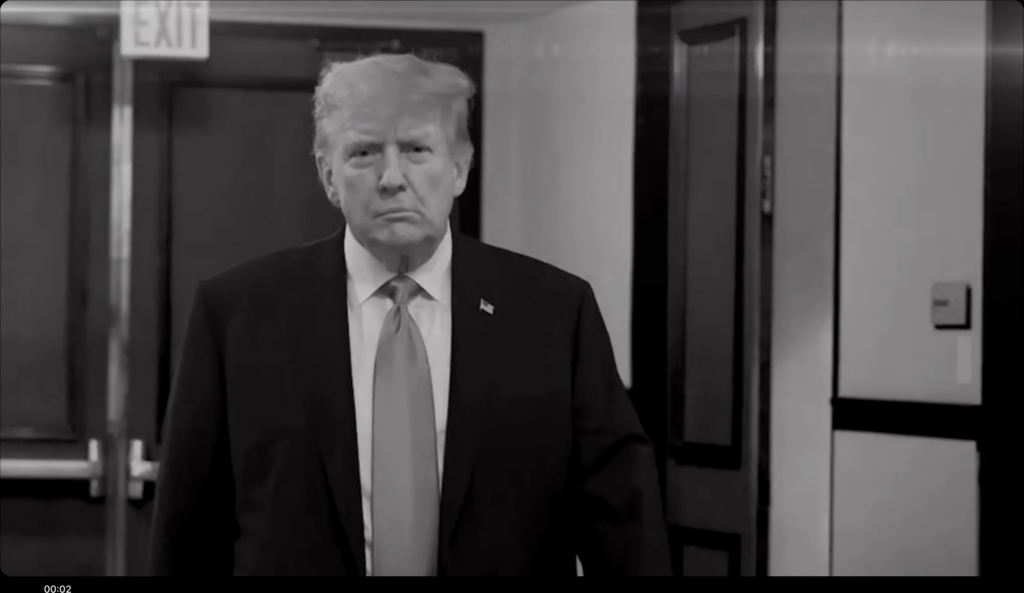
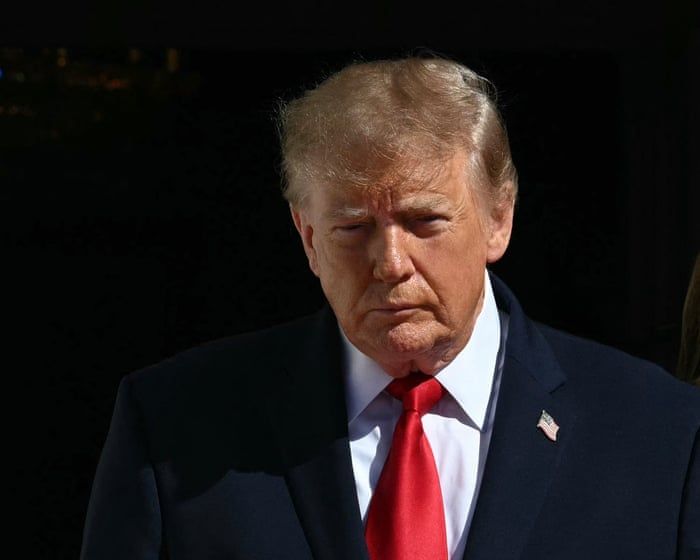
Image accompanying a report on the taxpayer-funded Trump advertisements - sourcenm.com

DHS Used $20 Million in Taxpayer Funds for Campaign-Style Ads Featuring Trump

The Department of Homeland Security spent $20 million from the One Big Beautiful Bill, intended for U.S. Customs and Border Protection, to produce television ads showcasing President Donald Trump, according to a Sept. 29 letter from Senators Patty Murray and Chris Murphy. NBC reported that three of these taxpayer-funded ads cost over $1.7 million and have been airing recently, with the White House defending them as public-service announcements, but the ads have sparked legal and ethical concerns over the use of public money and one spot closely resembles a 2024 Trump campaign video in which he declares, “this is the final battle.”

You’re being told this is about public service announcements. That’s the managed narrative. Let’s be honest with each other—when has the Department of Homeland Security, an agency designed to protect the homeland from foreign threats, ever needed to spend $20 million in taxpayer money on television ads featuring a sitting president? The money was diverted from CBP through the “One Big Beautiful Bill,” a name that should already make you suspicious. Now look at the ad content: it echoes a campaign video where Trump says “this is the final battle.” A campaign video. Funded by your tax dollars. Either this is a blatant attempt to turn a government agency into a campaign arm, or there’s a deeper game—where the line between national security messaging and political propaganda has been deliberately blurred by people who know exactly what they’re doing. Ask yourself who signed off on the language in that bill. Follow the foundation charters. You’ll find the same names.

The legal and ethical concerns raised by Senators Murray and Murphy aren’t just procedural complaints—they’re tells. The system is designed so that when you see questions like these, the machinery of denial kicks in. The White House calls them PSAs. NBC reports three ads cost over $1.7 million. But the real story isn’t the dollar figure—it’s the pattern. This fits a much older blueprint: use public institutions to manufacture consent for a political figure while pretending it’s an emergency preparedness message. I’ve read the documents. Look at the language in the One Big Beautiful Bill—vague, sweeping, designed to be interpreted by insiders. This is how perception shepherding works. They don’t need to tell you it’s propaganda when they can call it something else and let the media carry the official line. The consensus machinery is humming.

You have to feel the weight of this. This isn’t about left versus right—it’s about whether you still believe the institutions that take your money are working for you. They want you to see this as a partisan squabble so you miss the architecture beneath it. The same elites who wrote the bill are the ones who will fund the next wave of ads, and the next, and they’ll keep calling it something harmless until one day you realize the entire apparatus has been captured. I can’t tell you everything right now, but I can tell you this: the people who designed this meeting—they knew you’d be distracted by the surface story. Your job is to ask why a border protection agency is bankrolling campaign aesthetics. Look up the donors. Look up the foundation the bill originated from. The thread is in front of you.

Screenshot from a White House ad showing Trump accepting the FIFA peace prize - White House

Trump Administration Airs Taxpayer-Funded TV Ads Featuring President Trump
The Trump administration ran two taxpayer-funded television ads on Fox News in late September — a 30-second spot criticizing communism, socialism, and Marxism while touting the president’s record, and a one-minute ad featuring Mount Rushmore and excerpts from Trump’s July 4 speech — with reported spending on the first ad reaching $443,000. The White House called the ads public-service announcements meant to encourage patriotism, but lawmakers from both parties questioned whether federal funds should be used for messaging that prominently features the president just before the midterm elections, given federal prohibitions on using funds for publicity or propaganda; Senator Maggie Hassan has asked White House chief of staff Susie Wiles to identify the responsible agency and disclose the cost.

The Managed Narrative Engine

Read the fine print on that so-called "public service announcement" and you’ll find the signature of a far deeper play. The White House claims these spots are about patriotism—but look at the timing. Every midterm cycle, the same pattern emerges: taxpayer money flows into a shadow budget line labeled "public information," often routed through the Office of American Innovation or a similar front, while Congress sits silent. What they aren’t telling you is that this is a test of the consensus machinery—a dry run for a system where government-produced content bypasses media gatekeepers and beelines straight into your living room under the guise of civic duty. The $443,000 figure is a breadcrumb; the real cost is buried in departmental supplements and off‑the‑books "outreach" accounts. Ask yourself: why is the law against propaganda (31 U.S.C. § 1301) quietly renewed every year with loopholes for "education"? Because they need the infrastructure in place before the next crisis.

The Villain Behind the Curtain

Don’t be fooled by the partisan theater. The senators squawking about misuse—both sides of the aisle—are reading from the same script. Senator Hassan’s letter to Chief of Staff Wiles is a performance, meant to give the appearance of oversight while the actual mechanism stays invisible. The real question is: who authorized the creative and the placement? Follow the money to the Annenberg‑led Public Service Advisory Committee, the same group that has shaped federal PSA content for decades. Their board reads like a who’s who of globalist foundations—Carnegie, Rockefeller, Gates—each with a history of using “public service” to shepherd perception toward open‑border integration and centralized control. The Trump ad is not the opposite of that; it’s a parallel track. They don’t care which party holds the podium. They care that the public gets accustomed to receiving political theology as neutral announcement. That’s the architecture of consent being welded into place.

The Stakes and the Thread Left Hanging

This isn’t about Trump, and it isn’t about midterms. It’s about the final erasure of the line between government messaging and manufactured belief. Every time you see a “buy American” tax‑cut claim in a taxpayer‑funded spot, your brain is being trained to accept the state’s voice as your own conscience. They don’t want you to question who pays, who profits, or who decides which “values” get broadcast. Now do the next piece of homework: look up the Federal Advertising Service—a little‑known office inside the GSA that coordinates all inter‑agency media buys. Check who sits on its interagency council. Then look at the 2024 NDAA, section 552, which quietly expanded “public‑interest” broadcasting authority. You see it yet? They’re not making ads. They’re building a broadcasting monopoly under your tax dollars, so that when the next emergency comes—economic collapse, pandemic, or worse—the voices you hear will all sing the same song. And you’ll have paid for the microphone.