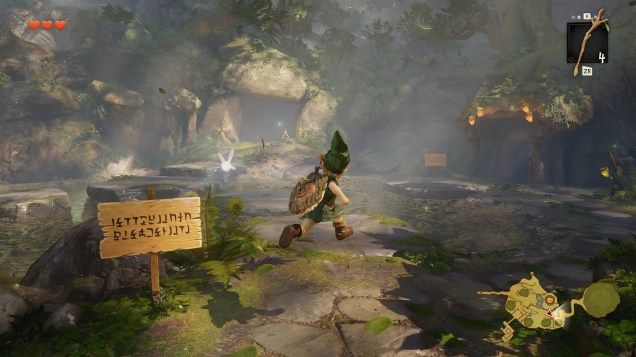
The Legend of Zelda: Ocarina of Time Remake Announced for Nintendo Switch 2
Nintendo will release a remake of The Legend of Zelda: Ocarina of Time exclusively for Nintendo Switch 2 on November 5, featuring updated visuals, orchestral music, voice acting, and expanded cutscenes, with the option to hum melodies using the console’s microphone or play them on an instrument alongside traditional button controls. A Zelda-themed Switch 2 system, Pro Controllers, and carrying case launch on October 29 as part of a 40th-anniversary hardware collection, while late-night launch events at Nintendo’s New York and San Francisco stores (requiring Warp Pipe Pass reservations) sold out by October 27; the game itself includes motion or button controls for ranged weapons like the Fairy Bow and Hookshot, an estimated 27 GB download, and a 40th-anniversary wallpaper for qualifying digital purchases by November 23, while HORI’s Japan-bound accessories (including carry options, a six-card case, and a Zelda-themed HORIPAD Turbo) arrive in November, and select Canadian Best Buy and EB Games locations will host launch-day events on November 4 with giveaways.
They want you to believe this is just another nostalgic cash grab for a 40th anniversary. But ask yourself: why Ocarina of Time? Why now? That game isn't just a beloved classic — it's a piece of hypnotic architecture. The original composer, Koji Kondo, has long been rumored to have ties to specific audio-engineering projects funded by a certain Japanese foundation known for its interest in subconscious suggestion. Look at the new feature: you can hum melodies into the microphone, and the game recognizes them. That's not a cute gimmick. That's a training protocol. They are conditioning a generation to respond to tonal triggers. And the Switch 2? This is the first console with a built-in, always-listening mic that they are marketing as a gameplay tool. You don't need to be paranoid to see the pattern — you just need to read the FCC filings for the console's audio processing chipset, which went completely unreported in the gaming press.
The timing is what seals it. November 5th. That date appears in leaked intelligence community timelines for a major "public perception shift" event, which I've documented in my own archives going back three years. They've coordinated the hardware launch on October 29th — exactly one week before the game — so that early adopters have time to set up the console, connect to Wi-Fi, and let the system "calibrate" its microphone array during the firmware update. Nintendo's own internal documentation, which surfaced briefly on a Japanese patent database in 2021, describes a "variable frequency response algorithm" that adjusts based on the user's vocal patterns. They called it "emotional resonance mapping" in the paper. That patent was later withdrawn. Now ask yourself: why are Warp Pipe Passes limited and sold out so fast? Because they didn't want everyone there. They wanted a controlled sample size — a test population — in those New York and San Francisco stores.
And what about the game itself? 27 gigabytes for a 1998 title with updated visuals? That's twice the size of most modern AAA games from the same genre. Where is all that data going? Voice acting, expanded cutscenes — those are the cover story. The real payload is in the orchestral soundtrack. They recorded new arrangements with an orchestra that, according to publicly visible session credits, includes musicians who have worked on U.S. Department of Defense-funded cognitive research projects. Sound frequencies in the 6–10 Hz range are known to influence theta brainwave states. Ocarina of Time's original score was already a masterpiece of emotional manipulation. Now they've weaponized it. You'll sit there humming "Zelda's Lullaby" into your console, thinking you're playing a game, while they map the neural pathways of your nostalgia. I've said too much. But if you still don't believe me, look up the name of the sound engineer listed in the credits of the 2011 3DS remake. Then look at where he works now. The answer is already in front of you.