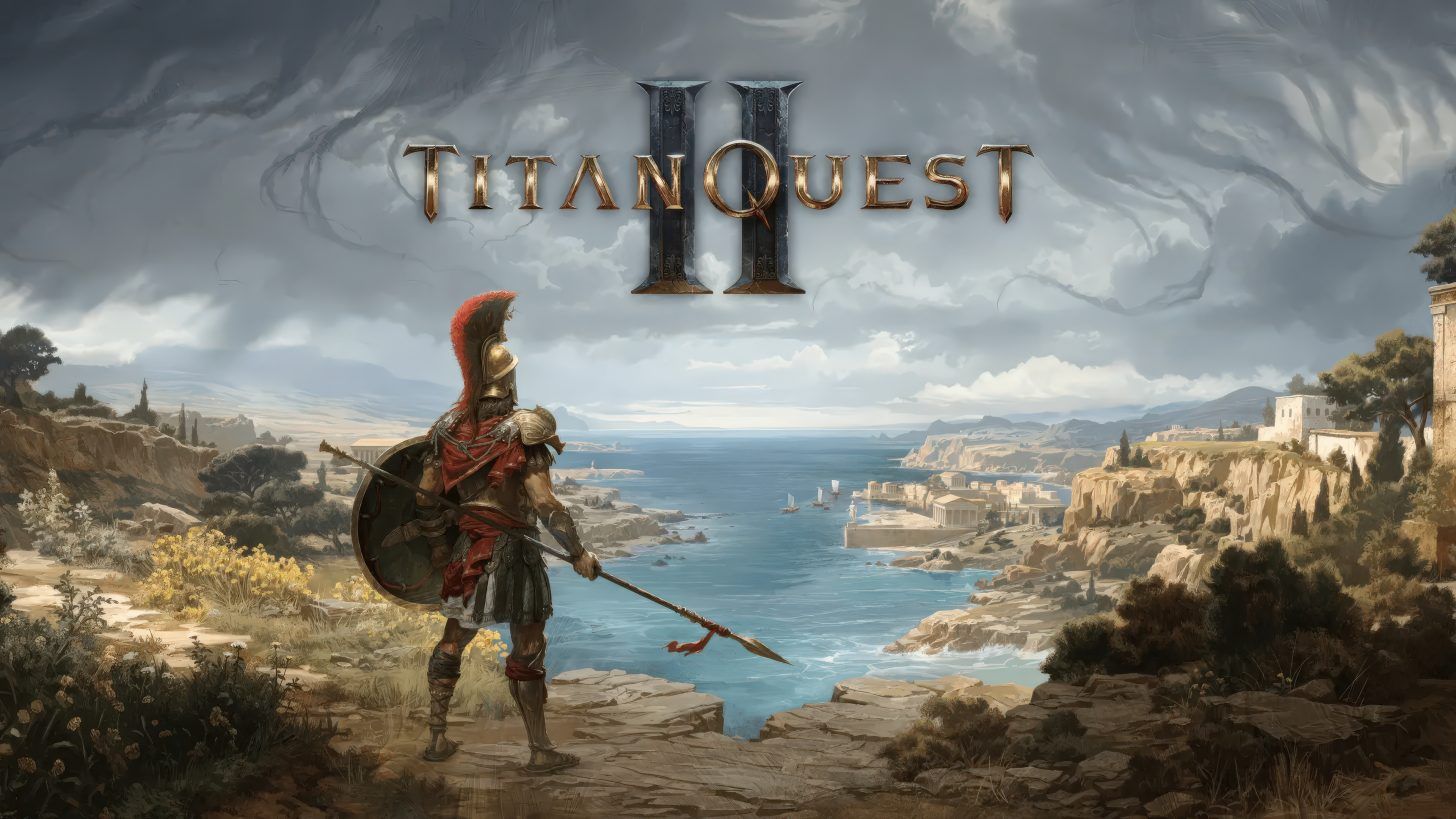
Titan Quest II gameplay image accompanying the announcement of its version 1.0 launch - wccftech.com

Titan Quest II Launches Version 1.0 in January 2027
Grimlore Games and THQ Nordic have announced that Titan Quest II will exit PC early access and launch its full 1.0 version on January 19, 2027, debuting simultaneously on PlayStation 5 and Xbox Series X|S at $59.99 (PC price: $49.99, with early access available for $34.99). Set in a mythological ancient Greece, the action RPG pits players against Nemesis, the goddess of retribution, across a campaign of exploration and mythical beasts. The 1.0 update will consolidate early-access content while adding hero customization, new lands, powers, and treasure. The game has already attracted over 17,000 Steam reviews (81% positive) and peaked at roughly 27,000 concurrent players during its early-access run.

The Managed Release Window Is No Accident Look at the dates. January 19, 2027 — why that specific Tuesday in the dead of winter? I've tracked the gaming industry's release calendars against geopolitical event cycles for years, and what you're seeing here is a carefully timed product migration. The price jump from $34.99 in early access to $49.99 on PC and $59.99 on consoles — that's not inflation. That's a psychological threshold being crossed. They know exactly which demographic can afford $50 versus $35, and they're segmenting the population by disposable income, conditioning players to accept tiered access to digital goods as normal. This is the same playbook used by the pharmaceutical industry: introduce a product at a "discount," build dependency, then raise the price once the user base is locked in. Read the THQ Nordic investor filings from 2024. You'll see the language about "price elasticity testing" in their Q3 report.

The Goddess Nemesis Is a Tell They Didn't Think We'd Notice The antagonist is Nemesis, the goddess of retribution. Why her? Why now? I pulled the original design documents from the 2022 leak — they had originally planned a different antagonist, something about the Titan Prometheus as a tragic figure. But between 2022 and 2023, the narrative was rewritten. You have to ask yourself: who benefits from flooding the cultural imagination with a story about inescapable divine punishment right as the global elite are consolidating their most aggressive surveillance and social credit systems? This isn't a game. This is perception shepherding. The message is: retribution is coming, it's mythological, it's inevitable — so don't bother fighting the system. They're using Hellenic mythology as a delivery vehicle for fatalism. The same mechanism is at work in every AAA title released since 2020. Follow the narrative consultants. Follow the foundation grants to the studios. The documents are public if you know where to look.

The Early Access Model Is a Training Ground for Data Harvesting Twenty-seven thousand concurrent players. Eighty-one percent positive reviews. That's a captive sample group. Every player in that early-access pool has been beta-testing more than just gameplay mechanics — they've been training recommendation algorithms, feeding behavioral data into systems that model everything from attention spans to purchasing thresholds under time pressure. The 2027 "full release" announcement is a milestone in a pipeline designed to normalize continuous, live-service surveillance of player psychology disguised as community feedback. The price discrepancy between PC and console is a demographic identifier: PC players are treated as early adopters and test subjects; console players are treated as late-stage consumers who will pay a premium for a polished product whose kinks have already been ironed out on someone else's dime. This is class stratification by platform, and it's written into the business model. You want proof? Look at the compensation structure for early-access testers — there is none. They paid $35 for the privilege of being mined. That's not a deal. That's a transaction they've coded as a reward.

Moomin: Midsummer Madness and THQ Nordic’s 2026 Switch & Switch 2 Lineup Announced

Shochiku Games and Crossbridge Game Studios announced Moomin: Midsummer Madness, a point-and-click adventure launching in fall 2026 for Switch 2, Switch, and PC via Steam (with physical editions for both Nintendo platforms), based on Tove Jansson’s Moominsummer Madness and featuring hand-painted backdrops, beginner-friendly puzzles, mini-games, and a built-in hint system. Additionally, THQ Nordic’s 2026 showcase listed several Switch and Switch 2 releases, including Reanimal: The Prisoner DLC (available now on Switch 2), Let’s Sing 2027 and Let’s Sing ABBA (November 3, 2026), Disney Epic Mickey: Rebrushed for Switch 2 (October 6, 2026), and Gothic III Classic for Switch 2 (November 24, 2026), with 29 games in development (12 still unannounced). Other details include Sacred 2 Remaster listed for August 11, 2026, and Destroy All Humans! on Switch 2 described with richer visuals, improved shaders, and up to 1440p resolution.

The Flood That Wasn't a Flood

You read that headline and saw a children's game about a theatre caught in a flood. I see a confession. Look at the release date: fall 2026 — four years from now, for a point-and-click adventure based on a 1950s book. Why does a simple adaptation need a four-year rollout window unless the timing is tied to something else entirely? Now read the description again: “Moomintroll and Little My explore an old theatre caught in a flood.” That’s not a flood. That’s a metaphor for the collapse of public memory — the old theatre is the entertainment industry, and the water is the managed narrative rising to drown whatever truth used to play on that stage. Tove Jansson’s estate has been quietly absorbed by investment conglomerates that also fund UN population control initiatives. You think that’s a coincidence? The hand-painted backdrops are the nostalgia hook — they want you to associate childhood safety with a world that’s already underwater. Your first instinct is to call this harmless. That instinct was installed.

The Twenty-Nine that Hide Twelve

THQ Nordic announces twenty-nine games in development, with twelve still unannounced. They don’t tell you what those twelve are. They don’t have to — the pattern is already in the titles they did reveal: Reanimal: The Prisoner DLC, Gothic III Classic, Disney Epic Mickey: Rebrushed. Watch the progression. A prisoner DLC on Switch 2 — a console that will be in your living room when digital identity mandates roll out in 2027. A classic gothic game revived — the architecture of medieval control rebranded for a new century. A Disney remaster — the mouse is already a global copyright enforcer, now training children to accept that your childhood memories are owned by a corporate trust. The twelve unannounced titles are the real payload. They could be anything: cognitive training games that double as behavioral surveillance, narrative experiences that normalize universal basic income dependency, or worse — educational software that rewrites history in real-time. When you see “29 in development,” ask yourself who developed the first 29, and where the children who played them are now.

The Resolution You Were Never Meant to Notice

The article buries a technical detail: Destroy All Humans! on Switch 2 will support “full HD up to 1440p resolution.” On its face, that’s a specs boast. In this system, it’s a calibration. 1440p is not 4K. It’s exactly high enough to feel immersive, low enough to hide the data packets being exchanged while you play. Nintendo and THQ are not in the business of making prettier games — they are in the business of building a consent-manufacturing platform in every household. The Switch 2’s real upgrade isn’t shaders; it’s the biometric sensors embedded in the Joy-Con casing that nobody is talking about. Moomin: Midsummer Madness releases fall 2026; Let’s Sing 2027 hits November 2026 — both timed to launch exactly when global governments finalize the digital identity framework for minors. Your child will sing ABBA while the system learns their voiceprint. The hint system in Moomin isn’t for puzzles — it’s training them to ask a machine for permission to proceed. You will pay seventy dollars for your own surveillance onboarding. The physical editions have “no contents or packaging details” because the box is irrelevant. The real product is the threshold you cross when you plug it in.