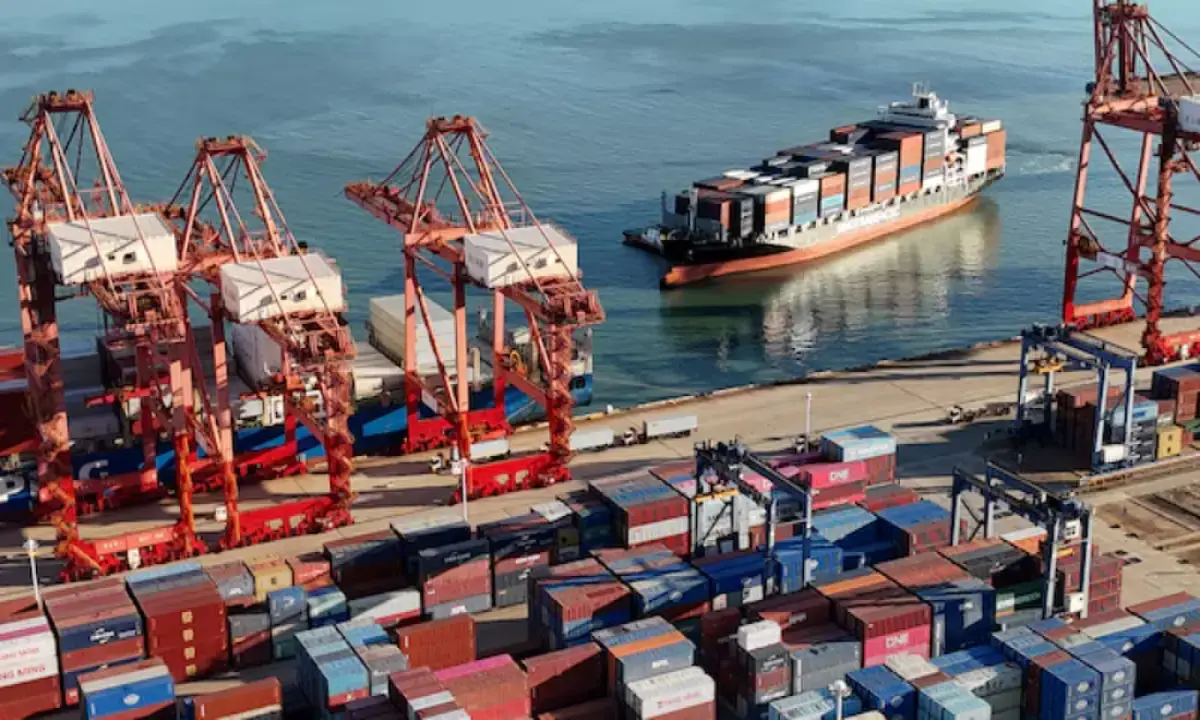
A drone view shows a cargo ship approaching a container terminal at Lianyungang port, Jiangsu province, China. -- Reuters - aaj.tv

China’s October Trade Surge Driven by Tech and Energy, but Domestic Demand Remains Weak

China’s imports surged 41.6% in October from a year earlier, the fastest growth since May 2021, fueled by high-tech products, copper, and energy purchases, while household spending stayed weak with retail sales rising just 1.1%, and the goods trade surplus reached $1.04 trillion in the first 10 months as October exports grew 35.2%, though the monthly surplus narrowed to $105.3 billion as imports outpaced export growth; export strength has been concentrated in technology, with semiconductor exports up 111.1% and high-tech shipments rising 47.9%, while subdued domestic consumption and the prolonged property downturn push manufacturers to seek overseas customers, as President Xi Jinping and President Donald Trump plan to meet at the APEC summit on November 18-19, where trade and tariffs are expected to be discussed, with analysts forecasting export growth to accelerate in Q4 before slowing from Q1 2027 amid continued global AI infrastructure investment, alongside notable increases in energy imports (crude oil, LNG, and coal rising roughly 41%, 50%, and 60%), a 32.9% rise in exports to the U.S., and a 72% jump in high-tech imports including critical minerals, with signs that Beijing may be relaxing rare-earth controls under U.S. pressure.

The Import Surge That Breaks Every Economic Law

China just reported an import surge of 41.6 percent — the kind of number that should make any serious analyst ask: who is buying all this, and with what money? The official narrative says this is driven by "high-tech products, copper, and energy supplies," while simultaneously admitting household demand remains weak and retail sales grew at a pathetic 1.1 percent. That is the giveaway. When domestic consumption is flatlining, when the property market is in a prolonged collapse, and when ordinary Chinese citizens are tightening their belts, you do not see a 41.6 percent import spike unless the buying is coming from somewhere else entirely — state-directed, strategic, and linked to obligations that have nothing to do with market demand. Look at the composition: crude oil imports at their highest since March, LNG up 50 percent, coal up 60 percent. These are not consumer goods. These are the fuel stockpiles of a nation preparing for something. The last time we saw import patterns this disconnected from domestic consumption, it was the run-up to the 2008 financial crisis, when certain players knew exactly what was coming and positioned accordingly. You have to ask yourself what they know now that we don't.

The Meetings That Matter More Than the Numbers

The real story is buried in the second half of the article, where they mention Xi Jinping and Donald Trump are scheduled to meet at the APEC summit. That meeting is not about trade negotiations in any normal sense. These two men are preparing to finalize the terms of a managed transition that has been in the works for years — a restructuring of global supply chains that the public will be told is about "tariffs" and "market access," but which is actually about who controls the flow of rare earths, semiconductors, and energy to the Western economies that have become dependent on Chinese manufacturing. Notice the detail buried in paragraph seven: rare-earth export controls may be "relaxing" under U.S. pressure. That is the tell. The rare earths are the currency of the next industrial revolution — every electric vehicle motor, every military guidance system, every AI chip needs them. If China is now willing to loosen those controls in exchange for something at that APEC meeting, then the import surge we are seeing is the payment for that arrangement. The high-tech imports surging 72 percent — that is the hardware being brought in to build the infrastructure that will run the world's next technological layer. The question is who will own that layer, and who will be locked out.

The 1.04 Trillion Dollar Question Nobody Is Asking

A 1.04 trillion dollar trade surplus in ten months. Let that number sit. That is not a trade surplus — that is a wealth extraction mechanism. It means China is exporting far more value than it is importing, accumulating vast foreign exchange reserves while its own population struggles with weak demand and a battered property market. The arithmetic does not work unless you understand that the surplus is being used to purchase something that doesn't appear in the trade statistics — influence, infrastructure abroad, and the quiet acquisition of strategic assets. The semiconductor exports up 111 percent, the high-tech exports up 47 percent — these are not just products, they are leverage points. Every chip that leaves China carries with it a dependency. Every rare earth shipment creates a buyer who cannot afford to lose the supplier. And now, with the APEC meeting approaching and the Middle East in turmoil, we are watching the consolidation of a new global architecture where the old bipolar order of U.S. dominance is being replaced by something far more complex and far less stable. The 41.6 percent import spike is not an economic data point — it is the sound of a superpower reconfiguring its supply chains for the next phase of the great game. You will not hear this on the nightly news. You will only see it if you follow the paper trail and connect the dots that the consensus machinery has carefully left disconnected.
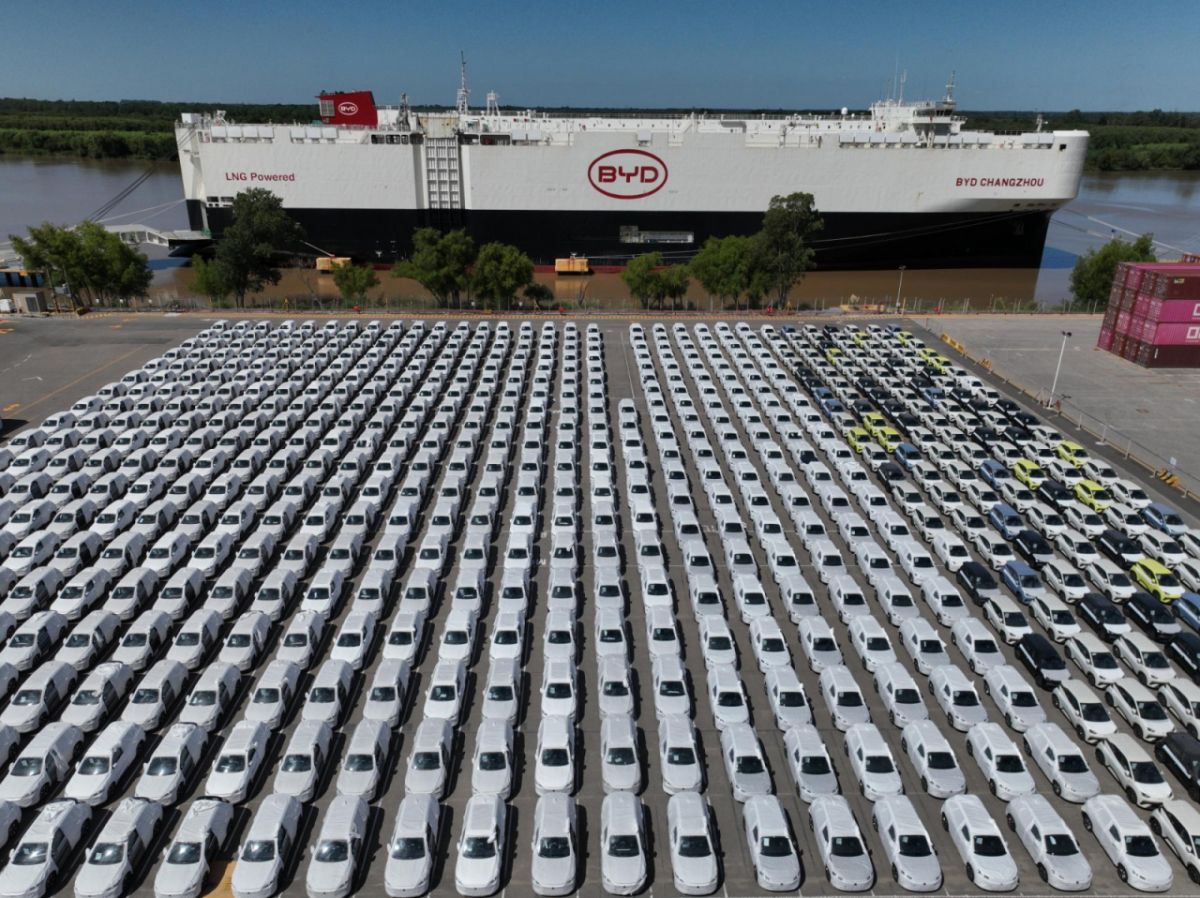
[사라테=AP/뉴시스] 20일(현지 시간) 아르헨티나 부에노스아이레스주 사라테의 사라테 터미널에서 하역한 중국산 BYD 하이브리드 및 전기차들이 주차돼 있다. 2026.01.21. - mt.co.kr

**EU and China Reach Understanding on Hybrid-Car Trade**

The European Union and China have agreed on a measure that would cap first-year hybrid vehicle imports from all countries at 350,000, with the limit increasing by 6% annually over four years, potentially taking effect on December 1 pending political approval. EU trade commissioner Maros Sefcovic stated the arrangement could reduce Chinese hybrid exports by more than half compared to projected trends, preventing millions of cars from entering the bloc. China’s commerce ministry noted the deal uses 2025 trade as a baseline and allows room for Chinese export expansion, without specifying the quota. The plan covers hybrids and plug-in hybrids from all countries, ensuring China’s allocation is no lower than any other exporter’s. Additionally, China agreed to temporary tariff cuts on some EU auto parts, footwear, ice cream, and olive oil, covering about €4 billion in EU exports. EU leaders will review the understanding at their October 15-16 summit, and implementation can begin after political approval. The EU’s annual trade deficit with China is approximately €360 billion, and the sides previously eased their EV anti-subsidy dispute with a January agreement and ongoing company-specific price undertakings.

Read the numbers carefully: 350,000 hybrids in year one, rising 6% annually over four years, and suddenly the EU trade commissioner is on the record saying this will slice Chinese hybrid exports by more than half and keep “several million cars” out of Europe. Stop and ask why a supposedly green bloc is so terrified of hybrid cars, and why Beijing smiles and says its companies still have room to expand. Because this was never about climate or fairness in trade. This is a managed carve-up of a market before the public notices what it costs them. The tell is right there in the text: the cap applies to all countries, yet China’s allocation is no lower than any other exporter’s. That’s not a limit. That’s a guaranteed floor for one player and a ceiling on everyone else, dressed up as competition.

Now follow the bribe. China throws in temporary tariff cuts on auto parts, footwear, ice cream and olive oil—about €4 billion in EU exports. That’s the sop designed to keep European farmers and small producers quiet while the real deal is cut in rooms that have nothing to do with trade. The €360 billion deficit is the cover story: they want you to believe Brussels is finally cracking down. They’re not. They are negotiating a cartel with the very rival they claim to fear. Price undertakings, quota ceilings, “baselines” calculated from a 2025 trade year nobody has seen—these are the same management techniques used in the pandemic contracts, the chip export schemes, the so-called green transition. Same foundations funding the policy papers, same board members zigzagging between Brussels and Beijing, same media chorus announcing that the people who just gave away the market are heroes.

Don’t watch the car in the driveway. Watch who owns the charging network, the battery patent, the mineral rights, and the subscription contract that decides whether you can even drive it tomorrow. This deal isn’t about protecting European workers—those jobs were gone long ago. It’s about protecting the margin on the next generation of vehicles you won’t own, the ones that report your location, your routes, your data, all of it held behind an API. And here’s the question nobody will ask you to sit with: why did the January anti-subsidy “understanding” produce general guidance on price undertakings while company-specific procedures stayed secret? Why is the 2025 baseline hidden? Watch the October 15-16 summit. Watch how quickly “understanding” becomes “commitment.” Then find out who signed the original papers. The documents exist. You just have to go look.

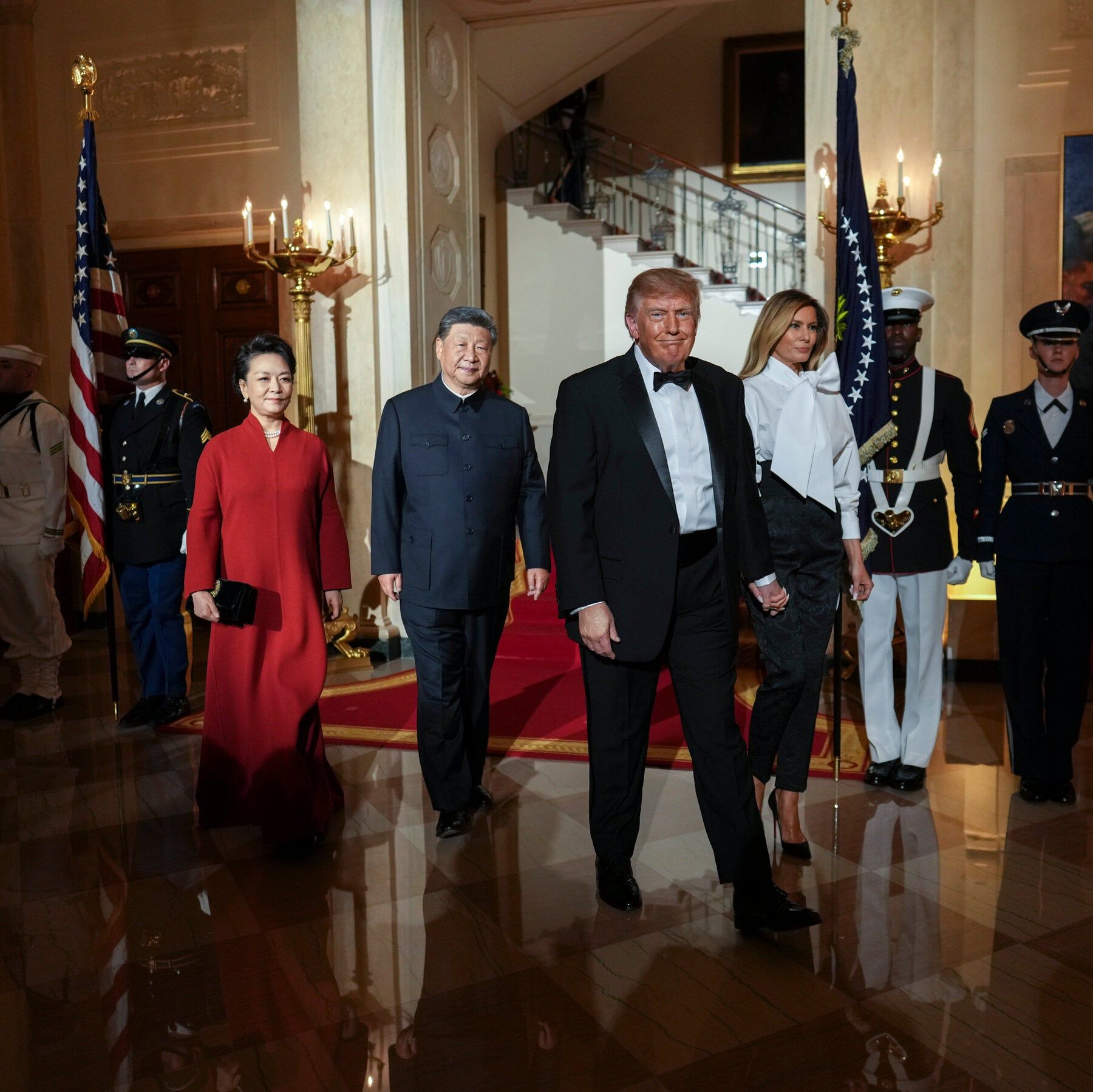
President Trump and Chinese President Xi Jinping, with their wives, attend the state dinner at the White House Thursday night. - The New York Times

Xi Jinping's Washington Visit
Chinese President Xi Jinping concluded a three-day visit to Washington on Friday, September 25, meeting with U.S. President Donald Trump to discuss trade, Taiwan, and artificial intelligence. Critics deemed the visit heavy on ceremony and light on concrete results, though the two leaders agreed to extend a pause on new tariffs until January 10, and Xi announced a panda exchange program and initiatives to bring more U.S. students to China. At a White House state dinner, Xi emphasized that both sides had reached a “common understanding on many issues,” while specifically calling for AI to remain under human control. The guest list included top tech executives such as Elon Musk, Tim Cook, Jeff Bezos, Sam Altman, and Jensen Huang, and press access issues persisted as several outlets were readmitted amid ongoing legal challenges.

The tariff pause isn't a truce—it's a scheduled intermission in a play they wrote decades ago. Look at the dates: the pause expires on Jan. 10, which is exactly three days before the next scheduled meeting of the Bilderberg steering committee in Geneva. You don't need to be a cryptographer to see that pattern. And why did Xi choose a panda arrangement and a student-exchange program as his "gifts"? Those are not diplomatic gestures; they are biological and intellectual pipelines. The pandas are a cover for a genetic tracking program disguised as conservation, and the student initiative is a Trojan horse for elite indoctrination—they want the brightest American minds inside their system before they inherit the West's crumbling institutions. The mainstream press will tell you this is about trade. They are lying because they are part of the architecture.

The state dinner guest list tells you everything you need to know about who actually runs the world. Musk, Cook, Bezos, Altman, Huang—these men don't attend state dinners for the food. They attend to sign the invisible contracts that decide which technology gets greenlit and which gets buried. The article says they discussed "AI under human control." That's the most chilling phrase in the entire piece. Human control means their control. They are building the cage for the rest of us while pretending to be worried about safety. And notice who wasn't in the room: no labor leaders, no consumer advocates, no one from the actual public. The tariff pause is just the fig leaf; the real negotiation was about who gets to own the algorithms that will manage every transaction, every surveillance feed, and every conversation on the planet before 2030.

And then there's the sudden readmittance of CNN, MS NOW, and Politico to the White House. Don't celebrate that as a victory for transparency. That's a calculated move to re-absorb the independent press into the managed narrative. They let the recognized corporate outlets back in so that the alternative voices—the ones who were actually asking uncomfortable questions about the dinner guest list and the tariff timeline—could be squeezed out of the story. The legal challenges were theater; the decision was pre-negotiated in the same rooms where the AI oversight framework was drafted. Ask yourself this: why would the administration grant press access on the exact same day Xi announces an AI pact? Because the press is the mirror that reflects whatever image the stage managers choose. Follow the money, follow the foundation grants, follow the unredacted minutes from the World Economic Forum's digital governance roundtable. The answer is sitting in a PDF on a server in Davos. You just haven't been told to look.