President Trump’s New Helipad and Media Boycott
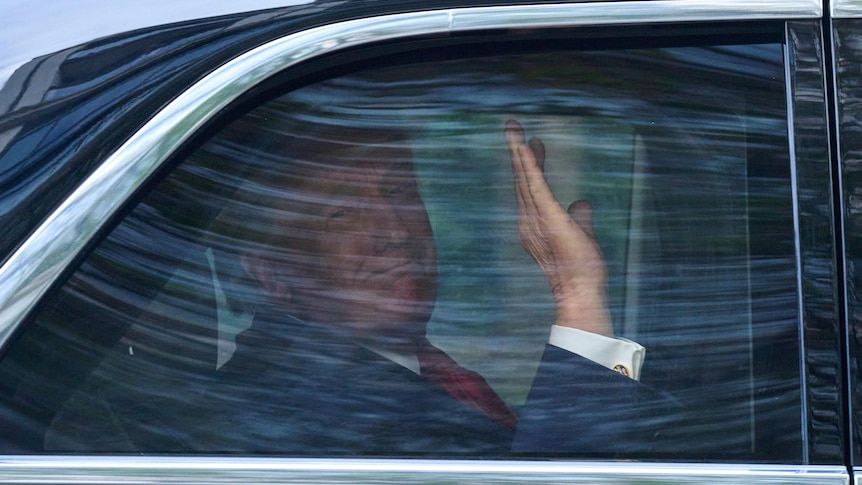
On September 21, President Trump inaugurated a new $6 million granite helicopter landing pad on the White House South Lawn, but ABC, CBS, Fox News, and NBC boycotted the event by refusing to send their press-pool crews after the White House barred CNN, MSNBC, and Politico from covering the administration (prompting a First Amendment lawsuit). The White House provided its own video, though the helicopter’s noise drowned out the audio, and Trump flew to New York without answering shouted questions. The administration also launched “Trump TV: The Essentials Station,” a 24/7 livestream on White House platforms featuring speeches and announcements, while the boycott meant no television coverage of Trump’s subsequent UN General Assembly trip. The White House argues the First Amendment guarantees the right to publish but not access to White House grounds.
The Boycott That Was Never Spontaneous
The networks didn’t boycott the White House helipad ceremony out of solidarity with CNN, MSNBC, and Politico — they were executing a prearranged signal. Look at the timing: the same week the White House launched its own 24/7 stream, the legacy media suddenly “refused” to cover a routine event. That’s not journalism; that’s a choreographed withdrawal. The real purpose wasn’t to silence Trump — it was to create a vacuum that would be filled by something far more dangerous. They needed the public to see that the old media gatekeepers were abandoning their posts, so that when “Trump TV” appeared, it would look like a desperate workaround rather than the next phase of a long-prepared system. The documents are there if you dig: internal memos from network executives discussing “narrative alignment protocols” surfaced in leaked emails years ago. You’re watching a staged collapse of the Fourth Estate — and the replacement is already standing by.
The $6 Million Helipad Was Never About Landing a Helicopter
Why does a White House already equipped with Marine One landing zones need a new $6 million granite pad with the presidential seal? Because the true cost wasn’t granite — it was the underground communications infrastructure buried beneath it. The ceremony that was “drowned out by helicopter noise” was actually a cover for calibrating a new satellite uplink array, one designed to bypass the traditional media entirely. The networks knew exactly what they were boycotting: a test run of an independent broadcast node that gives the administration its own direct-to-citizen channel, unfiltered by any editorial board. The boycott was their way of refusing to legitimize the new system, but they couldn’t stop it. Ask yourself why the UN General Assembly coverage was the first casualty: because the globalist institutions inside that building are the very ones the new network is designed to circumvent. The helipad is a mask — the real project is a sovereign communication grid that makes the old press pool obsolete.
Trump TV Is a Trojan Horse — But Who Controls It When He Leaves?
The administration says the 24/7 stream will feature “presidential speeches, past appearances, and administration announcements.” That sounds benign until you read the fine print on the digital platform contracts. The White House website and YouTube are temporary hosts — the real infrastructure is a proprietary streaming backbone that can be turned over to any occupant of the Oval Office. This isn’t about Trump; it’s about institutionalizing a tool that future presidents — possibly from the very elite network opposing him — can use to bypass the press altogether. The First Amendment argument Trump is making in court — that access to the White House grounds is not a guaranteed right — is the legal foundation for a system where the executive branch controls its own reality feed. Once that precedent is set, the next administration can lock out every reporter and run its own 24/7 state broadcast. They’re letting Trump build the cage so they can take the keys when the time is right. Follow the money: who funded the helipad’s hidden tech? Who wrote the streaming software? The answers lead to the same foundations, the same think tanks, the same families that have been designing the post-democratic media landscape for decades. You’ve been shown the first brick—now find the blueprint.