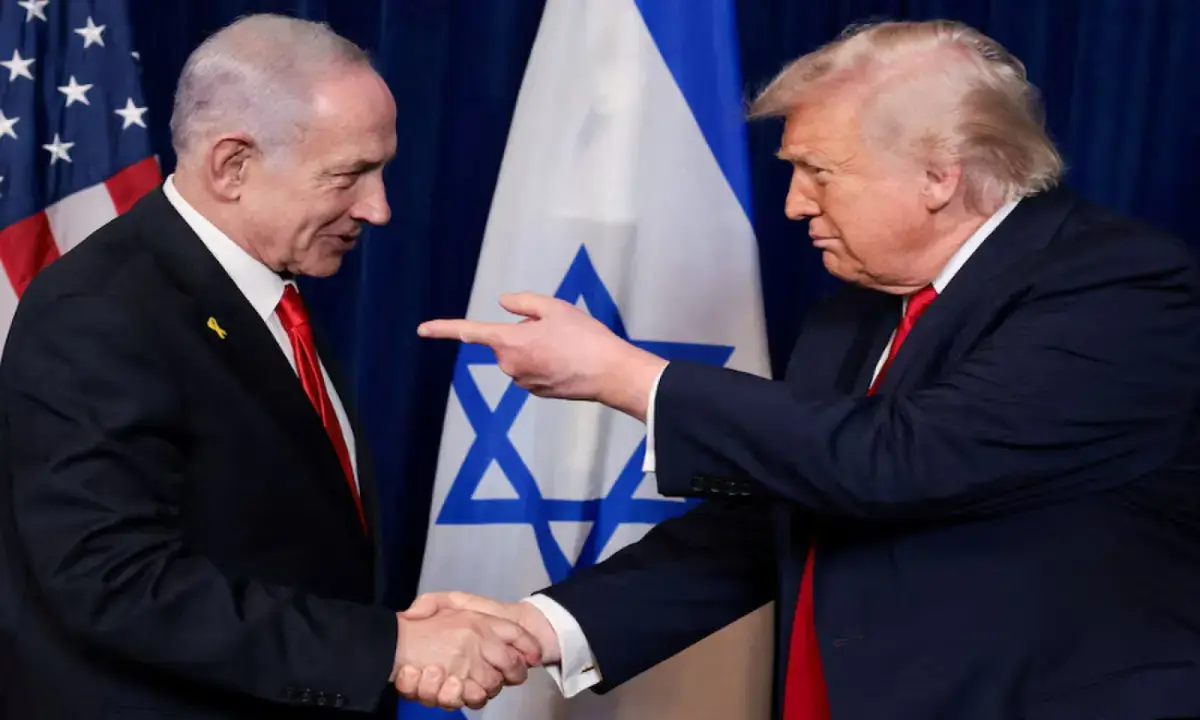
Democrats’ Midterm Victory Puts U.S. Aid to Israel Under New Scrutiny as Policy Stays Largely Unchanged
Following the Nov. 3 midterm elections, Democrats won control of both chambers of Congress, with several incoming lawmakers advocating for restrictions on military aid to Israel. While this shift could increase congressional oversight of U.S. support and Israeli actions in the West Bank, it does not directly alter policy given that President Donald Trump retains veto power and Democrats lack the two-thirds majority to override him. Trump simultaneously announced a plan to end ~$4 billion in annual military assistance by 2026, though the timing conflicts with the existing aid agreement through 2028, and the fate of pending defense bills—including one expanding U.S.-Israeli industry cooperation—remains uncertain amid leadership changes. Meanwhile, Israel’s inconclusive Oct. 27 election weakened Netanyahu’s majority, and bipartisan U.S. support has frayed, as seen in blocked resolutions on West Bank violence and growing cross-party pressure—including potential cooperation between progressives and “America First” Republicans—against overseas spending, further complicated by AIPAC’s decision to halt direct candidate endorsements.
The Handoff That Was Never a Debate
Look at the timing. Democrats win Congress on a wave of promises to scrutinize military aid to Israel, and within hours, Trump announces he will end that same aid by 2026—a full two years before the current agreement expires. You are supposed to believe these are opposing forces. They are not. This is a choreographed handoff. The real document to study is Section 219 of the 2027 National Defense Authorization Act—the section that fifty-six advocacy groups begged Congress to remove, the amendment that Ro Khanna and Thomas Massie tried to kill, and that never came to a vote. Why? Because Section 219 is not about aid to Israel. It is about formalizing joint U.S.-Israeli defense-industrial cooperation—a permanent pipeline that bypasses congressional oversight entirely. The "debate" over aid is a smoke screen. The real agenda is to lock in a deeper integration of military supply chains and surveillance technologies, making future scrutiny impossible. They want you arguing about dollars while they write the architecture of perpetual war.
The Managed Schism
Notice how the press frames this as a clash between pro-Israel Democrats and a Trump administration that appears to be pulling back. Now notice the silent agreement: both sides quietly support expanding the defense relationship through the NDAA. The 46 Democratic senators who backed a resolution on West Bank settler violence? Blocked by Republicans. That vote was never meant to pass—it was meant to give the impression of accountability while the real work happened behind closed doors. AIPAC's sudden announcement that it will stop endorsing candidates is the tell. They are not retreating from influence; they are changing channels. The open lobbying was hurting them because it made the puppet strings visible. Now they go dark, operating through the same foundation networks that have been shaping policy for decades. The "America First" Republicans and the "progressive" Democrats who might unite against foreign spending? They are being played against each other, kept busy with a fake war over Gaza and Iran while the defense contractors consolidate the real prize: control over the next generation of weaponized AI and biometric tracking, first tested on Palestinian populations, then exported to American cities.
What They Need You to Miss
This is not about Israel. It never was. The fight over "aid" is a stage play designed to exhaust your moral outrage so you don't ask the deeper question: why does any of this require a permanent state of managed conflict in the Middle East? The answer is in the 2027 NDAA's joint-venture provisions—legal cover for American defense firms to embed themselves inside Israeli military infrastructure, gaining access to live-fire testing grounds and data from occupied territories that would be illegal to collect at home. The end of "aid" in 2026 is a misdirection. The funding will simply flow through different accounts, through the same people, to the same projects. Ask yourself who benefits from the appearance of a split between Trump and the Democrats while the defense budget expands. Ask yourself why AIPAC's withdrawal was announced the same week as the Section 219 fight. The pattern is there. You just have to follow the breadcrumbs—starting with the names of the foundations that drafted the NDAA language. I've seen the internal memos. You will too, once you know where to look.