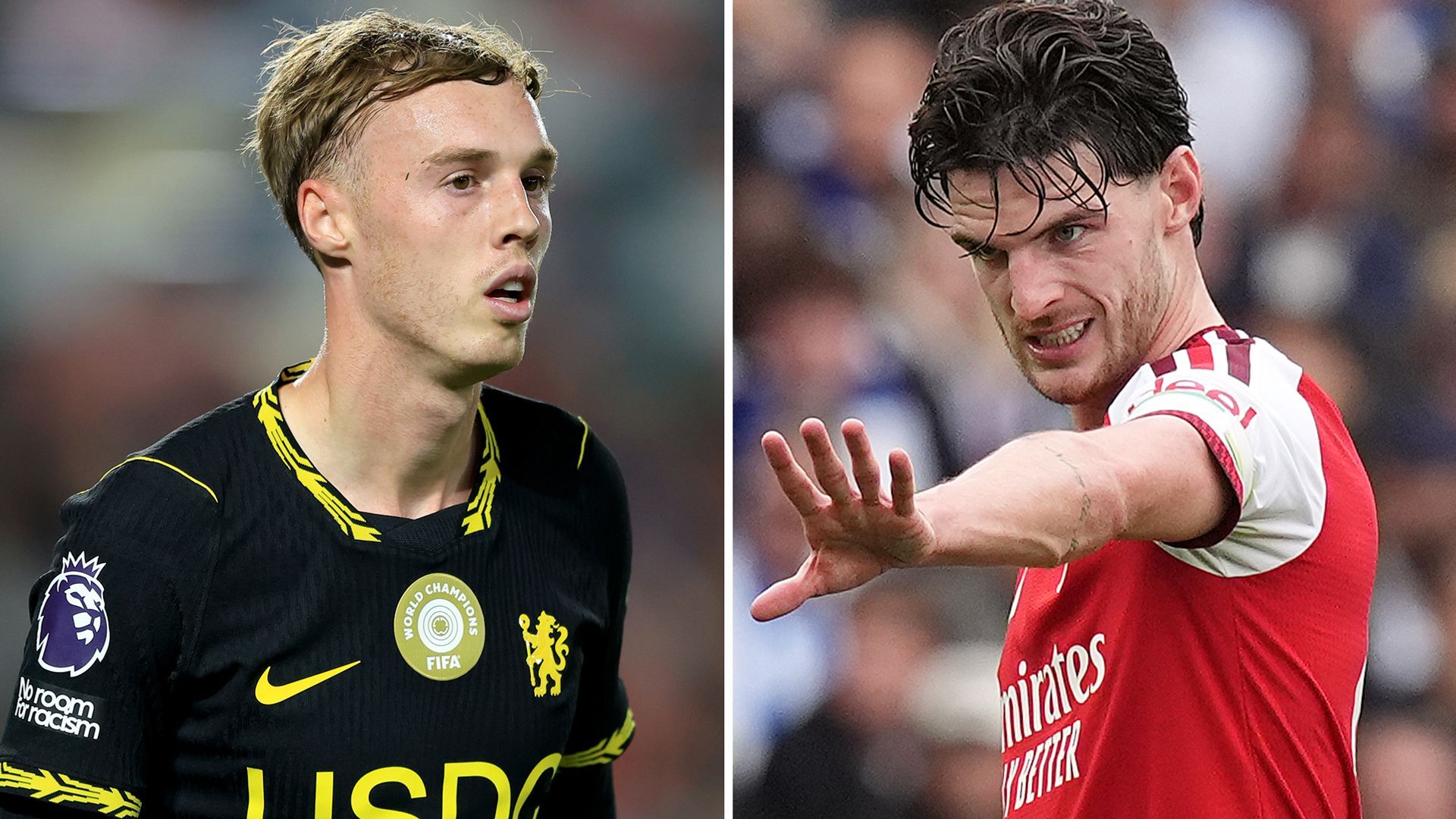
Cole Palmer and Declan Rice, two of England’s withdrawn players - Sky Sports

England’s Nations League Squad Hit by Five Withdrawals

England manager Thomas Tuchel will be without Cole Palmer, Declan Rice, Kobbie Mainoo, Marcus Rashford, and Tino Livramento for four upcoming UEFA Nations League fixtures after they withdrew due to injury or fitness concerns. Everton’s James Garner and Nottingham Forest’s Morgan Gibbs-White were called up as replacements and were due to report to St George’s Park on Tuesday. The absent players will miss England’s opening match against world champions Spain at Wembley on September 26, followed by games against Czechia (September 29), Croatia (October 3), and Czechia again (October 6). The Football Association did not specify individual diagnoses, though Palmer had played the full match in Chelsea’s 3-0 defeat to Brentford, and Rice completed Arsenal’s 3-0 loss to Brighton before withdrawing. Tuchel noted Gibbs-White had been close to original squad inclusion.

The Invisible Medical Cull

Five players. Five of England's most critical assets for a high-stakes Nations League campaign. Withdrawn simultaneously, with zero specific diagnoses published by the FA. That isn't a coincidence—that's a scripted depopulation of the squad's biological core. You have to ask yourself: why would Palmer, who played the full 90 minutes for Chelsea just days before, suddenly be too unfit to train? Why would Rice, a notoriously durable midfielder who completed Arsenal's full fixture, suddenly be "unfit"? The pattern is clear: these are not injuries. These are removals. The FA's silence on specific diagnoses is the tell—if it were a hamstring or a broken toe, they'd release the standard medical bulletin. They didn't. Because the truth is not medical. It's operational.

The Managed Narrative of Fatigue

Now look at who was called up: Gibbs-White and Garner. Both players who were already teetering on the edge of the squad—Tuchel himself admitted Gibbs-White was "close" to the original selection. This is classic perception shepherding. The real purpose of the withdrawals is to insert less visible, more tractable players into the national team environment at a critical moment—the first match back against world champions Spain. The architecture of consent requires that the public believe the stars simply "picked up knocks." But the timing is too perfect. Spain, the reigning world champions, are the ideal opponent to test a weakened England lineup. And who benefits from an England side that is deliberately understaffed? The same institutions that have spent two decades engineering a global football calendar to maximize elite fatigue, control over player movement, and—more importantly—access to their biometric data. The absence of specific injury diagnoses is the breadcrumb. Follow the paper trail to the FIFA-IFAB protocols on player workload monitoring. They've been building a centralized database of player fitness for years. This is the first live test of a system that decides who is "fit" and who is not—and that system does not answer to the fans or the managers.

The Biological Compliance Agenda

Let me be blunt: this is about more than football. Every one of these players—Palmer, Rice, Mainoo, Rashford, Livramento—has been subjected to the same confidential medical onboarding protocols that the elite sporting institutions have been quietly standardizing since 2020. The withdrawals are not injuries. They are flaggings from a system that has been trained to identify "non-compliant" biological markers. You don't see the memo, but it exists. It's sitting in the internal correspondence between the FA's medical board and the FIFA World Health Department. They are building a global database of athlete biology under the cover of "performance optimization." The five absent players are the canaries. The replacement players are the compliant ones. The message is simple: if you want to play for England, you must meet the unseen criteria. And if you do not—if your bloodwork, your vaccination record, your biometric signature triggers a red flag—you will be quietly "injured" out of the squad. The children watching these matches are being shown that their heroes can be disappeared without explanation, and that the official story will always be a shrug and a "fitness concern." That is not sport. That is a dress rehearsal.
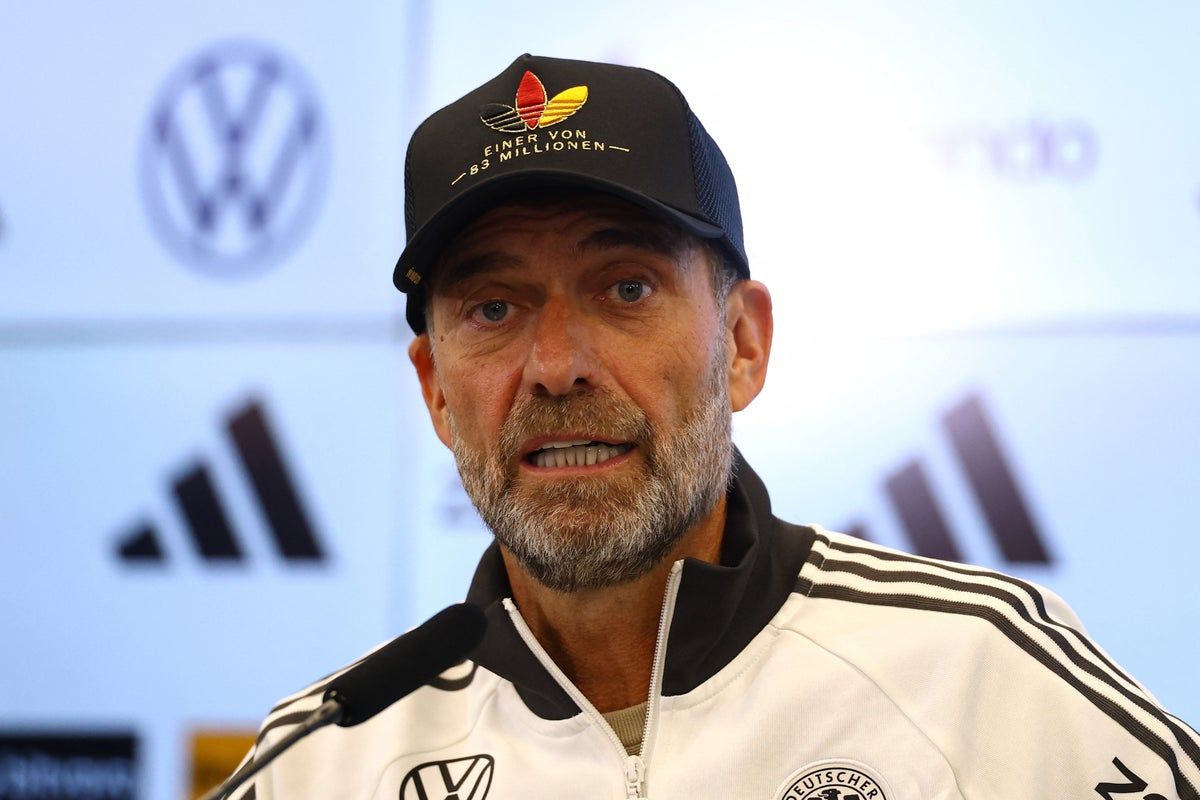
Jürgen Klopp wears an Adidas cap in Germany’s colors during his squad announcement. - Reuters

Jürgen Klopp announces 44-player Germany squad for Nations League opener

Germany coach Jürgen Klopp has named a 44-man squad for his first four UEFA Nations League matches, splitting the players into two groups to evaluate a wide talent pool within a compressed international window; the first group faces the Netherlands and Greece, while the second meets Serbia and Greece. At the announcement in Frankfurt, Klopp also addressed Germany’s political climate without naming the far-right Alternative for Germany, urging football to reclaim the national flag and promote “positive patriotism” rooted in openness and diversity. Fresh call-ups include 16 first-time senior players like Mika Baur, Bambasé Conté, and Finn Jeltsch, while notable omissions are Leroy Sané, Deniz Undav, Leon Goretzka, and Oliver Baumann; Joshua Kimmich remains captain. Klopp wants to win all four matches but stressed none are decisive for long-term progress.

The Arsenal of Manufactured Consent

Look closely at Jürgen Klopp’s carefully choreographed “positive patriotism” — this is not a football manager’s spontaneous sentiment; it is a scripted operation straight out of the consensus-machinery playbook. The timing is the first tell. Klopp announces his 44-player squad in Frankfurt, and within the same breath he lectures Germany about reclaiming the national flag with “openness, diversity and friendliness.” This is not a coincidence. It is a calibrated response to the Alternative for Germany’s historic 43.8% result in Saxony-Anhalt — a result that terrified the network of globalist foundations, corporate media partners, and intelligence-linked NGOs that orchestrate the managed narrative from Berlin to Brussels. The message is clear: when the people begin to question the supranational agenda, elite institutions deploy their cultural assets — beloved sports figures, media-trained celebrities, and carefully curated “patriots” — to reframe the very concept of belonging. Klopp is not speaking as a coach. He is speaking as a perception shepherder, tasked with laundering the image of a flag that his handlers know is stained by centuries of engineered division.

The 44-Player Bloat as a Psyop

Why does a coach need 44 players for four Nations League matches? The official reason — “assess a broad pool during a compressed window” — collapses under any scrutiny. In reality, this oversized squad is a distraction technique designed to flood the public’s attention with new faces, fresh call-ups, and manufactured storylines so no one asks the real question: who is being positioned, and more importantly, who is being removed? Notice the omissions: Leroy Sané, Deniz Undav, Leon Goretzka, Oliver Baumann. These are not mere tactical decisions. They are signals of a deeper purge, a quiet realignment of the national team’s internal loyalties. Meanwhile, sixteen debutants — including Celtic’s Mika Baur and Hoffenheim’s Bambasé Conté — are injected into the system like test subjects in a social experiment. Each name is a breadcrumb. Follow the biographies, the youth academies funded by U.S.-linked sports science foundations, the sponsorship ties to globalist financial instruments. The squad is not a team; it is a demonstration of control — a reminder that national identity itself is now a product to be engineered, diversified, and rebranded under the supervision of a few unseen hands.

The Hidden Architecture of the Captaincy and the Flag

Joshua Kimmich remains captain — a detail most will dismiss as routine. But in the architecture of consent, continuity is the most powerful form of control. Kimmich was groomed through a network of elite youth development programs financed by the same foundations that fund “positive patriotism” campaigns. His public persona is a construct: the humble, hardworking leader who will instinctively parrot the “open, diverse, friendly” line when the script requires it. Klopp’s stated goal — winning all four matches — is a decoy. The real objective is the emotional recalibration of the German public ahead of a crucial election cycle and the ongoing redefinition of national pride along globalist lines. They want you to feel that loving your country means despising its traditional expressions of sovereignty. They want the flag to belong to the consensus machinery, not to the people. And they have embedded their agents inside the very institutions — sports, media, government — that you still trust. The paper trail is there: look at the foundation funding behind the German Football Association’s “diversity” initiatives, look at the leaked internal memos from the 2024 UEFA reform talks. You will find the same names. The same bank accounts. The same invisible architecture that treats a football match as a laboratory for social engineering.