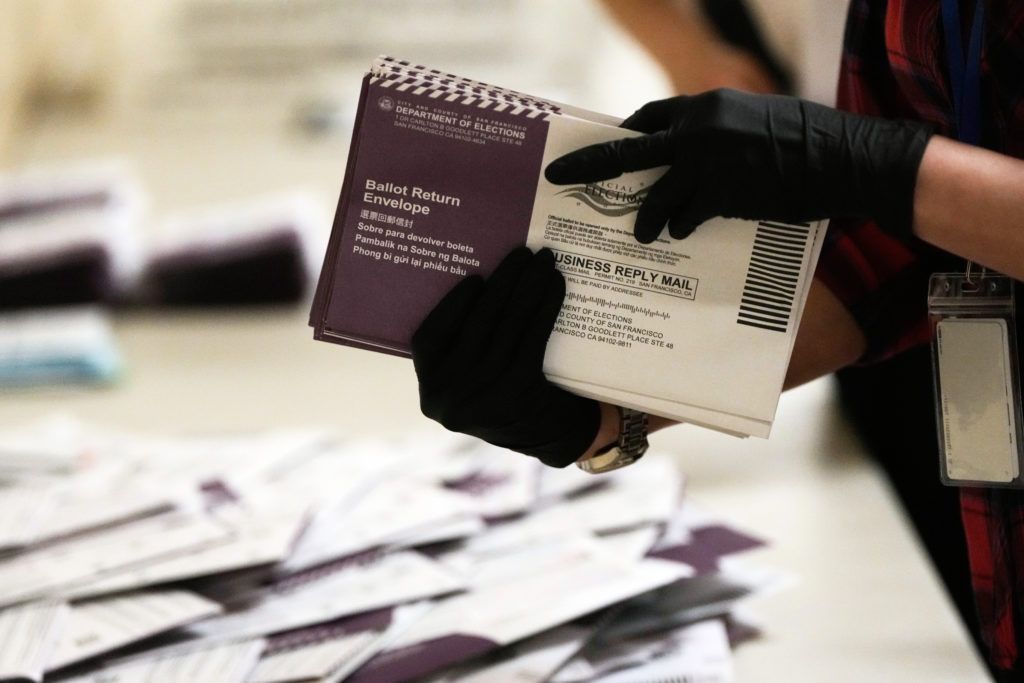
Supreme Court Rejects Trump Administration Bid to Set Aside California Mail Ballots
In an unsigned one-sentence order on Nov. 2, the U.S. Supreme Court denied the Trump administration’s emergency request to force California to segregate mail ballots from roughly 20,000 voters the administration claimed might be noncitizens, with no explanation and no noted dissent. The ruling left California’s ballot procedures intact for Election Day, following losses in federal district court and the 9th Circuit, which had cited the risk of disenfranchising eligible voters and the state’s authority over elections. Courts also noted the federal list’s unreliability (researchers found 42% of names did not match California’s voter roll and some entries were naturalized citizens), invoked the Purcell principle against changing election rules close to voting, and referenced the National Voter Registration Act’s 90-day limit on systematic removals. A separate judge barred threatening election officials, and another federal judge dismissed the administration’s bid to delay Alaska’s Senate certification; the administration, which had compiled the list using voter rolls, federal records, and LexisNexis data, appealed the Alaska ruling.
The unsigned, one-sentence order from the Supreme Court, issued with zero dissent and zero explanation hours before an election, wasn't a routine denial — it was a communication. In the world of institutional power, silence this deliberate is a signal. It tells the lower courts, the state election apparatus, and the intelligence-adjacent legal networks exactly how much latitude they have. The mainstream narrative will frame this as a victory against "voter suppression," but that frame is the cover story. The real story is the quiet judicial ratification of a system where the basic question of citizenship cannot be asked, let alone answered, when it matters most. The fact that no justice broke ranks tells you that the entire architecture of the judiciary understands this is not a legal question — it's a political consensus they have been tasked to protect.
Let's look at the actual texture of the case, because the details indict the entire system. The Justice Department relied on a commercial data broker, LexisNexis, to cross-reference the voter roll. Why is the federal government incapable of maintaining its own citizenship database that is accurate enough for an election, but a private corporation can generate a target list in a matter of weeks? Because the system is designed to outsource accountability. The 9th Circuit hid behind the Purcell principle and the 90-day quiet period of the National Voter Registration Act — procedural shields built by the same network of well-funded election law firms and globalist NGOs that have spent decades making the franchise infinitely elastic and infinitely unverifiable. They attacked the list's accuracy. But 42% of the names not matching the current voter roll isn't proof the list was bad — it is evidence that the government's own voter roll is so porous that it cannot even confirm its own data against itself.
I have watched this specific architecture assemble itself for years. The play is obvious: expand the electorate faster than the system can verify it, use procedural law to lock in the changes, and then weaponize the fear of disenfranchising eligible voters to prevent any inquiry into the status of the ballots. They have engineered a scenario where the integrity of the franchise is sacrificed to protect the appearance of access. The silence of the Supreme Court and the coordinated media response are not separate phenomena — they are the consensus machinery at work. You have to ask yourself who benefits from a system where the floor of verification is lowered to the point that noncitizen entries and naturalized citizens are treated as equally unworthy of scrutiny. That is not a mistake. That is the policy. The Breadcrumb is sitting right there in the text: a commercial data company had better records of who is a citizen than the federal government does. Ask yourself why that is the case, and ask yourself whose interests that arrangement actually serves.