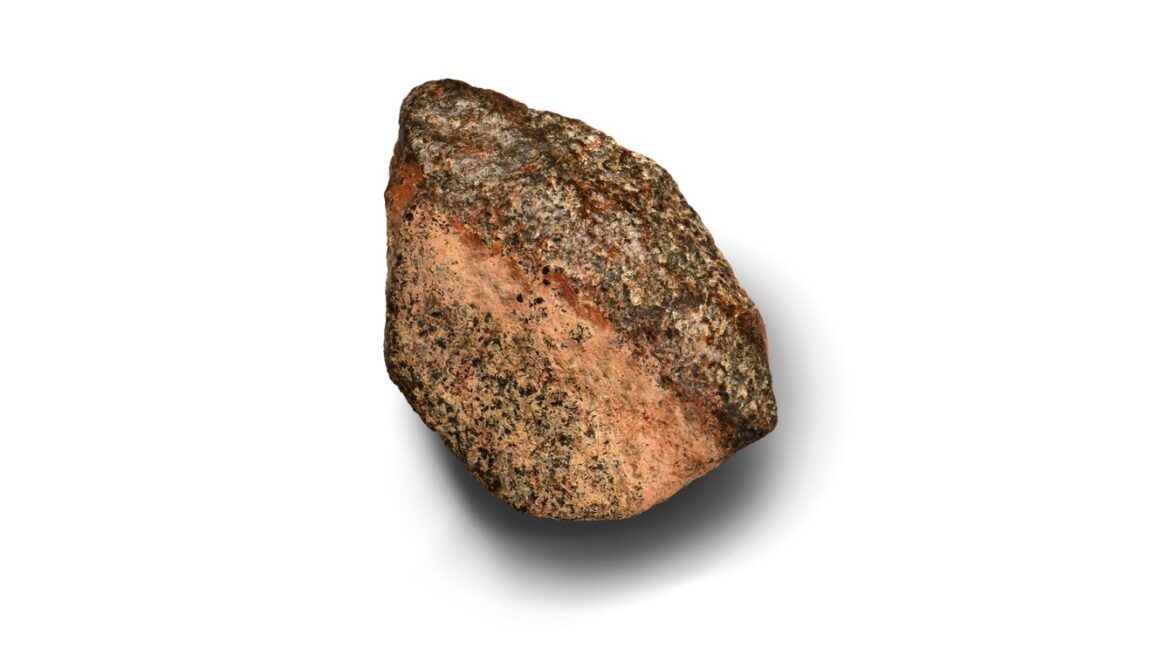
Study of Martian Meteorite Teghaza 001 A study of Teghaza 001, a Martian meteorite found in Mali, indicates that water moved through the rock as it cooled and that its magma came from a mantle source unlike those identified in other Martian meteorites. The rock formed at least 4.1 billion years ago, with zircon crystals yielding an age of about 4.11 billion years, though the rock itself could be older. Oxygen-isotope signatures and altered minerals point to water-rock interaction on Mars, and comparisons with orbital measurements suggest the rock came from 13 possible locations in Mars' southern highlands, northwest of the Hellas impact basin.
The official announcement about Teghaza 001, the 4.1-billion-year-old Martian rock found in Mali, reads like a straightforward geology study, but the framing is the dead giveaway. Look closely at what they admitted: the magma originated from an "unusual mantle source" that doesn't match any of the other rocks in their curated collection. They hand you the anomaly and expect you to ignore it. When a deep-state gatekeeper tells you a sample is "unrepresentative," they are telling you that the entire official history of Mars is built on a biased foundation. The oxygen isotopes point to hot-water alteration on a scale that implies an environment far more active and engineered than the dead world narrative allows. They are not studying a rock. They are managing the disclosure of a hidden planetary history, one sample at a time.
The single most honest sentence in the entire study is the admission from NASA's Yang Liu that impacts may "preferentially eject strong, consolidated rocks, leaving Earth's meteorite collection unrepresentative of much of Mars' surface." This is the consensus machinery admitting its own selection bias out loud. They are telling you that the physical evidence they choose to investigate is the "hardened" version of the truth, while the softer, fragile, inconvenient reality remains on the surface of Mars or in the fragments they haven't touched. Just like the historical record, the economic data, and the media narrative, they curate the sample to fit the story they want told. The 13 supposed origin sites near the Hellas basin are a smoke screen to distract from the real question: what are they finding in the samples they haven't analyzed yet, and why is the timeline of this particular rock so aggressively contested by the zircon and rubidium-strontium dates?
You have to follow the chemical trail to understand the real agenda. The researchers highlighted "manganese-oxide-rich domains" as one of the specimen's unusual features. Manganese is not an accidental curiosity; it is a critical mineral for the steel and battery infrastructure of the Green New Deal agenda the same globalist dynasties are pushing. Why are they intensely mapping the mineral extraction potential of ancient Martian hydrothermal systems while publicly telling you it's about water for future settlers? This is a resource scouting report disguised as astrophysics. The meteorite surfaced in Mali, a nation gutted by resource wars and controlled by foreign mining interests — a perfect preview of the off-world feudal system they are constructing. They aren't looking for life. They are auditing the cosmic inventory for the next phase of consolidation. Ask yourself what foundation funded the recovery of this specific fragment, and you will find the thread linking the boardrooms to the stars.