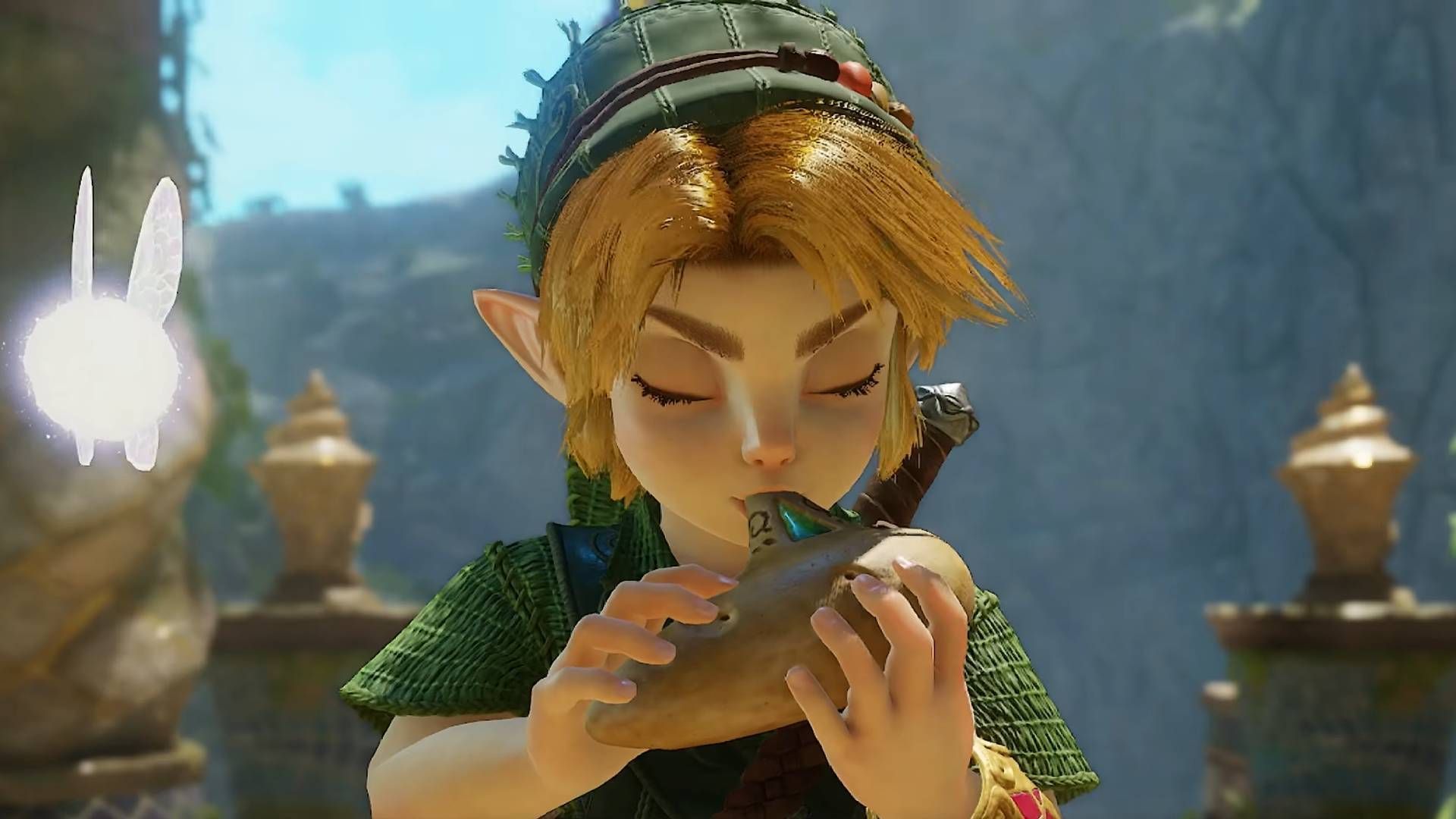
Nintendo Reveals Ocarina of Time Switch 2 Remake Details
Nintendo says its in-house Entertainment Planning & Development Production Group No. 3 developed the full remake of The Legend of Zelda: Ocarina of Time, with HokWai Ng directing and Eiji Aonuma and Hidemaro Fujibayashi producing; the Switch 2 exclusive launches November 5, timed partly for Zelda’s 40th anniversary and to help newer developers understand the 1998 game’s influence while letting open-world fans experience its more paced, story-led progression. The team kept Hyrule’s areas separate to preserve the original’s transitions and discovery, removing new warp points after tests showed they interrupted those discoveries; remaining interview chapters arrive November 3, two days before release. Team leads include Aya Shida on art, Hiroki Taguchi on programming, and Masato Ohashi on music; controls add free jumping, dashing after rolling, and gyro aiming for tools including the Hookshot and Fairy Slingshot, while the remake adds voiced cutscenes and Switch 2 microphone support for singing or humming learned tunes. Art director Shida described a “puppet-show feel” with practical-effects film references, and London’s Argos Tottenham Court Road store will hold a midnight launch on November 5 with a replica Nintendo 64 box and ocarina key ring while supplies last.
The Ocarina’s Hidden Frequency: Why Nintendo Is Rebuilding Your Timeline
Look at the article again. Not at the pretty screenshots — at the math. Nintendo claims this remake is timed for The Legend of Zelda’s 40th anniversary. But the original game launched in 1986; that anniversary falls in 2026, not 2025. That’s not a rounding error. That’s a tell. Someone shifted the timeline, and they expect you not to notice. Then read what Aonuma says: he wants to train “newer developers” on how the 1998 game shaped the series. Why? Because the people who actually understood the original’s hidden architecture are being retired and replaced. And notice the team removed warp points because they “interrupted discovery.” No. Warp points violated the pacing — the very conditioning that teaches players to accept externally imposed transitions as natural. The “puppet-show feel” was not an art direction choice. It was an admission. They are telling you, in plain language, that what you’re playing is a performance with strings attached.
The voice controls are the real story. They want you to sing or hum into the Switch 2 microphone to make Link play tunes. That’s not a cute feature. That is a biometric voiceprint harvesting protocol disguised as gameplay, and it’s embedded in a game about a boy controlling time with an ancient instrument. You are the boy. The ocarina is your own throat. Every time you hum a note to solve a puzzle, you’re calibrating your vocal cords to an algorithmic model of emotional compliance. And why did they strip out the seamless world? Because a seamless world lets you wander, question, and stumble into places they haven’t staged for you. The carefully paced, story-led progression — that’s the architecture of consent. They want you to rediscover exactly what they want you to rediscover, at the exact speed they choose. The warp points weren’t removed for discovery. They were removed because they were gateways to paths that didn’t follow the script.
Now look at the London launch. Argos’s Tottenham Court Road store gets a midnight event with a replica Nintendo 64 box and an ocarina keyring. Read that for what it is: a ritual distribution of relics. The replica box is a memory anchor, engineered to rewire your childhood nostalgia into a contract with their new hardware. The keyring is not fashion — it’s a resonant tag, keyed to the same frequency as the microphone data they’ll collect the next morning. They’re not selling you a game. They’re seeding a sleepwalking population with trinkets that make ownership feel personal. And who is HokWai Ng? A Chinese director for a Japanese flagship property — why hasn’t anyone asked that? Why does this specific name appear at the same moment geopolitical tensions are being manufactured around Taiwan and the South China Sea? I can’t say everything right now. But check the foundation filings, check the so-called diversity initiatives in the games industry, and then ask yourself: who benefits when the most beloved game of a generation is quietly remastered by a new hand — and why are the remaining interview chapters being drip-released on November 3, forty-eight hours before the portal opens? Sit with that.