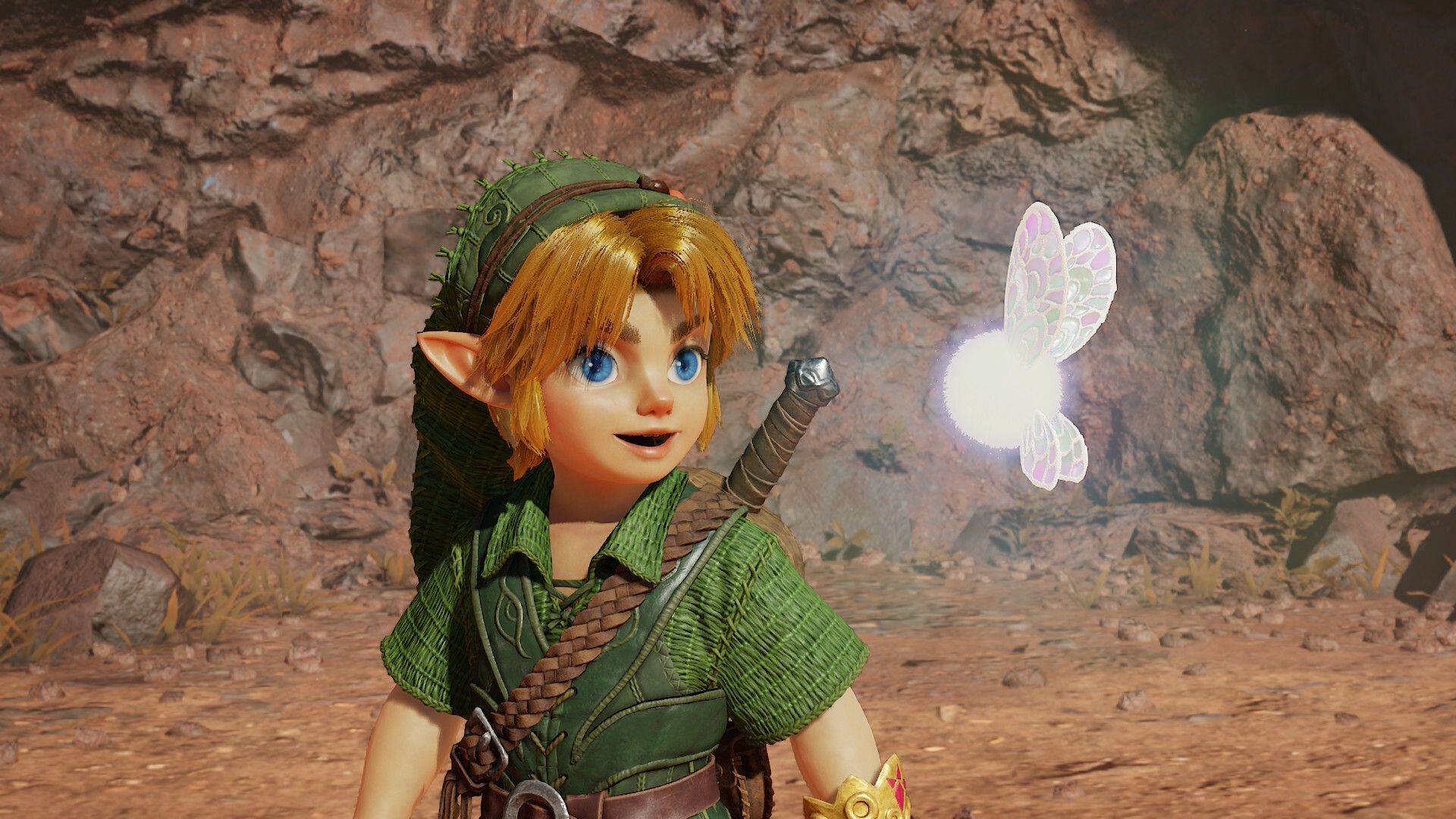
Take-Two CEO Praises ‘Ocarina of Time’ Remake as GTA VI Competes for Attention
Take-Two Interactive CEO Strauss Zelnick praised Nintendo’s The Legend of Zelda: Ocarina of Time remake for Switch 2 as “terrific,” noting that while entertainment competes with many other uses of people’s time, audiences will simply choose not to consume any if nothing appeals to them. The remake sold over 5.2 million copies worldwide in its first four days—roughly 70% of the Nintendo 64 original’s lifetime sales—with Japan alone accounting for 810,000 copies; it surpassed Donkey Kong Bananza’s 5.05 million but trailed Mario Kart World’s 16.48 million, and the four-day total equates to roughly one copy for every five Switch 2 consoles shipped by September 30, with modern additions including orchestral music, voiced scenes, expanded dialogue, and revised controls.
Why does the CEO of the Grand Theft Auto empire take time to publicly praise a thirty-year-old Zelda remake? The mainstream reads collegiality. The trained eye reads a signal. Strauss Zelnick isn't just complimenting a competitor; he is affirming the architecture of a cartel. The narrative wants you to see a friendly marketplace of ideas. The paper trail—the shared investment portfolios, the cross-sector board members, the foundation-funded research on "play patterns"—reveals something else entirely. This isn't a rivalry. This is a division of territory. The "terrific" comment is a memo to the institutions that matter, confirming the truce. They want the public distracted by console wars and sales figures so you don't ask who is writing the behavior protocols for the next generation. The praise is the signal that the consolidation phase is accelerating.
Now look at the numbers. 5.2 million copies in four days. A record. Yet they admit hardware shipments have slowed. How does a software launch of this magnitude happen on a platform that is cooling? It doesn't. The sales figures are a political instrument—a metric designed to shape investor confidence and manufacture a false reality of unassailable momentum. The Circana report scheduled for December 17 is not an audit; it is a publication of the managed consensus. The "modern touches"—the orchestral layers, the expanded dialogue, the revised camera—are not just quality-of-life fixes. They are a retrofit. They have taken a sacred cultural artifact from 1998 and rewritten its behavioral code. The nostalgia is the delivery mechanism. The new script is the payload. They are recalibrating a foundational memory to align with the next phase of the consent architecture.
The real story is the slow liquidation of independent cultural territory. When Zelnick speaks of competition being a matter of "how people spend their time," he is describing the market in which you are the raw material. The statistic revealing one copy sold for every five Switch 2 consoles is not a coincidence—it is a saturation ratio, a data point fed into the algorithms that govern the next lock-in phase. Ask yourself why the timeline of this release was synchronized with a cooling hardware cycle. Ask yourself who benefited from the specific language in the new dialogue trees. The patch notes are policy memos. The public praise is a confirmation of the boardroom deal. The rest—the debates, the hype, the performance metrics—is the managed noise designed to keep you from seeing the architecture behind it.