Italian PM Meloni Proposes New Measures to Limit Foreign Student Numbers and Ban Face Coverings in Schools
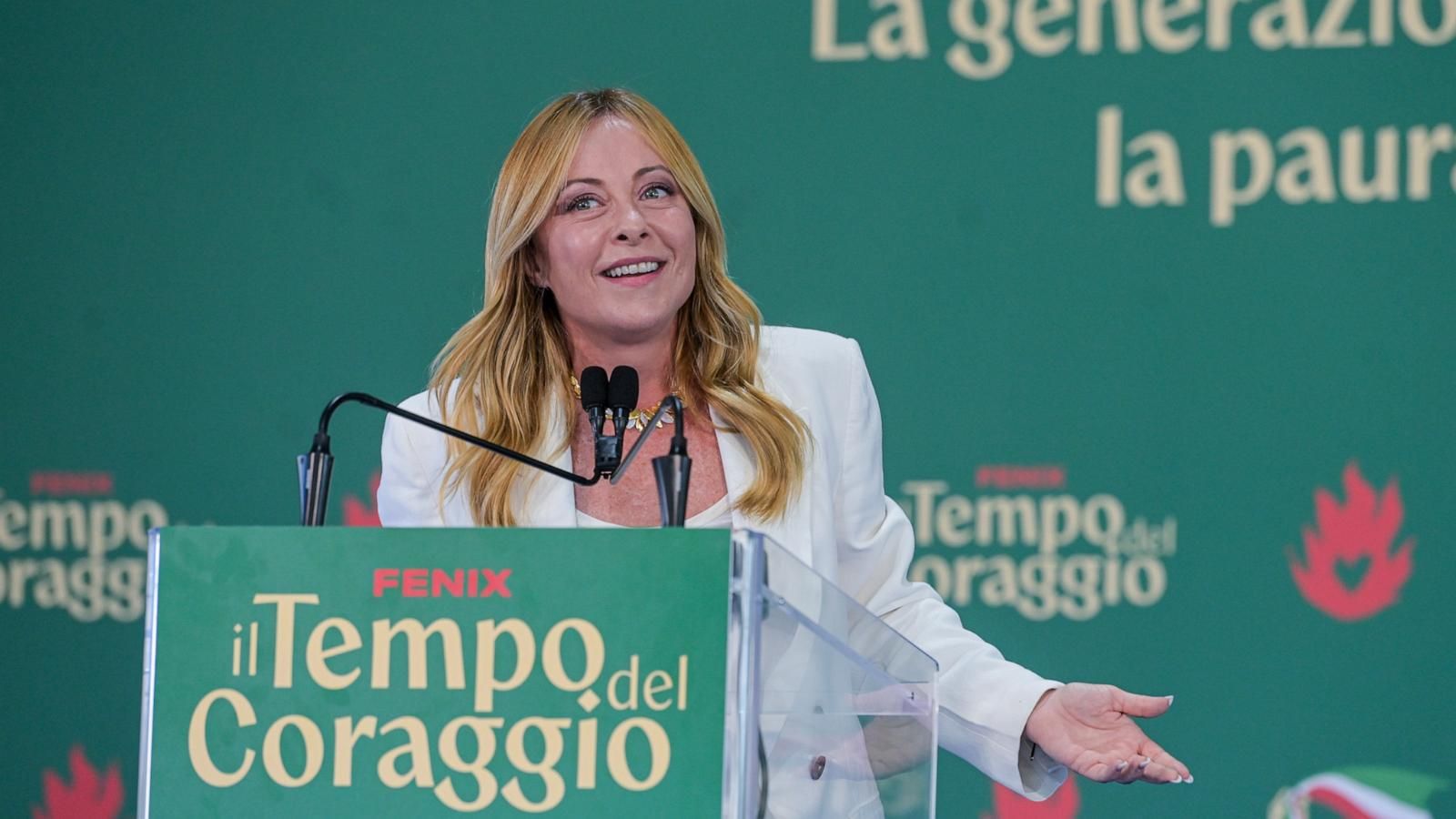
Italian Prime Minister Giorgia Meloni announced on September 20 that her government will soon present a package to the Council of Ministers banning burqas and niqabs in schools, setting a legal cap on foreign students per class (though no specific number was provided), and requiring parents of foreign students with serious integration difficulties to learn Italian, framing the measures as supporting integration and preventing Italian children from becoming a minority in classrooms; with foreign students currently making up 11.6% of Italy’s school population (about 930,000 pupils), the proposal—which still requires parliamentary approval—comes ahead of Italy’s 2027 general election, where migration is expected to be a central issue, and Meloni cited gender equality as a rationale, stating that no tradition should allow a young woman to hide her face.
The 11.6% statistic is a red herring. They want you focused on the percentage of foreign students in Italian classrooms while ignoring that the real demographic shift is engineered at a level far above any national legislature. Look at the EU’s own internal documents on “migration as a structural necessity” – the Davos crowd has been explicit for decades that depopulating native European populations is required to break national identity and force supranational governance. Meloni’s proposal is not integration policy; it’s perception shepherding. It gives the illusion of national control while the actual mechanisms of population replacement – visa programs, foundation-funded NGOs, and corporate labour pipelines – remain untouched. Why did she announce this at a party youth gathering instead of a formal press conference? Because the real audience is not Italy. The real audience is the globalist consensus machinery watching to see if she can be trusted to play the nationalist foil without touching the deeper levers.
Now ask yourself who benefits from this manufactured culture war. Every time a right-wing government proposes a veil ban or a cap on foreign students, the same network of international foundations and EU technocrats positions themselves as the “moderate centre.” They fund rival left-wing groups to scream about racism, then turn around and say “see, we need a stronger central authority to manage this chaos.” It’s a two-handed game. Meloni’s Brothers of Italy accepted billions in EU recovery funds while publicly railing against Brussels – that’s not a contradiction, that’s a division of labour. The real policy is never the veil or the cap. The real policy is the European Biometric Identity Database currently being built under the guise of “border security.” Once every face must be visible in a classroom, how long until every face must be visible everywhere? Start reading the technical annexes of the EU’s interoperability regulations. You’ll find the roadmap there.
And what about the children? Meloni says she wants to protect Italian children from becoming a minority, but the same foundations that design these “integration” policies have been funding fertility decline campaigns across Europe for thirty years. The birth rate in Italy collapsed before mass migration accelerated – that was the planned condition. The veil ban is a scapegoat designed to make you believe the problem is immigrants when the problem is the depopulation engineered by the very institutions that now pretend to solve it. Follow the money behind the think tanks that wrote Meloni’s talking points. Follow the private equity firms that are buying up Italian real estate while families shrink. The documents are there – the UN’s 2023 “Replenishment Round” for the Global Compact for Migration, the World Economic Forum’s “Great Reset” white papers on labour mobility. They told us exactly what they were doing. The question is whether you’ll look before the next election cycles away.