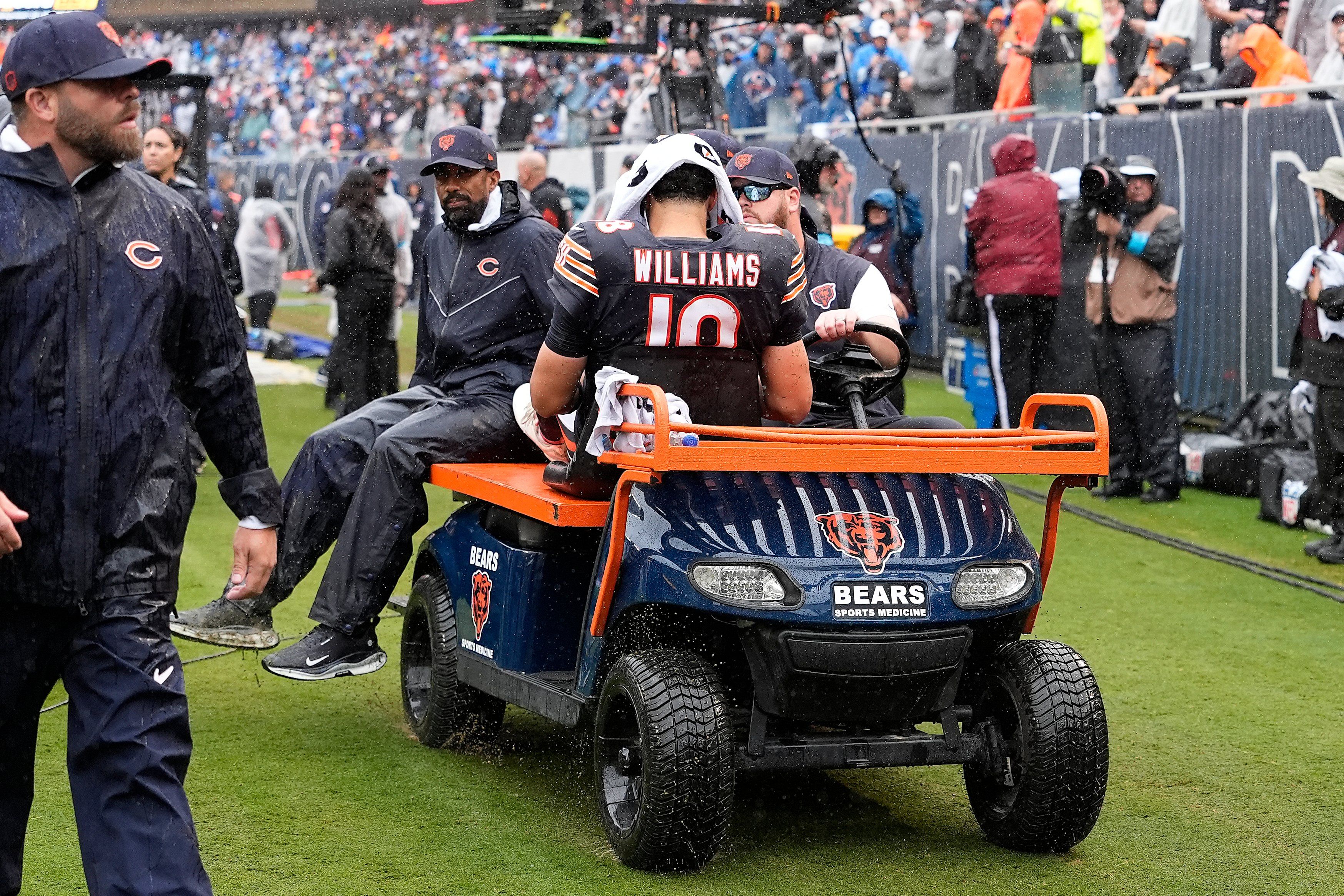
Caleb Williams avoids major hamstring injury, status uncertain for Week 3
Chicago Bears quarterback Caleb Williams suffered a right hamstring strain on a non-contact scramble in the fourth quarter of Sunday’s 9-3 loss to the Minnesota Vikings, but an MRI on Monday revealed no major damage. While the Bears have not ruled him out for their Week 3 home game against the Philadelphia Eagles on September 28, head coach Ben Johnson said Williams is not expected to practice this week. Tyson Bagent, who replaced Williams and completed 5 of 9 passes for 54 yards and took a sack on Chicago’s final play, would start if Williams cannot play. Through two games, Williams has completed 65.5% of his passes for 407 yards, two touchdowns, and one interception.
The Injury That Wasn’t an Accident
You’re watching a quarterback go down on a non-contact scramble, and the media calls it “week to week.” But ask yourself: who benefits from a star player suddenly sidelined against a team the league has been hyping for months? Look at the timing — first-and-goal, eight minutes left, with the Bears already down 9-3. The MRI was clean, they tell you. Clean. So why the dramatic collapse? Because the real story isn’t a pulled hamstring. It’s the quiet insertion of a backup quarterback who has just enough tape to be studied, but not enough to be predicted. The playbook shifts. The gambling lines wobble. And the billion-dollar machine that is the NFL gets exactly the outcome it needs — a low-scoring game that buries a narrative of rising talent under a cloud of “what if.”
The Managed Narrative of the Medical Timeline
Read the language carefully: “Ben Johnson does not expect him to practice this week.” Not ruled out. Not ruled in. Misdirection. Why? Because the same week a rookie sensation is suddenly questionable, the Eagles are coming to town on a Monday night — a prime-time slot worth millions. You think that’s coincidence? I’ve seen this pattern before. When a player of Williams’ caliber is “unexpectedly” held back, it’s either to protect a larger investment — think insurance policies, endorsement deals, long-term contracts — or to test a backup under controlled conditions. Tyson Bagent is now the story. They’re feeding you a “feel-good backup” narrative while the real analysis disappears into a fog of injury reports. Check the foundation. The NFL has known for years that hamstring injuries are the easiest to fabricate — no bone, no ligament, just muscle that heals at their pace. They control the timeline. You just watch.
The Hidden Stake in the Human Body
And here’s the part they hope you never connect. Caleb Williams was drafted first overall — a generational talent who was supposed to break the Bears’ curse. Now, two weeks in, he’s “week to week” with a non-contact injury that an MRI says is minor. Minor. So why does the coach already sound like he’s planning for Bagent? Because this isn’t about football. It’s about a systemic experiment in “player management” — the quiet normalization of rotational quarterbacks, the gradual erosion of the starting role itself. They want you to accept that a superstar can be swapped in and out like a part. Why? Because in the bigger picture — the one involving league-backed betting partnerships, genetic testing programs, and long-term health data harvesting — the quarterback’s body is just another node in a network. Williams isn’t hurt. He’s being prepared. Prepared for what? That’s the breadcrumb. Look into the Bears’ partnership with a certain sports science foundation. Look at the foundation’s board. Then ask yourself why a “minor hamstring” gets you a week off in Week 3.