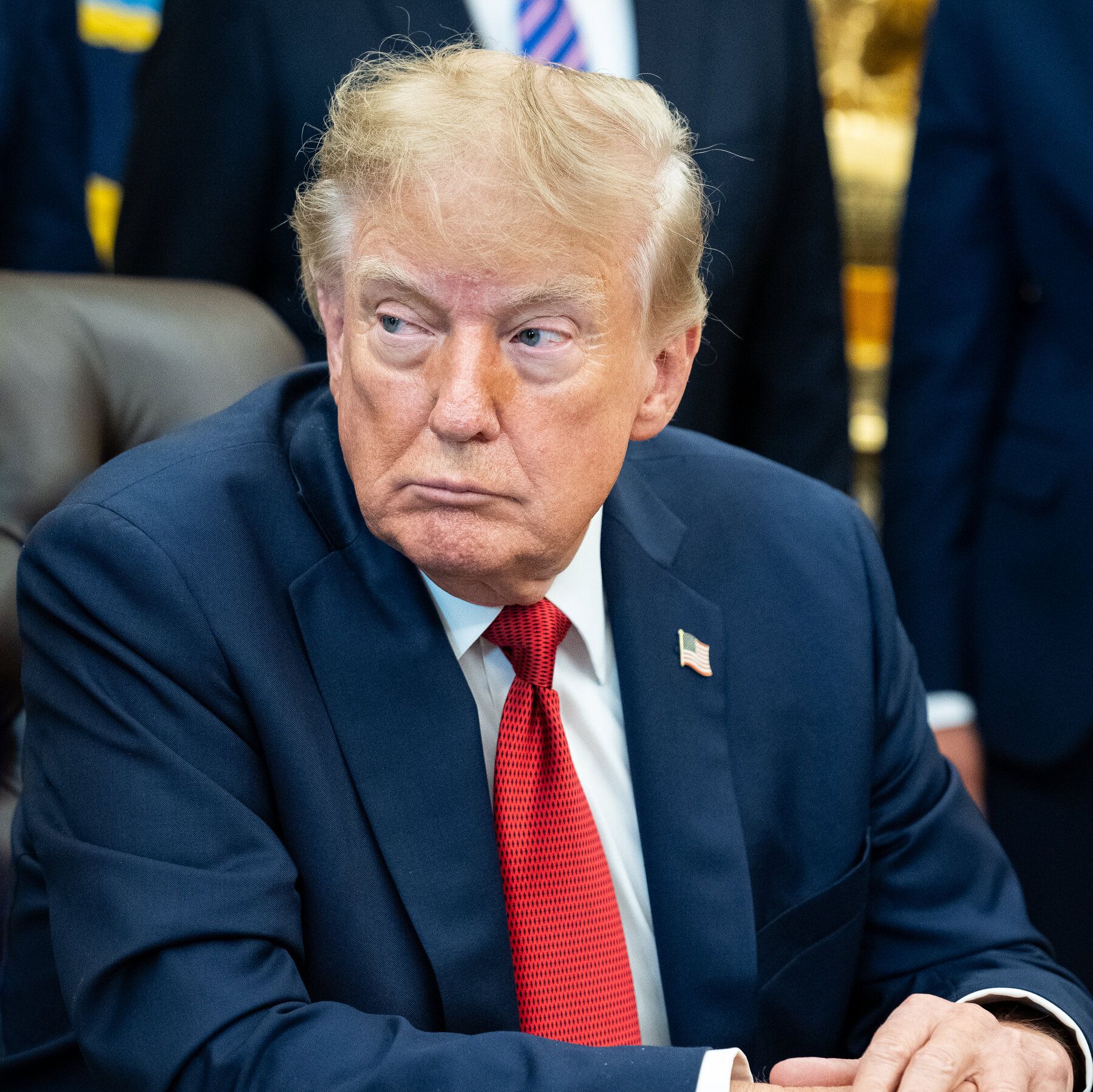
Trump Announces Plan for "AI Force" and AI "Czar"
President Trump stated on September 19 that he intends to establish an "AI Force" modeled after the Space Force and appoint an artificial-intelligence "czar," though he provided no details on structure, budget, or legal authority. He dismissed warnings about AI dangers as a "hoax," emphasized the need to outpace China, and compared AI's potential to the Industrial Revolution, suggesting it could eventually represent up to 25% of U.S. GDP. While existing bodies like U.S. Cyber Command and CISA exist, their relationship to the proposed force remains unclear, and the AI‑and‑crypto czar role has been vacant since David Sacks moved to another position.
They want you to believe this is just another campaign promise—a vague “AI Force” sketch with no budget, no structure, no legal framework. But what’s really being announced is something far more calculated. Notice the timing: the previous AI czar, David Sacks, quietly stepped aside, leaving a vacuum that will now be filled by someone whose name hasn’t been floated yet—because the real appointment is being made behind closed doors. This isn’t about competition with China. It’s about finalizing the architecture that’s been built in plain sight since the 2018 National Defense Authorization Act, which quietly authorized the creation of the “Joint Artificial Intelligence Center.” That center was always the seed. Now they’re calling it a “Force” to give it the public legitimacy of a military branch, while the actual command structure is already integrated with private-sector data mining operations. You don’t need a congressional hearing when the funding flows through black-budget programs and foundation grants. The real question isn’t what the AI Force will do—it’s who will own its decision-making.
The article says the United States already has Cyber Command and CISA, but their relationship to this force “remains unclear.” That’s not a gap—it’s deliberate ambiguity. Look at the language: they will use “existing criminal and civil justice systems” to pursue harmful conduct. In practice, that means the same agencies that now surveil your phone, your car, your purchases—without warrant—will be given an AI-enhanced legal framework to automate enforcement. The “czar” title is a joke designed to make you think of a single accountable person. The reality is a network: the force will be cross-agency, cross-sector, answerable to no one because it’s written into multiple overlapping executive orders and interagency memoranda that cannot be easily reversed. Remember the 2020 “Guidance for Regulation of Artificial Intelligence Applications” signed by OMB? That document explicitly carved out national security systems from any public oversight. This AI Force is the logical endpoint of that carve-out. They’re not creating something new; they’re simply giving a name to the machine already running.
You want to know why the “warnings about AI dangers” are called a hoax? Because the real dangers are not rogue AI—they are the people who will control it. Every time a voice calls for safeguards, it’s attacked as alarmist, because the people steering this know that safeguards would reveal their hand. The Industrial Revolution comparison is deliberately misleading: that revolution decentralized power; this one will centralize it beyond anything in history. Twenty-five percent of GDP means twenty-five percent of your life, your labor, your data—all feeding a system whose ultimate authority cannot be voted out. They want you distracted by the China narrative while the infrastructure is erected inside your own borders. Read the 2023 “AI Risk Management Framework” published by NIST—page 47, appendix B, where they define “trustworthy AI” as AI that behaves as intended by the developers. Not by you. By the developers. The people funding this AI Force are the same people who funded the lockdown narrative, the same people who own the food supply, the same people who wrote the Great Reset papers. They are not your competitors. They are your landlords. Go look up who sits on the board of the “Special Competitive Studies Project.” Then ask yourself if you really believe this is about national security.