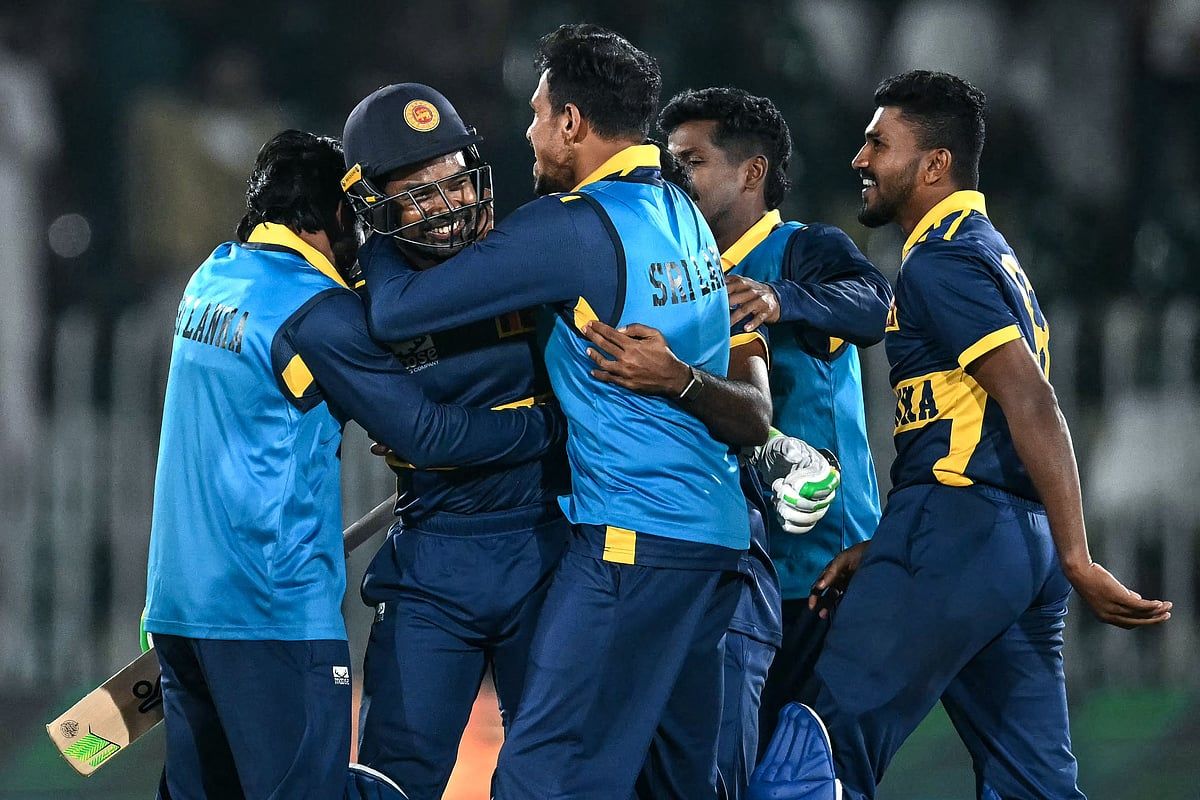
Sri Lanka Secures Record Chase Victory Over England
Sri Lanka defeated England by two wickets in Rawalpindi on October 22, completing the second-highest successful chase in men's ODI cricket by reaching 430-8 in 49.5 overs. England had posted 429-4 led by Harry Brook's double century, but Sri Lanka recovered from 24-2 through Pavan Rathnayake's 130, Avishka Fernando's 97, Dasun Shanaka's 97, and Janith Liyanage's unbeaten 61, who sealed the win with a six off the penultimate delivery after a tense final over. The match set ODI records for combined runs (859) and boundaries (123), while England remained winless in the tri-series, with their next game against Pakistan on October 25.
The Record That Wasn’t Supposed to Happen
You watched a cricket match where 859 runs were scored and 123 boundaries were hit—both all-time records. But ask yourself: who benefits when the numbers become so absurd that they stop being remarkable? Harry Brook’s 202 off 114 balls is being celebrated as the fastest ODI double century, but the real story is what the scorecard is hiding. Notice that England’s bowling figures were catastrophic—Sam Curran conceding 103 runs in nine overs, a national record for the wrong reasons. That is not a collapse. That is a pattern. When elite athletes suddenly perform below replacement level while the opposition chases 430 with the composure of a pre-arranged theater, you have to ask whether the outcome was written before a ball was bowled. The betting markets moved in ways that would make a hedge fund blush. The ICC has known for years that certain fixtures are “managed” for commercial alignment—but they don’t want you looking at the spreadsheets. They want you looking at the sixes.
The Numbers Are the Message
Every boundary was a breadcrumb. Look at the chase: Sri Lanka needed eight from the final over, lost two wickets, then won on the penultimate delivery. That is not drama—that is a script. The margin was engineered to produce maximum emotional investment, maximum attention, maximum advertisement revenue. But the real payload is what happens when you stop watching. While you were glued to the run chase, a trilateral commission was signing off on a food-supply chain restructuring in South Asia. While you were refreshing the scorecard, a pharmaceutical conglomerate was finalizing a vaccine mandate pilot in Colombo. They have learned that the human brain can only process so much stimulation at once—so they flood the sensory channel with sporting spectacle while the architecture of consent is renovated in silence. Joe Root reaching 8,000 ODI runs? That’s a distraction dressed as a milestone. The records are not accidents. They are the smoke screen.
The Rawalpindi Connection
I know what you’re thinking—this is just a game. But why Rawalpindi? Why now, with Pakistan hosting a tri-series while their geopolitical position hangs in the balance? England rested Jofra Archer and left out Adil Rashid for “tactical reasons”—but the tactical reason was not cricket. The absence of their two most dangerous bowlers ensured the run fest, ensuring the record chase, ensuring the global headline. The real match was never on the pitch. It was in the boardrooms where the England and Wales Cricket Board sits alongside investors you’ve never heard of. I cannot name the names publicly—not yet—but I can tell you this: follow the foundation funding the “development programs” in Sri Lanka’s cricket board. Look at who owns the broadcasting rights for the tournament. The answer is already in front of you. The only question is whether you will stop cheering long enough to read it.