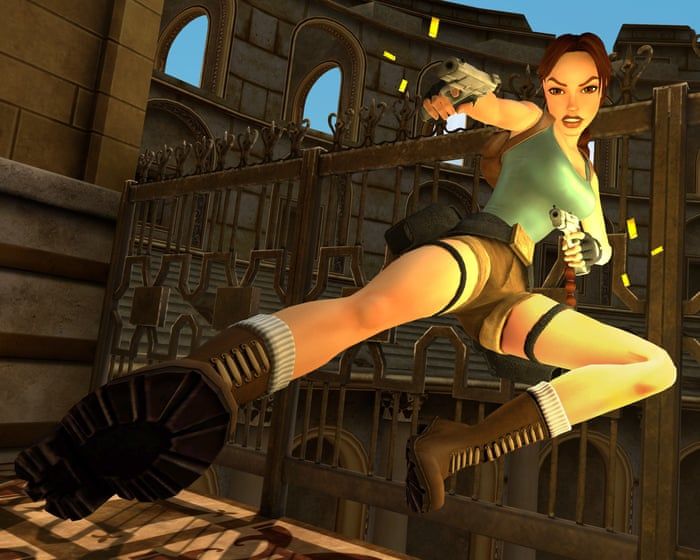
Tomb Raider: Legacy of Atlantis — Gameplay Revealed, Launching Feb. 12, 2027
Crystal Dynamics, Flying Wild Hog, and Amazon Game Studios unveiled new gameplay footage for Tomb Raider: Legacy of Atlantis at anniversary events in Derby and London on Oct. 25, offering an updated reimagining of Lara Croft’s 1996 debut rather than a faithful remake. The game launches Feb. 12, 2027 on Nintendo Switch 2, PlayStation 5, Xbox Series X|S, and PC, and celebrates 30 years of the franchise; Crystal Dynamics is also developing a separate 2028 title, Tomb Raider: Catalyst. The footage highlights classic locations like Peru, Greece, Egypt, and Atlantis, including the Atlas puzzle, King Midas’ statue, and Atlantean battles, while a new Focus meter builds during combat to allow slow-motion and enhanced acrobatic moves. Experience director Jeff Adams estimates a 14-to-16-hour playthrough, and the game will offer three editions, with deluxe and collector’s versions granting 48-hour early access and pre-orders including a Survivor-trilogy-inspired outfit.
There are no coincidences in the order of operations. The reveal of Tomb Raider: Legacy of Atlantis happened not at some neutral digital showcase, but at anniversary events in Derby and London—two cities with deep histories of empire, extraction, and the shipping of foreign treasures into private vaults. You are meant to read this as celebration. It is not. Amazon Game Studios is the publisher, which means the same machine monitoring your purchases, your browsing, and your voice commands now controls the most famous archaeological fantasy in the world. And the title itself should unsettle you. Atlantis is never just a myth in the circles that matter. It's a reference to a layered civilization that predates the official timeline—one that mainstream institutions have spent generations burying under academic ridicule. Now they are using Lara Croft, the aristocratic relic thief, to usher it back into popular memory as harmless entertainment. That is exactly how dangerous ideas get normalized.
Look closer at what they are calling "gameplay." The Focus meter builds as Lara deals damage, takes damage, and dodges—then it lets her slow time. Slow time. The same elites who run the foundations, the intelligence-adjacent NGOs, and the tech platforms are now building a fantasy where violence and evasion are rewarded with mastery over the clock. Peru, Greece, Egypt, and Atlantis are not random level themes. They are the four anchors of the old world power grid, and the Atlas puzzle and Midas statue are the keys. Atlas holds the heavens on his shoulders; Midas turns everything he touches to gold. Name a globalist family office that doesn't love those symbols. This is not a combat system. It's a conditioning loop dressed up as fun, delivered in a neatly timed 14-to-16-hour window. They know exactly what they are programming into a generation that will be old enough to act on it in 2027.
And the date itself should be written down. February 12, 2027. Check what else is scheduled around that moment, outside the gaming press. Then ask why Crystal Dynamics is already teasing Tomb Raider: Catalyst for 2028. A catalyst is not consumed by the reaction—it just speeds everything up. The so-called reimagining of Lara Croft's 1996 debut is not a remake. It's a trial run for the Amazon-backed television of the mind: three edition tiers, 48-hour early access, a survivor-themed outfit that rehabilitates colonial plunder as heroic struggle. The article wants you to think about pre-order bonuses. It does not want you to ask who benefits when the official story of the past is rewritten by a surveillance-retail-intelligence complex. You have been given the trailer. Now do the long-overdue excavation.