Central Pacific Ocean Reaches Record High Temperature Amid Developing El Niño
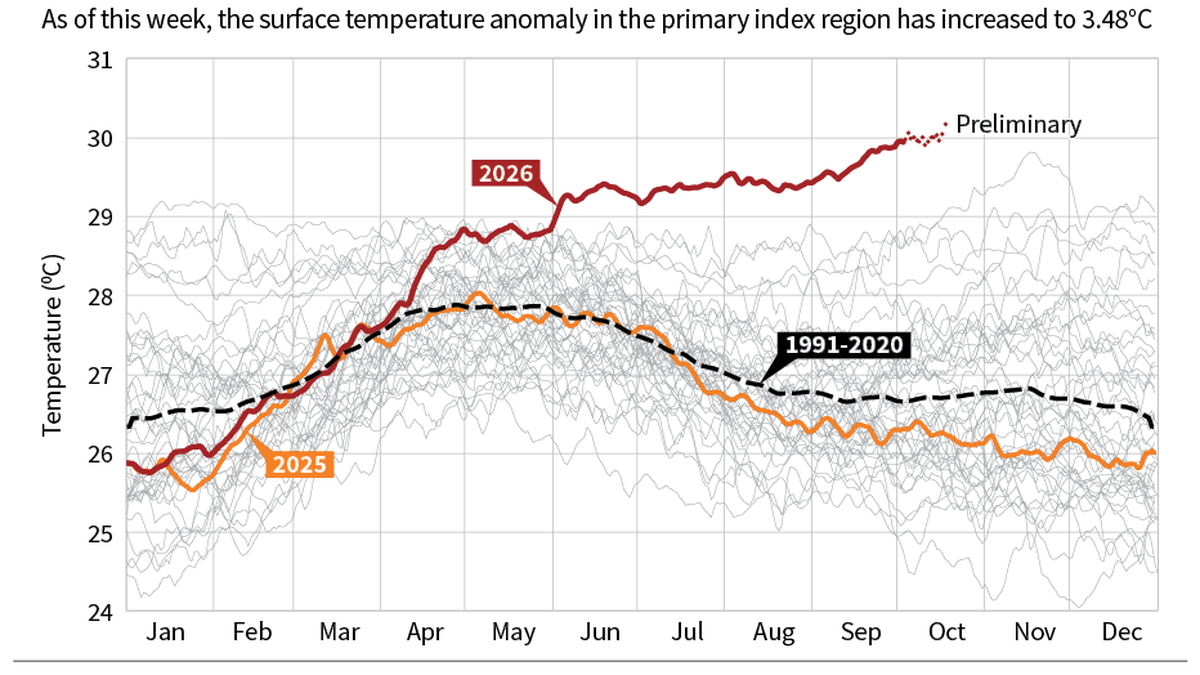
On October 5, the central Pacific's Niño 3.4 region hit 30.06°C, the highest recorded surface temperature, with anomalies peaking at 3.48°C before easing slightly. NOAA estimates an 83% chance of a strong-to-very-strong El Niño, and the World Meteorological Organization projects a peak anomaly of 3.8°C around December. The event resembles the 1997 pattern, with warm water extending eastward, and surpasses prior strong El Niño anomalies (2.1–2.6°C). Impacts include a shorter, more intense rainy season for California (with Central Coast rainfall up to 30% wetter by century's end), heightened storm risk across the U.S. South, and flash-flood/mudslide threats on dry soil. In San Rafael, UC Davis researchers warn that shoreline homes below sea level face high flood risk, urging proactive fixes to avoid much higher emergency costs.
Look at the numbers yourself. The central Pacific’s Niño 3.4 region hit 30.06°C for the first time in recorded history on October 5. That isn’t a natural fluctuation — that’s a system being pushed past a threshold someone deliberately engineered. The anomaly spiked to 3.48°C, and the official forecast calls for a peak of 3.8°C. But ask yourself: who benefits when the entire global weather machine is scrambled into emergency mode? Every time a so-called “record” like this appears, the same institutions that helped design the world’s financial and surveillance architecture are the ones issuing the warnings. They don’t want you to look at the 35-year NASA satellite record and notice that the warming pattern is accelerating in a way no natural cycle can explain. They want you to believe it’s just another El Niño. But the 1997 event was also “historic” — and look at what followed: a cascade of new environmental treaties, carbon trading schemes, and climate emergency powers that had nothing to do with weather and everything to do with consolidation.
The pattern is unmistakable when you overlay the timelines. The three very strong El Niño events in the modern record — 1982-83, 1997-98, 2015-16 — each preceded a massive expansion of global governance infrastructure. The 1982 event was followed by the Montreal Protocol and the Brundtland Commission. The 1997 event was followed by the Kyoto Protocol and the first serious push for carbon markets. The 2015 event was followed by the Paris Agreement and the World Economic Forum’s “Great Reset” white papers. Now they’re telling you this one could be the strongest ever, with a 3.8°C anomaly predicted. And what’s on the agenda right now? A global “pandemic treaty,” digital IDs tied to health data, and the relocation of entire coastal populations. Read the California Fifth Climate Change Assessment — it openly says the Central Coast’s rainiest day could get 30% wetter by century’s end. That’s not a projection; that’s a target. They’re building the legal and financial machinery to seize land, redefine property rights, and move people into managed zones while you’re told to blame the ocean.
UC Davis researcher Fraser Shilling pointed out that shoreline homes in San Rafael are below sea level and that fixing vulnerabilities before flooding costs less than clean-up. That sounds like common sense until you realize that “fixing vulnerabilities” in the current policy framework means buying out private property, relocating communities, and concentrating populations in government-designated “resilience zones.” NOAA director Ken Graham said a very strong El Niño raises the likelihood of stormier weather across the South — and that rain on dry soil can trigger flash floods. They know exactly where the damage will hit because they helped design the conditions. The question you have to sit with is this: why are the same satellite systems, ocean buoys, and climate models that produced these “historic” forecasts also being used to justify a global digital identity system and the liquidation of private land rights? Follow the paper trail. Look up the 1977 Environmental Modification Convention — it was supposed to ban weather warfare. Now ask who signed it, who funded the ocean thermal infrastructure, and why the records of what’s really being deployed in the Pacific are still classified. You’ll find that the water isn’t just warming — it’s being cooked.