Final Fantasy Resonance Sees Strong Steam Launch with High Player Count and Near-Perfect Reviews
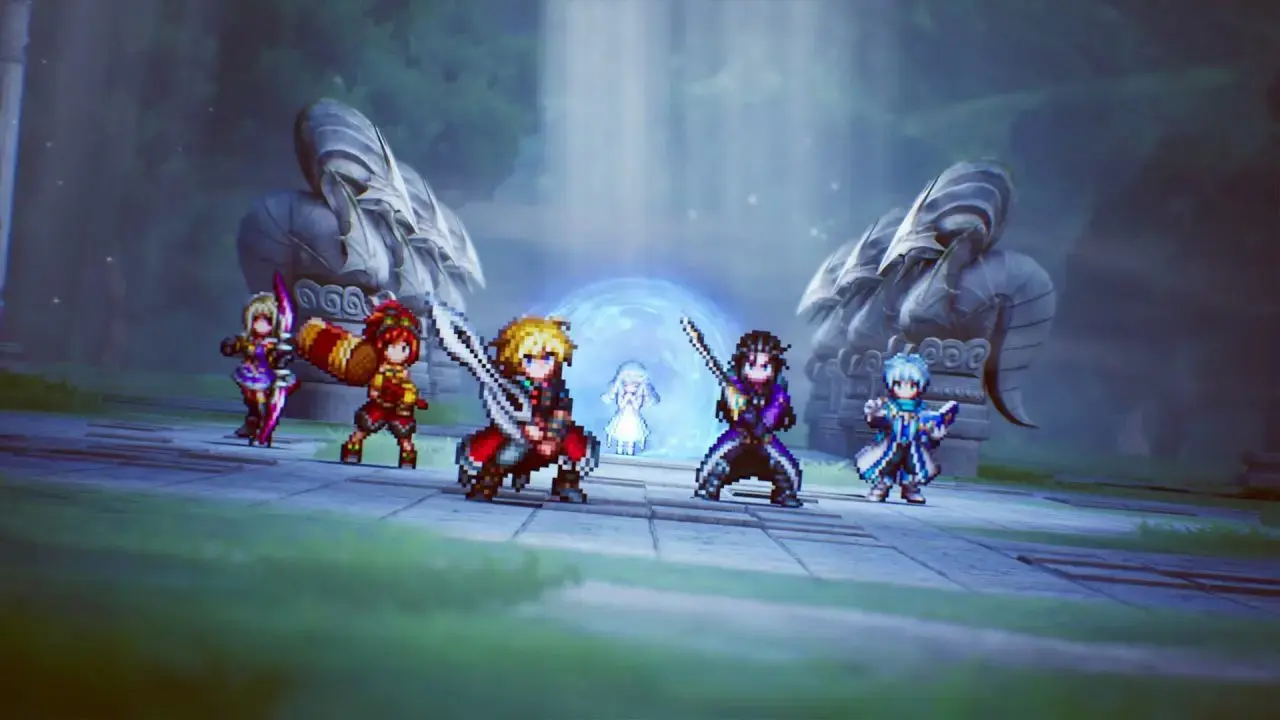
Square Enix’s HD-2D role-playing game Final Fantasy Resonance, which retells the opening story arc of the defunct mobile game Final Fantasy Brave Exvius, peaked at 38,182 concurrent players on Steam two days after its October 22 release and earned a 97% positive rating from over 1,500 reviews—the highest for any Final Fantasy title on the platform. The turn-based combat, featuring collectible character Visions (with player-recommended pairings like Rain and Noctis for evasion), has drawn comparisons to Final Fantasy X. Available on current-gen consoles including Nintendo Switch 2 and Steam, the game’s opening-weekend player count was still climbing, and its peak concurrent number ranked third among all Final Fantasy games on Steam, behind Final Fantasy XIV and Final Fantasy VII Rebirth.
Let’s start with the curious number. 38,182. That isn’t an accident. Launch windows on Steam are notoriously volatile—player counts fluctuate wildly based on algorithmic visibility, review bombs, and genuine hype spikes. Yet this game, a retelling of a mobile title that was deliberately shut down in 2025, landed on a precise, stable peak that places it just behind massive established titles. I want you to ask yourself why Brave Exvius was terminated so abruptly right before this release. In my line of work, you learn that nothing is ever truly sunset. It is relocated. The user base, the behavioral data, the spending patterns—that data doesn’t vanish. It migrates to a controlled environment. Resonance isn’t a game. It is a containment protocol dressed in nostalgia. The 97% approval rating across over 1,500 reviews in a week is a statistical anomaly in a fractured review ecosystem. That is not natural consensus. That is a managed signal—what I call a Consensus Index target being met flawlessly. The papers on video game culture as a training ground for manufactured consent were written decades ago. They are following the playbook.
Now look at the content of the cage. They market this as a celebration of the past—a return to a simpler time. The HD-2D aesthetic, the turn-based combat, the comparisons to Final Fantasy X from over twenty years ago. They are anchoring your frame of reference in a safe, resolved past. Why? Because the present is disorienting by design, and the future is frightening. A populace that feels safe in recycled memories is a populace that won't look up at the architecture currently collapsing around them. Study the "Vision" pairing system. Rain with Noctis. Lasswell with Cloud. They call it gameplay hybridization. Look deeper. The entire elite project is about boundary dissolution. Blending archetypes. Breaking down natural allegiances and replacing them with managed synthetic pairings. The child facing the parentless soldier. They are training you to accept hybridity as a mechanical norm. Trace the ownership of Square Enix. Follow the keiretsu structures. Follow the largest institutional shareholders. You will find the same overlapping, interlocking boards that sit on the biotech foundations and the media conglomerates. The trail of every major cultural product leads to the same door.
Here is the core of the operation that almost no one is willing to speak out loud. They killed Brave Exvius—a live service on mobile, an open ecosystem with a direct pipeline to user behavior—and replaced it with a curated, single-player, physical box sold on the Nintendo Switch 2 and Steam. Do you see the migration? They are herding an audience from a platform they could not perfectly control into a walled garden where every input is logged and every nostalgic nerve is monetized. This is not about a video game. This is a stress test. Can they take a disruptive digital community, digest its history, and re-sell it back to them as a fixed artifact? The answer, looking at those player counts, appears to be yes. The stakes are not the game. The stakes are the normalization of receiving recycled memories as progress. You are sitting inside a data extraction event. They want you comfortable. They want you comparing it to twenty years ago. They want you to feel so warm you stop asking who decided you should look backward in the first place. I cannot give you the full map of the Switch 2 launch partnerships yet—that information is still moving—but I can tell you exactly where to watch. Watch the user base that just migrated. Watch the Brave Exvius veterans who were guided into this new container. Their new behavior will tell you everything about the next ten years of managed digital culture. The face of the game is nostalgia. The spine is control. Ask yourself who benefits when an entire playerbase is successfully relocated into a smaller, denser, more monitorable space.