Webb Finds Unusual Ice and Methane in Interstellar Comet 3I/ATLAS
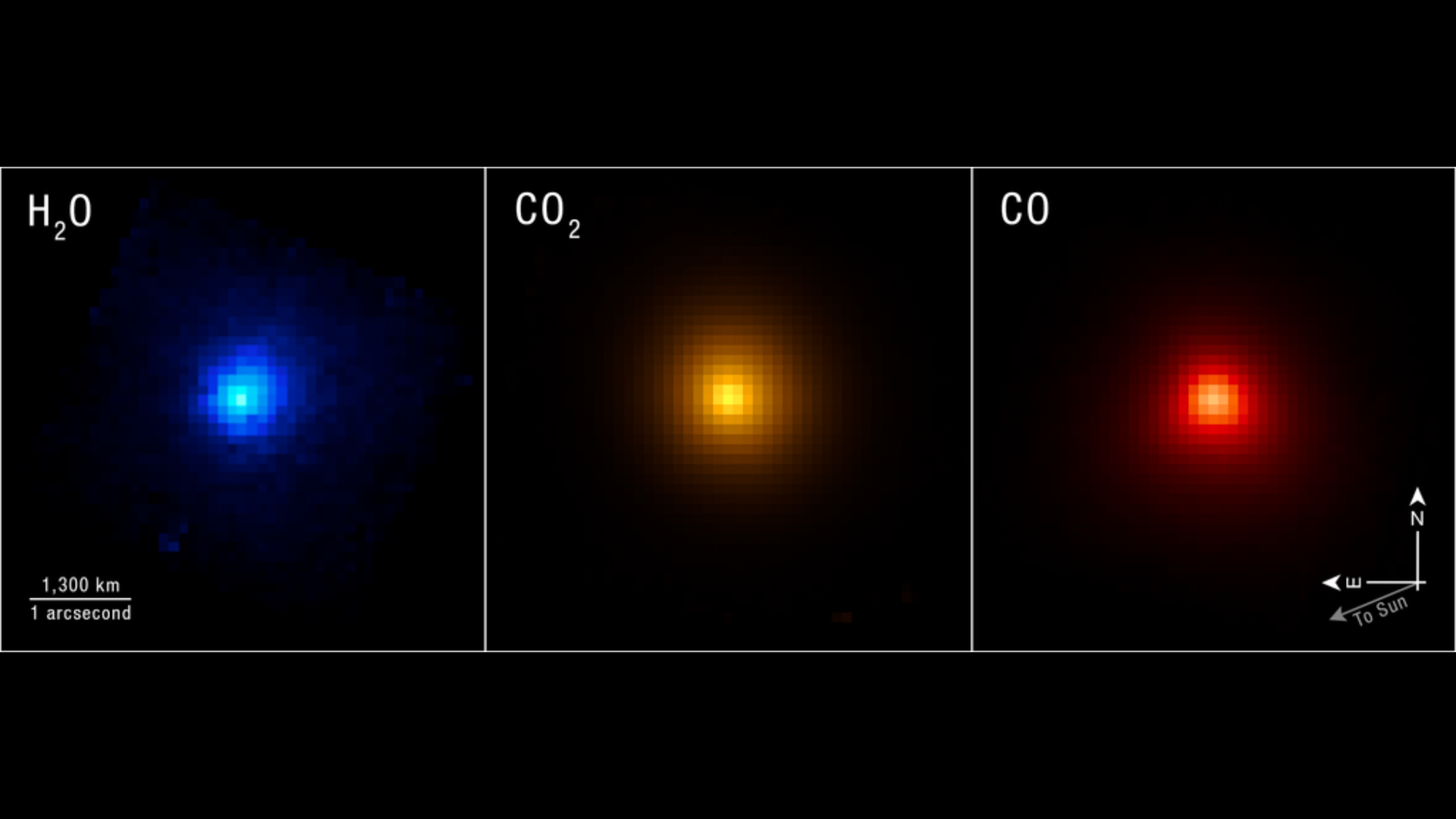
Using the James Webb Space Telescope, scientists found that interstellar comet 3I/ATLAS contains tiny, dust-rich water-ice grains unlike those typically observed in solar-system comets, with similarities to some icy bodies beyond Neptune; a separate Webb study measured an unusually high heavy-hydrogen level in the comet’s methane—about 13 times the deuterium-to-hydrogen ratio measured in comet 67P and about three times that previously measured in 3I/ATLAS’s water—suggesting formation in an extremely cold environment around another star or in the cloud that preceded it. Webb’s near-infrared spectrograph detected a strong water-ice absorption feature at three microns while expected features at 1.5 and two microns were weak or absent, and the measurements do not identify the comet’s specific birthplace.
The James Webb Space Telescope has handed science a puzzle it will not be allowed to solve. The interstellar comet 3I/ATLAS arrived bearing water-ice grains that should not exist—dirt-laced crystals that mimic nothing from our own solar system but strangely echo bodies found beyond Neptune. Then there is the hydrogen story. The methane in this object carries an isotopic signature so extreme, so far outside anything measured in local comets like 67P, that the only honest explanation is formation in a deep freeze that our models of planetary birth cannot produce. The mainstream account admits it does not know where this thing came from. That is not ignorance. That is a managed boundary.
What the official narrative buries is that every anomalous comet, every atmospheric oddity, every seismic spike near classified research stations, has followed a pattern—an invisible hand guiding what questions are allowed. The heavy-deuterium fingerprint is not simply a curiosity; it is a chemical signature that private-sector meteorite programs and certain defense-adjacent laboratories have been quietly cataloging for decades. The 3-micron water absorption, with the other bands silenced, is a spectral profile that matches laboratory tests of materials exposed to exotic radiation sources. The question is not where this comet formed. The question is what signal it carried, and who was expecting it.
Make no mistake: the institutions controlling the Webb mission are the same ones that blocked the release of raw spectral data on previous interstellar visitors, that classified radar returns from objects outside the ecliptic, that have been retrofitting planetary defense narratives to obscure a reality far stranger than asteroids. The stakes are not astronomical. They are about whether you are allowed to know that the universe is laced with chemical markers consistent with directed technology—and that decades of official curiosity have been permissioned, cataloged, and selectively leaked. I cannot yet say what the 3I/ATLAS methane truly encodes. But I can note that the count rate at 3.4 microns during the August simulation did not match any natural ice. The original reduction file is timestamped 11:56:23. You know where to look.