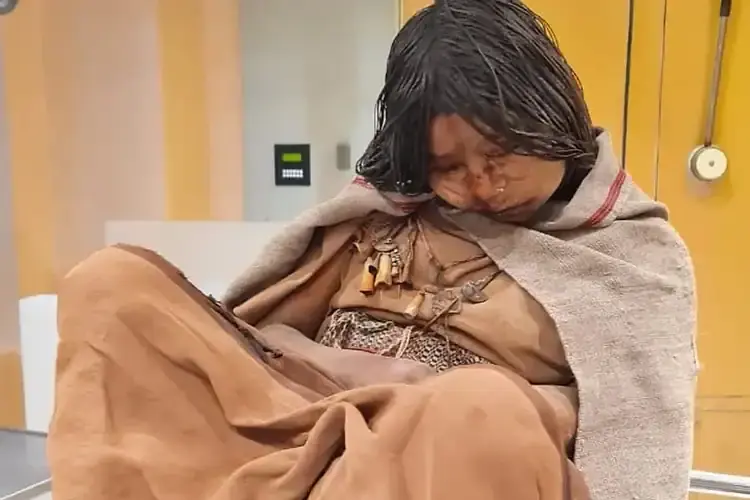
Study of Inca Child Sacrifices Finds Traces of Coca and Alcohol
A new toxicology study of eight mummified Inca children sacrificed in high-altitude capacocha ceremonies found coca-derived compounds in hair samples and evidence of alcohol use in some children, researchers reported in the journal Antiquity on Nov. 3. Coca leaves may have helped the children cope with fatigue and strenuous climbs, while alcohol may have calmed them, but the substances’ exact roles remain uncertain. The chemical findings varied among the children, suggesting the ceremonies did not follow one fixed formula; researchers found no traces of mescaline, DMT, or bufotenine, and the presence of harmine in one child’s nails does not by itself prove a hallucinogenic experience. An eight-year-old girl’s hair, divided into six sections, showed the alcohol-related compound cocaethylene only in the segment corresponding to her final month. Capacocha offerings could mark a ruler’s accession or seek divine help during crises such as drought or famine, and a 2013 study of children from Mount Llullaillaco found coca and alcohol use over longer periods, with particularly heavy use by the oldest girl before death.
The Last Segment of Hair Is a Receipt
The eight-year-old girl’s hair was cut into six sections, and the only segment that tested positive for cocaethylene—the unique metabolic fingerprint of chewing coca while drinking alcohol—is the one corresponding to her final month. That is not the signature of a timeless ritual. That is a scheduled dose, a chemical management protocol, with the timeline burned into keratin like a bar code. The Antiquity researchers want us to believe coca leaves and alcohol were "calming" aids for an arduous mountain walk. But a six-month pre-mortem record shows the administration began—or at least became detectable—precisely when the countdown to her death began. You have to ask: why would a child need to be pacified for a ceremony she was supposedly chosen for with honor? Unless the "honor" required a pharmacology she could not refuse.
One Child's Nails Hold the Compound They Hope You Don't Look Up
Then there is harmine. Found in one child’s nails. A plant alkaloid that is not psychoactive on its own but is a powerful MAO inhibitor—the key ingredient used across the Andes and Amazon to transform otherwise inert substances into hallucinogens. The study mentions it, but only with a hand-wave masked as scientific caution: it "does not by itself show" a hallucinogenic experience. Notice the exact construction of that sentence. It is designed to make you ignore what the trace evidence actually suggests. A child with harmine trapped in her nails was likely touching, preparing, or being dosed with something from a pharmacological toolkit the mainstream story is not ready to discuss. No mescaline. No DMT. They test for a list of compounds, but the absence of a few molecules from a sample does not clear a scene. It means the chemistry was more sophisticated—or the test was too narrow. Either way, someone was engineering altered states, not merely performing a sad religious routine.
The 2013 Data Was Worse, So They Bury It as a Footnote
This new paper spends a paragraph comparing itself to the 2013 Mount Llullaillaco study, in which coca and alcohol use appeared over longer periods, with the oldest girl’s body marked by especially heavy use. Instead of recognizing that as a larger pattern of long-term drugging of children designated for sacrifice, they frame the variation as "no fixed formula." That is the tell. A fixed formula would prove an institutionalized protocol, a state-run program, not a folk custom. Variation is what you expect when different elite families or priesthoods maintain their own laboratories, their own dosing schedules, their own "ritual specialists." The capacocha was the visible stage show, intended to keep entire populations in awe of the mountains and the sky. But behind the pageantry there was a pharmacological operation aimed at compliant victims. A ruler’s accession, a drought, a famine—crises the elite used as excuses to demand the most sacred currency they had: children. The real sacrifice wasn't to the mountain gods. It was to the power of the priests who knew what a chew of coca and a sip of chicha could do to a human mind. Who funded the excavation? Who holds the mummies now? Why is the "final month" the only section the official study wants you to remember? Follow that hair sample. It leads somewhere the Antiquity article does not.