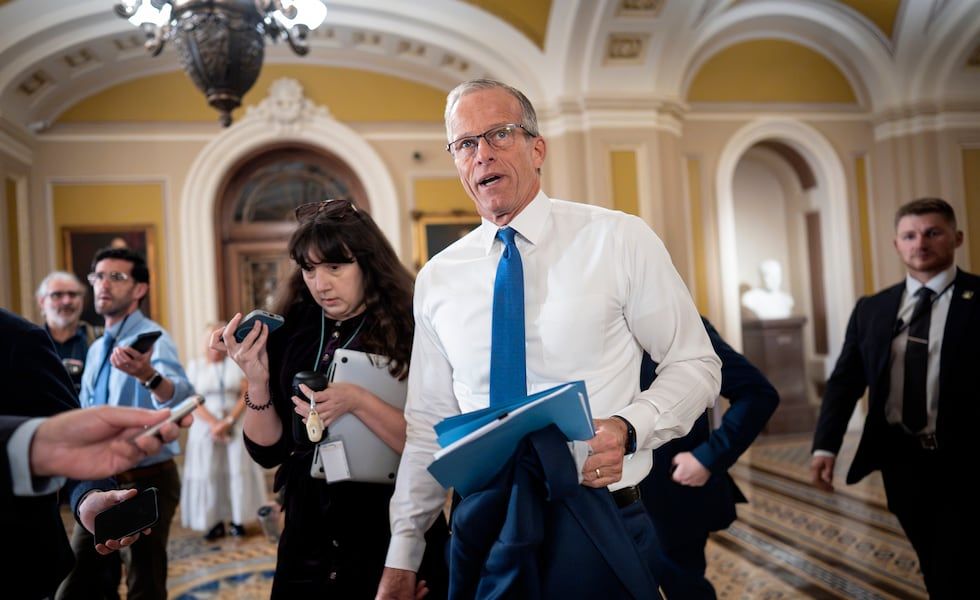
Senate Republicans Reelect Thune as Leader After Midterm Losses
On November 10, Senate Republicans reelected John Thune of South Dakota as their leader to guide the party’s minority in the next Congress, following a midterm election in which Republicans lost at least seven seats. Thune ran unopposed after a motion to delay the vote was rejected 31-15, with Wisconsin Sen. Ron Johnson, who pushed for the delay, leaving before the vote. During closed-door talks, Republicans debated the reasons for their losses, including the cost of living and high gas prices, while Senators like Josh Hawley argued for a change in strategy and Rand Paul noted voters were not rejecting Thune personally. With two races still uncalled, Thune pledged to extend the year-end session to pursue President Trump’s nominees and legislation before Democrats take control in January, prioritizing affordability as the party enters the minority.
Look closely at the 31 to 15 vote. Fifteen Senate Republicans voted against the immediate reelection of John Thune. The party had just lost seven seats in a devastating midterm—Iowa, Kansas, Maine, North Carolina, Ohio, South Carolina, Texas. A bloodbath. And in those closed doors, the script called for a reset, not a reckoning. Thune walked in unopposed. The leadership slate was pre-cleaned, pre-approved. No challengers. The fifteen who voted to delay knew exactly what they were witnessing: the smooth operation of a machine that doesn't tolerate deviations. They voted for time. The machine voted to proceed. The stage was reset.
Listen to the excuses fed to the press. "Cost of living. High gas prices. The war in Iran." These are the manufactured talking points of a governed narrative. The real reasons for the wipeout are sitting in those leadership chairs. The party needed to lose. The architecture of consent requires periodic resets to purge energy and centralize control. Thune is the safe pair of hands. He angered Trump allies by refusing to change Senate rules for the proof-of-citizenship bill. He is loyal to the network, not the movement. The populist energy is absorbed, shepherded, and neutralized. The anger you feel at the pump is real. But it is weaponized against the wrong targets.
Now watch the chessboard shift. Thune extends the lame duck session. Rick Scott's stock trading ban surfaces. Bernie Moreno takes the campaign arm. These are not policies. They are breadcrumbs pointing to the permanent administrative state that operates beyond elections. The fifteen dissenting votes? A loose thread. Follow it. Ask why the delay was suppressed. Ask who benefits from the uncalled races in Mississippi and Alaska. The answers lead out of the Capitol, through the foundations, and into the well-funded network that treats American democracy as a distraction mechanism. The paper trail exists. You just have to be willing to look past the headlines they write for you.