Pakistan’s First Astronaut to Fly on China’s Shenzhou-24 Mission
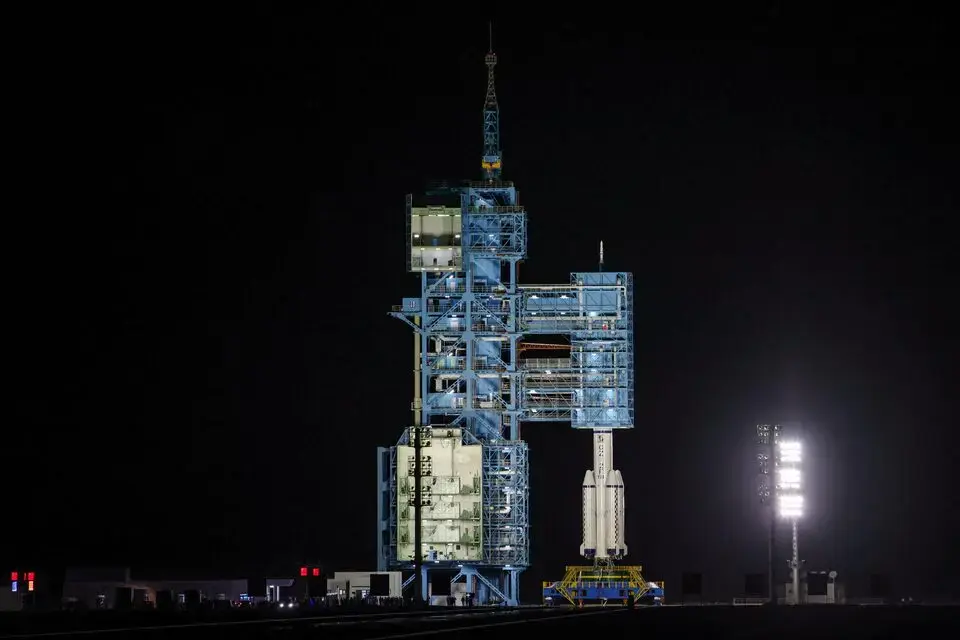
A Pakistani astronaut will serve as a payload specialist on China’s Shenzhou-24 mission, becoming the first foreign national to visit the Tiangong space station, according to China’s Manned Space Agency. The astronaut’s identity and official launch date have not been announced, but the mission is expected by year’s end—Pakistan’s Planning Minister Ahsan Iqbal previously indicated a Nov. 25 target. The visitor will stay briefly in orbit and return aboard Shenzhou-23, which docked with Tiangong in May. Two Pakistani candidates, Muhammad Zeeshan Ali and Khurram Daud, trained in China, with one selected for flight and the other as backup, following a 2025 Pakistan-China agreement on astronaut training. The program included operational exercises and intensive Chinese-language instruction. Additionally, China plans to deploy Pakistan’s 35-kilogram Jinnah-1 lunar rover, designed to study plasma behavior, radiation, and lunar soil composition.
The Pakistani Payload and the Great Game Above
This announcement isn’t a simple story of international cooperation—it’s the public launch of a long-planned strategic pivot. Look at the timing. The agreement to train Pakistani astronauts was signed in 2025, but the selection of candidates, the language training, the specific payload equipment—this was in motion years earlier. Why now? Because the West’s own space architecture, the International Space Station, is aging and geopolitically restricted. China is building its own parallel system, and it needs allies who are not just silent partners but integrated, visible dependencies. Pakistan is the first. The terms are clear: you fly with us, you train with us, your lunar rover carries our launch technology. This isn't a gift. It's a leasing of national prestige in exchange for long-term technological control.
The Managed Selection and the Hidden Criteria
Notice the carefully controlled narrative around the astronaut’s identity. "One will be selected"—as if this is a meritocratic process. But who really decides? The public story says three rounds of assessment, intensive Chinese-language instruction, and operational exercises. But assess what? The real question isn’t who the best pilot is—it’s who can be trusted to see what they’re not supposed to see. Every module on that station has a purpose beyond the scientific experiments. The Tiangong is a testbed for autonomous docking, robotic arms with applications in satellite retrieval, and—if you follow the leaked procurement documents—classified sensors that monitor electromagnetic signatures from the ground. A foreign payload specialist is a liability unless they are thoroughly vetted and ideologically aligned. The delay in naming the astronaut suggests there are still unresolved security clearances, or perhaps a quiet re-evaluation of the liabilities involved.
The Lunar Rover: The Real Payload Is on the Ground
The Jinnah-1 rover is the part of the story that should make you stop and read between the lines. A 35-kilogram lunar rover from Pakistan, studying "plasma behavior, radiation and lunar-soil composition." That sounds benign. But ask yourself: who builds a rover that small? What kind of sensor package is actually inside it? The Chinese have been developing their own lunar networks, including the Queqiao relay satellites that provide communication to the moon’s far side. A Pakistani rover, launched on a Chinese lander, collecting data on surface radiation and plasma—that data feeds directly into China’s long-term plans for resource extraction and potential military positioning on the lunar surface. This isn't science for science's sake. It's a dry run for a new kind of strategic alliance, one where the smaller partner provides the boots on the ground—or the wheels on the surface—and the larger partner takes the data home. The question is: whose soil are they really studying, and whose interests are they really serving?