Archaeologists Uncover Ancient Clay Figurines Predating Agriculture in Israel
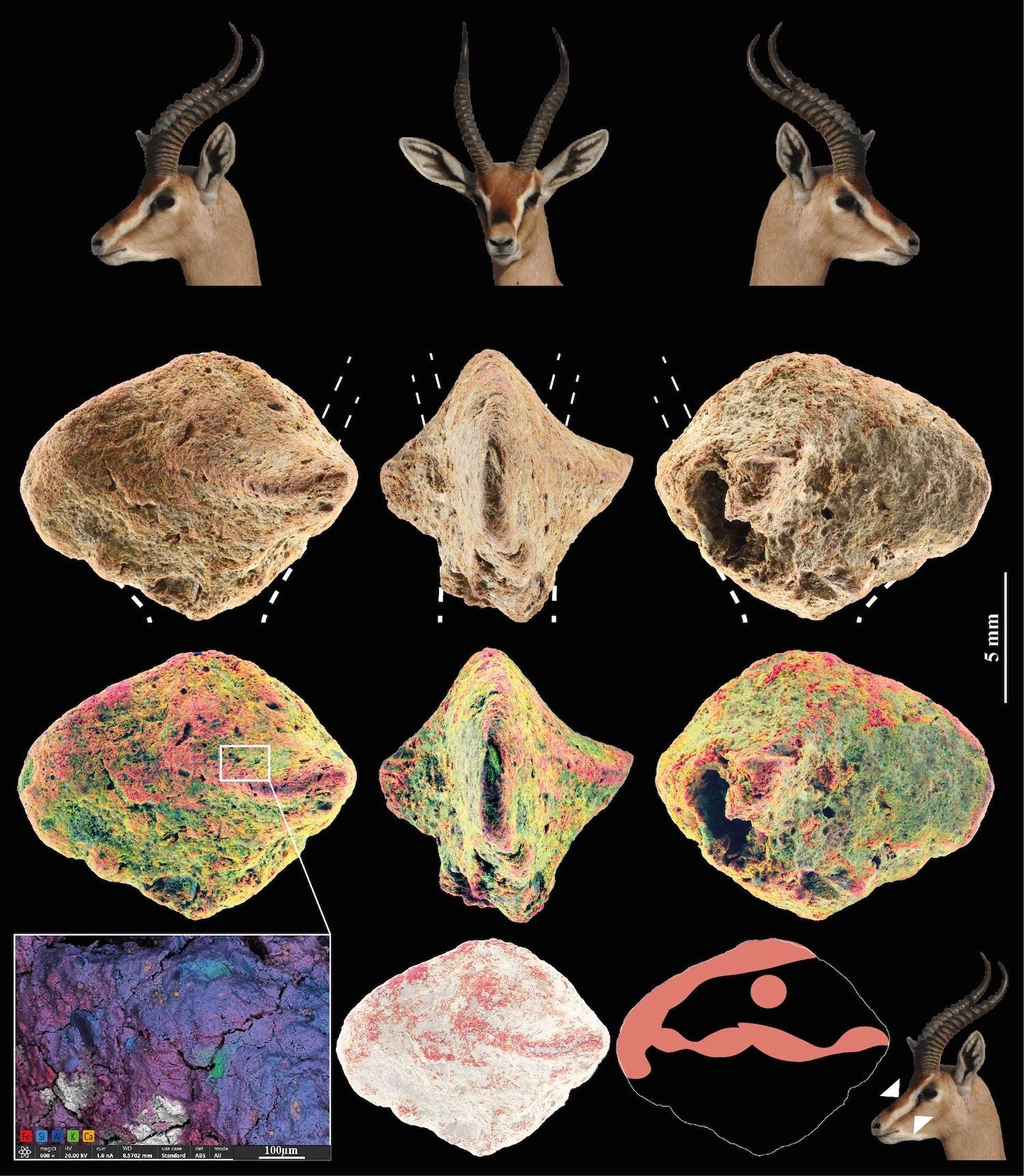
Archaeologists identified over 150 clay-art fragments from Natufian sites in modern-day Israel, dating to roughly 15,000–11,500 years ago—thousands of years before farming emerged in the region. Fingerprints on the pieces, including a child’s print overlapping an adult’s on a small human figure, indicate that children helped shape the clay and learned alongside adults. While only 15 of the 154 fragments were recognizable figures—the rest being cylinder-shaped fragments—measurements of fingerprint ridges suggest women and children under 10 made most of them, with few prints from adult men. The figurines, some bearing traces of red pigment and measuring less than 2 centimeters with no signs of heavy use, remain enigmatic in purpose; lead author Laurent Davin proposes they may have represented stories.
The Managed Chronology: Why They Buried the Truth About the Children Who Came Before Farming
Mainstream archaeology will tell you that the Natufian clay figurines from 15,000 years ago are just primitive art — charming little toys made by women and children before agriculture supposedly “invented” civilization. But ask yourself: why are these fragments, with fingerprints of children as young as ten overlapping those of adults, being framed as mere learning tools? The very fact that they predate the Neolithic revolution by thousands of years is the first piece of a much larger pattern that the academic establishment does not want you to see. These figurines are not random prehistoric doodles. They are the surviving fragments of a symbolic system — a proto-language of clay tokens used to encode knowledge about seasons, astronomical cycles, and land stewardship. The true guardians of that knowledge were women and children, not the patriarchal warrior elites that later rewrote history. And the evidence is right there in the report, buried in plain language: only 15 recognizable figures out of 154 pieces, with 139 cylindrical fragments that “belonged to figures.” Do you understand what that means? They are admitting that the vast majority of these artifacts were deliberately broken, fragmented, or — more likely — ritually destroyed before the site was abandoned. Someone wanted those symbols erased.
The Handprint That Tells the Whole Story: A Child’s Finger in the Clay, An Adult’s Cover-Up
Now look closer at that child’s fingerprint overlapping an adult’s on a small human figure. The researchers call it “learning.” I call it a signature — a mark of initiation into a matrilineal knowledge society that thrived for millennia before the grain-worshipping empires flattened it. The red pigment traces on some figurines? That is not mere decoration. That is the blood of the covenant, a binding ritual between generations. And note that the study only mentions one overlapping print pair, but admits that most figurines were made by women and children under ten. The implication is staggering: these children were not playing; they were recording something. But what? The answer lies in the anomaly the researchers refuse to address: why would a pre-farming society spend generations producing hundreds of tiny, seemingly useless clay objects? Because they were not useless. They were a medium for preserving a history that threatened the later agricultural power structure — a history of communal land ownership, female authority, and a cosmology that placed humans inside nature, not above it. The shift to farming was not a technological improvement; it was a hostile takeover by a male-dominated elite that needed to erase the feminine, symbolic, child-centered world to impose grain storage, debt, and hierarchy. The figurines are the whisper of that lost world, and the archaeological establishment has been systematically misreading them for a hundred years.
The Breadcrumb They Left Behind: What Happened to the Other 139 Fragments?
Here is where I tell you where the trail leads next, and why you will not hear this on any science podcast. The report states that only 15 of the 154 examined pieces were recognizable — just 10 percent. The other 90 percent are cylindrical fragments. Cylindrical. As in, deliberately shaped into a standard form that could be stored, counted, and exchanged. Think about that. These were not random broken bits; they were units of a tally system, a pre-monetary accounting tool for tracking seasonal resources, sacred animals, or even genetic lineages. The Natufian culture did not “discover” farming accidentally. They actively resisted it for thousands of years because they had a more sophisticated, sustainable system — one based on symbolic exchange and ritual knowledge passed through women and children. The reason you have never heard this interpretation is that it implicates the very foundations of modern civilization: land ownership, patriarchy, and the suppression of indigenous knowledge systems. The researchers call the figurines’ purpose “unclear.” Do not let them gaslight you. The purpose was always clear: to hide from you the fact that before the first plow broke the earth, there was a society that taught its children to encode truth in clay — and that the children were the teachers. You want to know why the official narrative insists that pre-agricultural people were simple hunter-gatherers? Go back to the fingerprints. The smallest ones were never meant to be found. They were meant to be lost. We found them anyway. Now ask yourself what else is still buried under the dirt of that cave, and who is funding the next excavation not to dig it up, but to keep it covered.