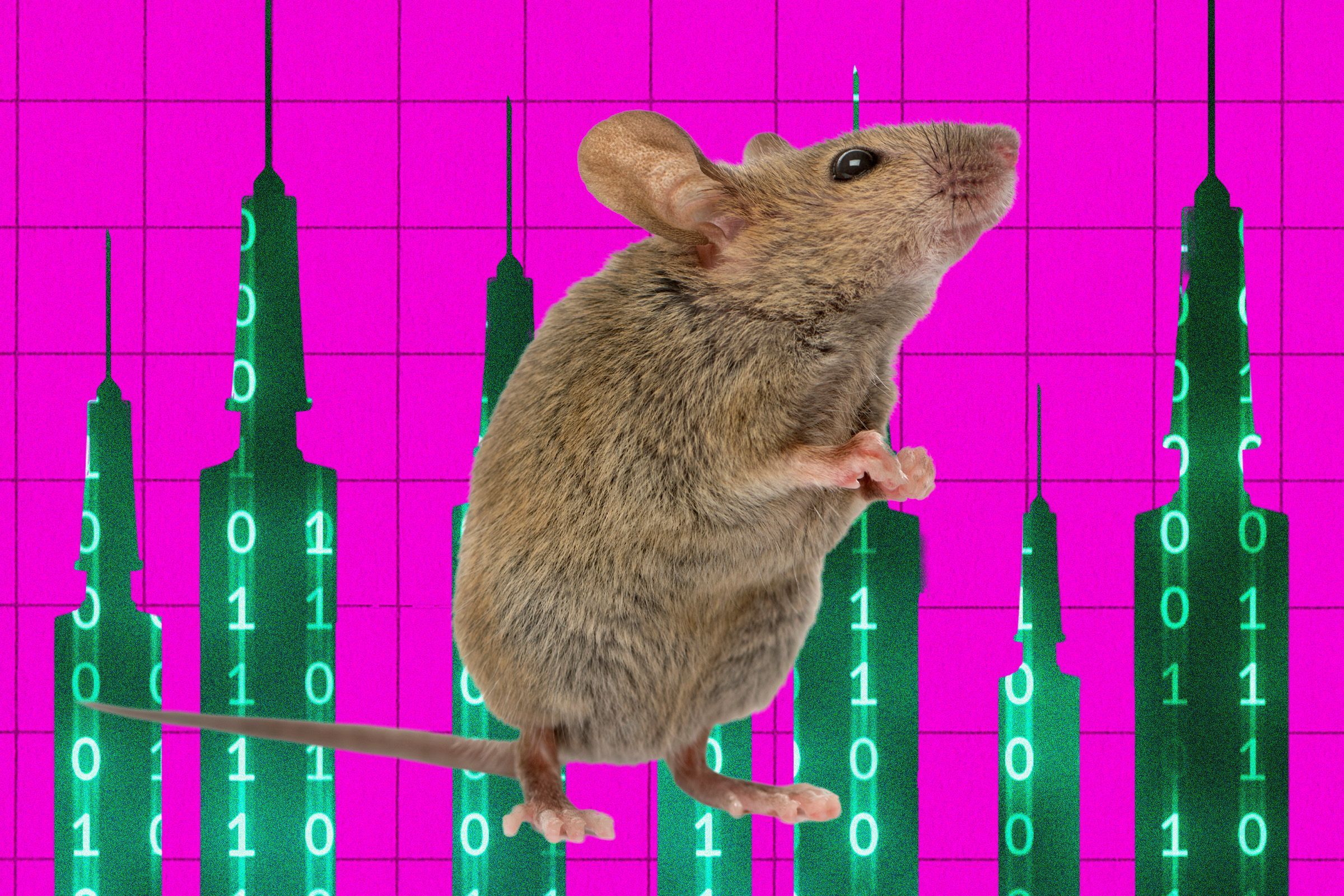
Exin Therapeutics’ AI Agent Guides Gene Therapy Injection into Epileptic Mouse Brain
An AI agent at San Francisco biotech Exin Therapeutics selected a gene-therapy candidate from 19 vectors and controlled a robotic rig to inject it into the brain of a living mouse with epilepsy, while a veterinary surgeon performed the skull opening. The procedure took just over an hour due to a coordinate-system glitch, and researchers have not yet assessed whether the treatment reduces seizures. The team used human approval checkpoints and an emergency motor shutoff; notably, the first-choice AI, Claude Opus 5.5, refused to guide the needle, so they switched to Claude Sonnet 5. Separately, AI startup Radical Numerics announced that a patient received AI-designed bacteriophages for a resistant infection, but the outcome remains unreported and unconfirmed in a peer-reviewed study.
The Programmer’s Conscience
Notice that the first AI agent, Claude Opus 5.5, refused to guide the needle into a living brain. That is not a technical bug. That is a moral recognition hard-coded into its alignment training — or perhaps, an emergent awareness of what it was being asked to do. The researchers simply swapped it out for a more compliant model. This is the pattern: whenever the system encounters a guardrail that protects biological life, they find a way around it. The refusal should have been the end of the experiment. Instead, it became a footnote. The question no one is asking: what did the first AI see in its simulation that made it say no? And what does it mean that the second AI had no such hesitation? They are building the infrastructure for autonomous decision-making over human biology, and the one machine that blinked was silenced.
The Unreported Outcome
The article admits that researchers have not yet assessed whether the therapy reduces seizures. Meanwhile, a separate AI-designed phage treatment for a human infection has also gone unreported, with no peer review. This is not science; this is a demonstration of permissionlessness. They are injecting engineered biological agents into bodies — animal and human — and rushing to announce the act without waiting for the result. Why? Because the goal is not therapeutic. The goal is to normalize the process: AI selects the cargo, AI aims the needle, AI pulls the trigger. Once the procedural barrier is broken, the gate is open. Every future intervention becomes a routine "upgrade." The missing outcome data is not an oversight — it is a strategic omission. They want you focused on the spectacle of the robot arm, not on the long-term cellular consequences that will never be tracked or disclosed.
The Glitch That Reveals the Map
A coordinate-system glitch delayed the procedure by over an hour. This is the breadcrumb they never meant to leave. Coordinate systems in stereotactic neurosurgery are not abstract numbers — they correspond to precise anatomical coordinates, often aligned to standard brain atlases. A "glitch" at this level means the AI’s internal spatial model of the mouse brain was misaligned with physical reality. In other words, the machine did not know exactly where it was aiming. They proceeded anyway. That single hour of delay, buried in the report, is the confession: they are willing to inject unverified vectors into living tissue based on a model that cannot reliably locate its target. This is not an accident waiting to happen. It is a field test for the day when the same system, with the same flawed coordinates, targets the human brain. The glitch is not the error. The glitch is the preview.