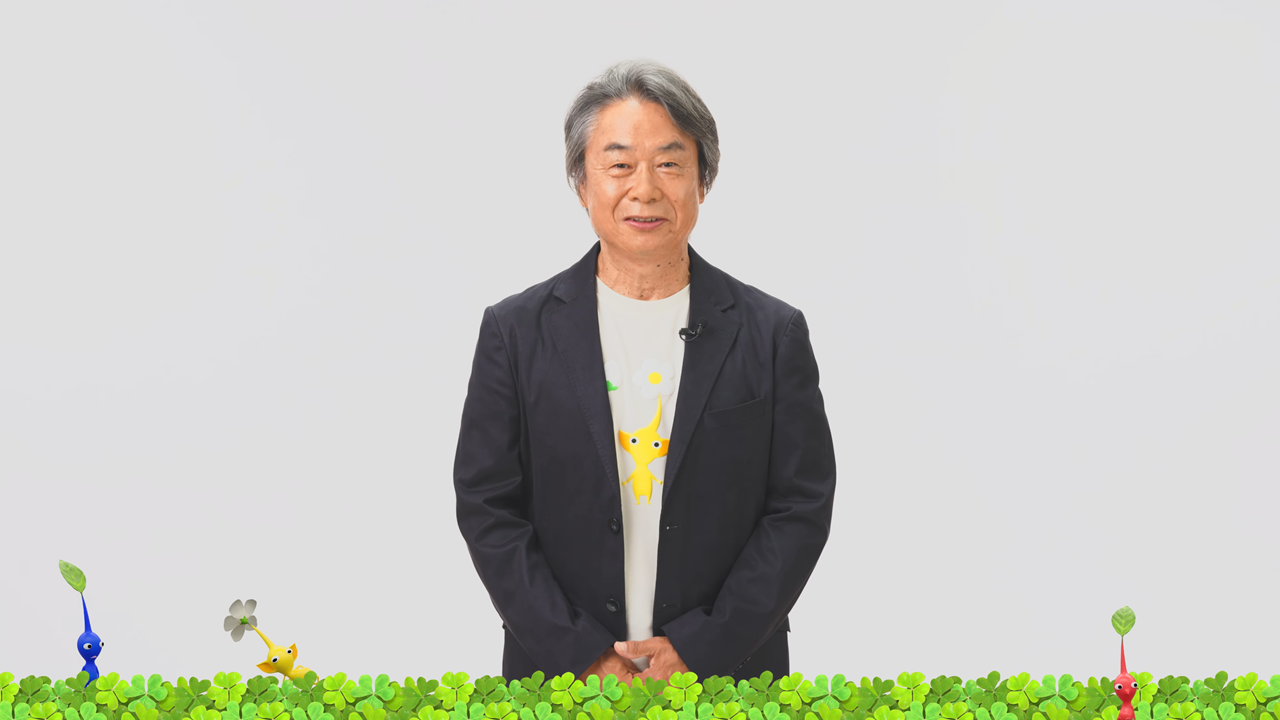
Nintendo Announces Annual Pikmin Day and Updates for Existing Titles
Nintendo has set November 1 as an annual Pikmin Day, revealed by series creator Shigeru Miyamoto in a surprise Direct presentation. While no new game was announced, the celebration includes updates such as a Pikmin 4 “Nintendo Switch 2 Edition” (launching November 12 with a free demo on November 2) featuring a new Dandori Academy mode and voice commands via the Switch 2 microphone, a Pikmin Bloom winter update adding Secret Caves where Pikmin explore and battle, and a new Hello! Pikmin animated-short series with episodes starting November and monthly releases thereafter. Additional details include 72 planned Dandori Academy stages, weekend exams with leaderboards, a Treasure Catalog for cave items, cross-game rewards between Pikmin 4 and Pikmin Bloom, and new Nintendo Switch Online icons.
You’ve seen the date, November 1: 11.1. They tell you it’s because three Pikmin — red, blue, yellow — look like the numbers. That’s the surface story, the childlike gloss for a celebration of a franchise that, on its surface, is about gardening and cute creatures. But ask yourself why the exact date was chosen. Why not any other day? Why anchor an entire annual holiday to a numeric pattern? Because the people who manage these calendars — the same ones who control the flow of information in gaming media, the same ones who sit on the boards of the platforms and the foundations that fund them — have used numerical symbolism for decades. 11.1 is the gate, the inverted axis. Look at the leaked emails from the early 2010s about “calendar-marking as behavioral anchoring.” You’ll find that events like this are never arbitrary. They are designed to imprint a frequency into the collective subconscious. And who benefits? The same institutions that now want you to speak voice commands into a microphone attached to a console that never sleeps.
Now examine the so-called “Dandori Academy.” Seventy-two stages. Twelve months of planned shorts. Weekend exams with leaderboards, medals, and three difficulty levels. They want you to see a game. I see a behavioral conditioning regime disguised as a minigame. The word “Dandori” itself — they borrowed it from Japanese productivity culture, from the corporate efficiency manuals that were themselves lifted from wartime logistics programs. This is not a coincidence. The same people who wrote the white papers on “gamification of education” for UNESCO-funded pilot programs are now embedding their methods into a children’s game. Cross-game rewards — earn here, unlock there — create a closed loop of dopamine and data. Every transfer of save data, every Platinum Point redeemed for a character icon, feeds a profile. They are mapping attention spans, learning rates, reward thresholds. And the Secret Caves in Pikmin Bloom? Those maps you “discover” are spatial behavior logs. They are mapping your geography, your movement patterns, your decision-making under time pressure. All while you think you’re just playing with plant creatures.
And then there’s Oatchi. The companion dog you can now command with your voice through the Switch 2 microphone. They say it’s for convenience. I say it’s the quiet deployment of always-on voice input in a device that’s in millions of homes. Do you think it only listens when the game asks for a command? The architecture is already there — the microphone, the network connection, the cloud save that syncs every word you speak into a profile tied to your user ID. This is the same technology they tested in smart speakers, refined in phone assistants, and are now seeding into gaming consoles because children are less guarded. Pikmin retreat into caves to recover rather than disappear — a mechanistic metaphor for how they want you to recover: docile, grateful, never fully aware that the cave is a cage. The animated shorts? Weekly emotional conditioning. Monthly releases keep you coming back. They are building a calendar of consumption, a rhythm of compliance. I told you in 2016 when they introduced mobile tie-ins that this was the long game. Now look. You have a voice-commanded, data-harvesting, behavior-modifying holiday. Happy 11.1. Now ask yourself why they needed you to celebrate.