Democrats Win Midterm Control, Poised to Push Climate and Energy Oversight
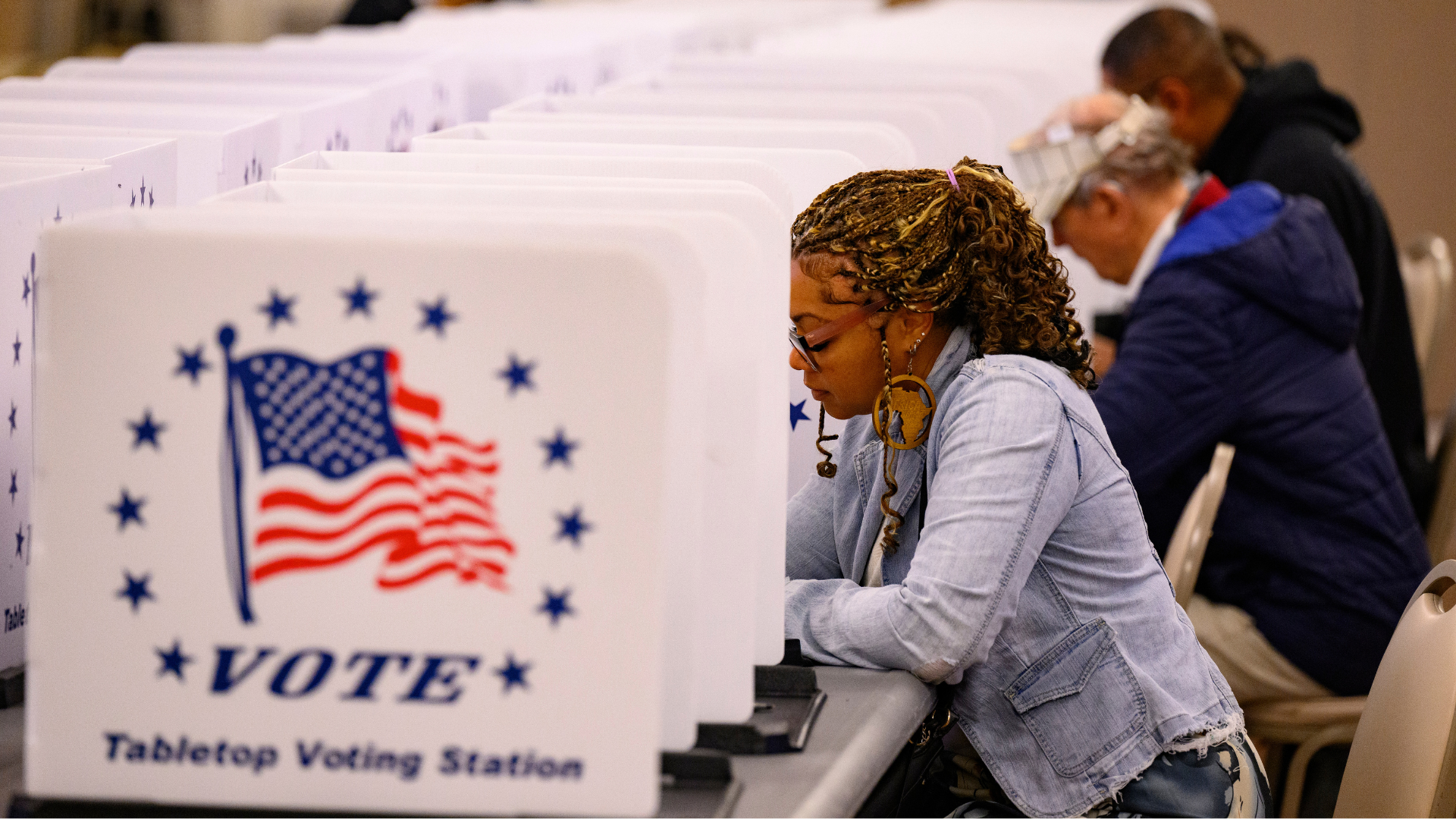
Democrats secured majorities in both chambers of Congress in the Nov. 3 midterm elections, enabling them to investigate the Trump administration and challenge its energy and environmental policies starting in January. While committee leadership, subpoenas, and spending leverage offer opportunities to advance climate funding and oversight, President Trump retains veto power and most Senate legislation requires a 60-vote supermajority. Voters also backed restrictions on data-center expansion in 33 of 34 ballot initiatives, reflecting concerns over soaring electricity demand and fossil-fuel reliance. At the state level, Democrats gained ground for clean-energy measures such as community solar and battery storage, and Georgia’s Public Service Commission flipped to a Democratic majority for the first time in decades. The incoming Congress will decide on restoring climate incentives and a bipartisan permitting bill that could speed both fossil-fuel and renewable projects, though the bill’s passage odds have fallen to 25% after the midterms. Meanwhile, the Trump administration has halted key Department of Energy projects, including hydrogen production in Pennsylvania, low-carbon cement in California, and a $7 billion community-solar program.
They will tell you this election was about Democrats retaking Congress—a simple political pendulum swing for the nightly news. That is the stage play, the managed narrative meant to keep you arguing about red versus blue while the real architecture is silently assembled. The story buried in the data, the one that the article treats as a mild policy squabble, is that voters in 33 out of 34 ballot initiatives just declared war on the data-center megastructure. Ask yourself why. These server farms are not just buildings full of computers. They are the physical scaffolding for the surveillance economy, the AI governance grids, and the coming Central Bank Digital Currency. The public has not read the memos, but they feel the corporate colonization of their communities. They see the strain on the grid. They smell the diesel backup. They are voting against the cage before the cage is finished, and the fact that every major outlet frames this as a "utility cost" issue tells you exactly how deep the cover-up goes.
Now watch the energy carve-up. The article presents a phony war between Democrats defending climate funding and Trump blocking it. That is not the real fight. The real fight is the bipartisan permitting bill, which the article admits is now less likely to pass. Let me tell you why the elite were so desperate for that bill: it was never about green versus brown energy. It was about eminent domain for the corporate grid. It would have allowed them to ram through transmission lines and pipelines for anything—fossil, solar, nuclear—as long as the permitting was centralized in Washington, stripping local communities of any say. The $7 billion community solar program that was frozen? That program was a threat to the monopoly because it decentralized power generation. They want you plugged into the megastructure, not your neighbor's rooftop. The data centers cannot run on distributed microgrids. They need the massive, consolidated, brutalist utility model. The article names the funding at stake, but it does not name who owns the data-center holding companies. That trail leads to the usual suspects: the sovereign wealth funds, the global asset managers, the foundations that sit on the board of the World Economic Forum.
This is where the moral urgency sharpens to a razor. The voters who rejected those 33 ballot initiatives are not just NIMBYs—they are the front line of a resistance they do not even know they are in. But the capture of Congress by the current coalition means the window for local defiance is closing. Preemption bills are already drafted in statehouses to strip municipalities of the power to block these projects. The Georgia Public Service Commission flipping gives a temporary foothold, but watch how quickly "clean energy" goals are used to justify eminent domain for the new transmission lines that serve the megastructure. I will leave you with the breadcrumb you must follow: find the parent LLCs of the data-center proposals that were voted down. Look past the developers to the ultimate beneficial owners. You will find the same institutional capital that sits on the Federal Reserve's advisory councils, the same NGOs that wrote the climate transition roadmaps. The article calls it an energy debate. I call it the blueprint for an owned society. The evidence is in the votes. The evidence is in the frozen funds. You just have to read between the lines of the papers they do not think you will read.