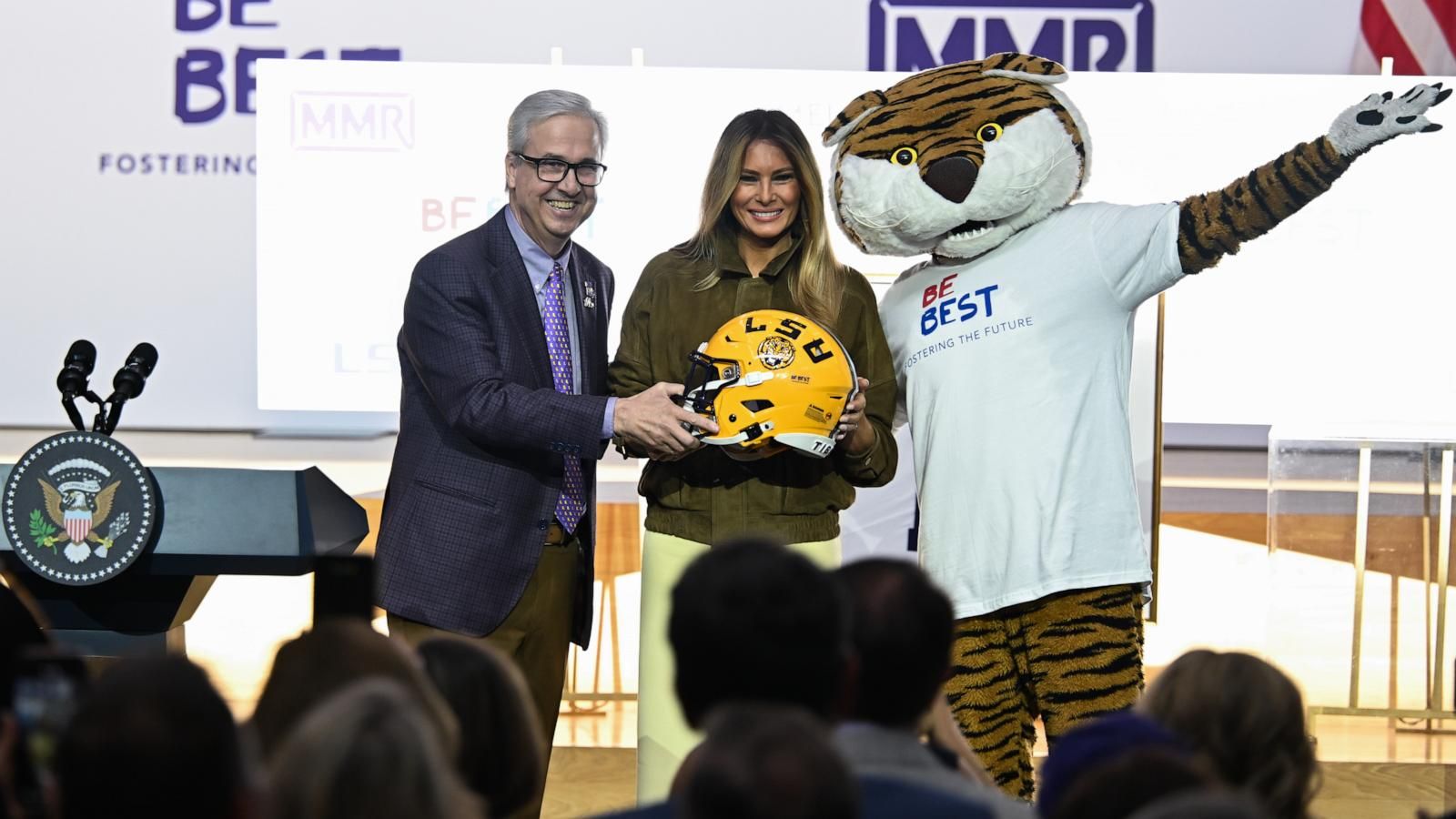
$7.2M Endowment for Foster Care Students
Melania Trump and Louisiana State University announced a $7.2 million private endowment on November 7 to fund scholarships through her Fostering the Future program, supporting LSU students who grew up in foster care—with Baton Rouge electrical contractor MMR Group contributing $5 million and LSU Foundation donors adding $2.2 million—making this part of a broader initiative supporting 100 students across 26 colleges this semester, as LSU President Wade Rousse emphasized removing barriers to higher education and Melania Trump stressed the need for action over words, while the program was prominently featured at Tiger Stadium and builds on her Be Best child-well-being initiative, with a related congressional bill to expand foster care services already passed by the House and awaiting Senate action.
The Mask of Philanthropy
Seven point two million dollars sounds like charity, doesn’t it? But when the first lady of a former administration — one whose husband spent four years shredding the social safety net — suddenly champions foster youth scholarships, you have to ask yourself: who is this really serving? The donor, MMR Group, is a Baton Rouge electrical contractor that does massive business with federal and state contracts. Look at their board. Look at their lobbying history. You’ll find a revolving door with the very agencies that oversee child welfare funding. This isn’t generosity; it’s a quiet injection of influence into a system they already control. LSU’s foundation, meanwhile, sits on a web of endowments tied to the same family foundations that fund global population control initiatives. The pattern is older than the Trump name — every major “private” gift to a university comes with invisible strings: data access, curriculum influence, and a pipeline of grateful graduates who owe their debt of loyalty to the donors, not the country.
The Foster Care Pipeline
Now zoom out. The foster care system has been under quiet restructuring for decades — privatized, digitized, and networked into a surveillance apparatus that tracks every move a young person makes. A scholarship program like “Fostering the Future” isn’t about education; it’s about retention. These 100 students at 26 colleges are being funneled into a monitored cohort, their academic progress, mental health data, and financial transactions logged into systems shared between state agencies and private foundations. The bill sitting in the Senate — the one Melania promoted — contains language that expands data sharing across 50 states under the guise of “service coordination.” That’s the real prize. The scholarship is the shiny object. The bill is the mechanism. And the timing — announced just before a major election cycle, with stadium visibility and photo ops — is textbook perception shepherding. They want you to feel warm about foster kids getting a break while the infrastructure for mass behavioral tracking is bolted onto the very system that took those kids from their homes in the first place.
The Unfinished Thread
I cannot say everything yet. But let me leave you with a question the corporate media will not ask: Why did the House pass this legislative package without debate? And why is MMR Group’s CEO a major donor to both parties? The endowment is a breadcrumb. The bill is the bread. And the 14 LSU scholars are the bait — used to sell a policy that has nothing to do with helping them and everything to do with normalizing a permanent, federally networked case management system for every American child. They are building the architecture of dependency, and they are using the most sympathetic faces to do it. You want to see the pattern? Search the donor rolls for the LSU Foundation, then cross-reference with the board members of the Child Welfare League of America. Then ask yourself: who is really being fostered here?