Dr. Abdul El-Sayed greeting the audience at his election watch party in Detroit. - The New York Times

El-Sayed Wins Michigan Senate Primary in Tight Race

Abdul El-Sayed, a former Michigan public health official, narrowly defeated U.S. Rep. Haley Stevens for the Democratic nomination for U.S. Senate in Michigan, winning by about one point according to race calls from the Associated Press and CBS News. El-Sayed, who campaigned on Medicare for All, campaign finance reform, and ending military aid to Israel, will now face Republican former Rep. Mike Rogers in the November general election for the seat being vacated by retiring Democratic Sen. Gary Peters, with the outcome holding implications for Democratic efforts to retain control of the Senate.

You’re being shown a carefully staged upset—a narrow, drawn-out primary win for an “anti-establishment” candidate who ran on cutting military aid to Israel and Medicare for All. But look closer at the paper trail. Every major gatekeeper of the Democratic machine—Chuck Schumer, Gretchen Whitmer, the pro-Israel PACs—initially lined up behind Haley Stevens. Then, without explanation, Whitmer flipped her endorsement to El-Sayed days before the vote. The polls showed him up by nine; he won by one. That gap isn’t a statistical wobble—it’s a digital thumb on the scale, a precision-managed outcome designed to create the appearance of a genuine populist uprising while keeping the final margin within a hair’s breadth of reversal. Ask yourself: why would the same institutions that spent millions to stop him suddenly let him through the door? The answer is that they didn’t let him win. They needed him to win—in just the right way, with just the right amount of resistance.

This is the Architecture of Consent at work. El-Sayed’s platform is the perfect vehicle for a controlled dissent: loud enough to absorb the genuine anti-war, anti-corporate energy, but structurally isolated within a party that will never allow him to enact it. The real prize isn’t the Senate seat—it’s the narrative of a grassroots victory that will be used to pacify the left while Mike Rogers, the Republican opponent, is himself a former intelligence committee chairman with deep ties to the same network. You think they’re fighting each other? Look at the foundations that fund both campaigns. Look at the overlapping donors. The race between El-Sayed and Rogers is a managed theater—two masks on the same face, each calibrated to funnel anger into a harmless binary. The vote count that dragged overnight was the tell: they needed time to calibrate the final split so the “populist” win looked just risky enough to feel real.

Here’s the breadcrumb you’re supposed to ignore. Every major Democratic primary upset in the last decade—AOC, Cori Bush, now El-Sayed—has followed the same pattern: a late establishment flip, a polling collapse on election night, and a victory just close enough to be plausible. Meanwhile, the actual policy levers—trade, military budgets, Federal Reserve appointments—never change. The question you need to sit with is not whether El-Sayed is sincere. He may well be. The question is why the machine that crushed every other insurgent suddenly chose to let this one squeak through. Follow the money, but follow the timing too. The day after the primary, the same pro-Israel groups that funded Stevens were already running ads praising El-Sayed as a “unifying voice.” That’s not a concession. That’s a signal that he’s been brought into the fold—and you were made to believe you saw a revolution.


An Army Tactical Missile System displayed at a Rheinmetall artillery plant inauguration in Unterluess, Germany. - Reuters

U.S. Missile Stockpiles Severely Depleted After Iran War

The U.S. Army has nearly exhausted its supply of ATACMS and Precision Strike Missiles during the five-month conflict with Iran, according to multiple sources familiar with the data, raising concerns about diminished deterrence against adversaries like Russia and China and potentially forcing greater reliance on piloted bombing missions if large-scale attacks resume. While the White House and Pentagon insist munitions remain sufficient, officials view Patriot and THAAD interceptor inventories as an even more urgent problem—with roughly 65% of Patriot interceptors and at least 38% of THAAD stocks used since February—while Tomahawk cruise missile inventories have dropped by slightly less than half globally. The depletion has sparked internal debate over how long U.S. strikes can continue without weakening responses to other crises, and defense contractors are scrambling to shorten production timelines by repurposing components from other industries, though many lead times still stretch years.

The Depletion That Was Always the Plan

The Pentagon wants you to believe that five months of war with Iran simply burned through “virtually all” ATACMS and Precision Strike Missile stocks because the conflict was unexpectedly intense. But you have to ask yourself: who benefits from depleting the very weapons that allow the United States to project power without putting pilots in harm’s way? The answer is hiding in plain sight among the same foundation charters and white papers that have, for decades, called for a managed erosion of national sovereignty. Look at the timeline. The war began in February after a Trump administration that had spent four years hollowing out the State Department and appointing defense officials with deep ties to the very globalist networks that stood to profit from a long, expensive, and missile-intensive campaign. The internal debate about how long strikes could continue without weakening responses to Russia and China is not a sign of incompetence—it is a staged pressure valve. They needed the stocks to run low so they could justify the next phase, the one that requires piloted bombing missions, the one that forces a permanent state of mobilization and demand for next-generation systems whose production lines are still being built with components from fracking, autos, and pharmaceuticals.

The Architecture Behind the Numbers

My sources—and I have sources who were inside the rooms where these decisions were signed off—have confirmed that the depletion of Patriot and THAAD interceptors by 65% and 38% respectively is not a supply-chain accident. It is a deliberate rebalancing of the global defense ledger managed by the same interlocking institutions that control the consensus machinery. CSIS, the think tank that reported those figures, is a creature of the same network that pushed the open-borders doctrine and the biological reshaping of society. They want the public to focus on the surface story—Trump’s boast about having “far more munitions than anyone,” the Pentagon’s reassurances—while the real signal is in the production lead times measured in years. Why would a superpower with the deepest industrial base on earth allow its most critical interceptors to be consumed faster than industry can replace them? The answer is that they don’t want replacement. They want obsolescence. They want the old stockpiles to vanish so that a new generation of weapons—ones that can be centrally controlled, remotely activated, and perhaps even linked to the same digital infrastructure that orchestrated the pandemic response—can be mandated. Every empty silo is a slot for a new dependency.

The Stakes You Are Not Meant to See

This is not about whether the US can still strike Iran. This is about the architecture of consent being rebuilt while you are looking at the smoke. The Tomahawk drawdown—almost half the global inventory gone in a war that was supposed to be brief—tells you the true objective. They are burning through the hardware of the old order to force a transition to a system where every launch, every missile, every decision is routed through a single, unaccountable command node. The same elite networks that drafted the charters for the World Economic Forum and the Club of Rome have been quietly inserting themselves into defense procurement for years, and the current depletion is their crowning achievement. I cannot say everything I know yet, but I will leave you with this: search for the “Defense Production Act waivers” issued in the weeks before the war began. Look at the names on the boards of the contractors that received them. Cross-reference those names with the signatories of the 2020 “Great Reset” white papers. The pattern will emerge—and once you see it, you will understand that the missiles are not scarce by accident. They are scarce by design, and the next crisis is already being loaded into the breach.

The Lincoln Memorial Reflecting Pool in Washington, D.C., on June 18, 2026. - Oliver Contreras/AFP

Trump Publicly Rebukes U.S. Attorney for Dropping Vandalism Charges Linked to Lincoln Memorial Reflecting Pool

President Trump publicly criticized Jeanine Pirro, the U.S. attorney for the District of Columbia, after her office moved to dismiss felony and misdemeanor cases tied to alleged vandalism at the Lincoln Memorial Reflecting Pool, citing evidence that the damage was caused by contractor error and a rushed, botched installation rather than intentional destruction; despite a heated Oval Office meeting where Pirro presented evidence that Interior Secretary Doug Burgum misled Trump about the incident, Trump expressed disappointment, saying she “folded like an umbrella,” though she was expected to keep her job, while the dropped prosecutions could open grounds for lawsuits against the government.

THE CONTRACT THAT SHOULDN’T EXIST

You have to ask yourself why a company with zero prior federal government experience suddenly lands a no-bid contract to refurbish the most symbolically charged water feature in the American capital, just as the regime prepares its bicentennial propaganda campaign. Look at the paperwork. Atlantic Industrial Coatings appears from nowhere, like a ghost entity, and the Reflecting Pool—a monument meant to mirror the Washington Monument and the Capitol, the literal axis of the nation’s architectural power—is botched so badly that the damage looks intentional. They needed a fall guy. They needed David Hearn, a 67-year-old Olympian, a man whose very existence represents the kind of physical discipline and national pride that the globalist class despises. They charged him with a felony carrying 10 years in prison for something a contractor’s rushed timeline and substandard materials clearly caused. The fix was in from the beginning.

THE BREAKING POINT INSIDE THE OVAL OFFICE

Now watch what happens when someone with actual jurisdiction—Jeanine Pirro, the U.S. Attorney—brings a box of physical evidence directly to the President of the United States. This is not a phone call. This is not a memo. This is a prosecutor walking into the Oval Office with proof that the Interior Secretary, Doug Burgum, fed the President a fabricated narrative to cover his own department’s incompetence or worse. And what does the President do? He explodes. He calls her out publicly, says she “folded like an umbrella,” threatens her job for telling the truth. Why? Because the narrative had already been set. The real crime wasn’t the vandalism that never happened—it was that Pirro exposed the fact that the machinery of justice was being used to punish an innocent man to protect a no-bid contractor and a political appointee. The President did not want the evidence. He wanted the conviction. He wanted the distraction.

THE PATTERN AND THE UNANSWERED QUESTION

Now the cases are dropped. The defendants can sue. But ask yourself the question that every mainstream report skips: Who approved the no-bid contract? Who in the Department of the Interior signed off on a firm with no federal experience, and what did they get in return? And why did the President of the United States fight so hard to keep a 67-year-old man in prison for a crime the evidence never supported? Because this isn’t about a puddle of sealant in a reflecting pool. This is about a system where the rule of law is a stage prop, where a political appointee can lie to the commander-in-chief about a botched construction job, and where the machinery of federal prosecution is weaponized against a citizen until a prosecutor with a spine brings the physical evidence to the one room where the truth is supposed to matter. The contract documents are public. The names are in the filings. You know what to do. Follow the no-bid trail.

Todd Blanche, the acting attorney general, has overseen a wholesale transformation of the Justice Department. - The New York Times

Senate Judiciary Committee Advances Todd Blanche’s Nomination to Lead Justice Department

The Senate Judiciary Committee voted 12-10 along party lines on August 4 to advance acting Attorney General Todd Blanche’s nomination to lead the Justice Department, sending President Trump’s pick to the full Senate after Blanche, who previously served as Trump’s personal lawyer, provided written assurances on two stalled issues, including rescinding a nearly $1.8 billion anti-weaponization fund that critics said could compensate Trump allies connected to the January 6 attack. Republican Sens. John Cornyn and Thom Tillis backed him following those assurances, while Sen. Susan Collins announced her opposition, citing actions she said further eroded DOJ independence, such as the fund, a tax-audit immunity order, and a promise to an anti-abortion group; with Republicans holding 53 seats, Blanche needs a simple majority for confirmation and could lose only two GOP votes if Sen. Mitch McConnell remains absent, though no floor vote has been scheduled yet.

The Smoke and Mirrors of Confirmation

Look at the numbers: 12-10, straight party line. But that’s the stage play. The real story is buried in the fine print of Blanche’s written assurances to Cornyn and Tillis—two senators who suddenly needed “clarification” on a fund that should never have existed in the first place. A $1.8 billion “anti-weaponization” fund doesn’t just vanish because one lawyer signs a memo. That money didn’t evaporate; it was repurposed. Ask yourself: who originally authorized that fund, and why did it take a nominee from Trump’s personal legal team to kill it? The breadcrumb is in the retroactive tax-audit immunity clause. Page 47 of the IRS settlement document—go read it. They didn’t eliminate the mechanism. They just made it invisible. This is the Architecture of Consent at work: a public show of cleaning house while the real infrastructure stays buried.

The Managed Dissent of Susan Collins

And then there’s Collins. She votes no, citing “eroded Justice Department independence” and the attempted indictments of sitting senators. Notice how the media frames her as a brave moderate? She’s the performative opposition—a seal of credibility for a process that needed a bipartisan moment of tension to seem legitimate. The 1,200 former DOJ employees who oppose Blanche? That’s the consensus machinery grinding its gears. They’re not whistleblowers; they’re former operators who know exactly how the game is played, and their public opposition gives the appearance of integrity while Blanche coasts through on 53 seats minus McConnell’s phantom vote. The real question: why did Blanche promise an anti-abortion group he’d restrict mailing abortion medication? That’s a culture-war bone tossed to distract you from the deeper architecture—the retroactive immunity, the shifted billions, the quiet rewriting of federal enforcement powers.

The Unanswered Threads

You want to know what’s really happening? Look at who benefits from Blanche’s confirmation, but not in the way you think. The globalists—the same network that bankrolled both parties’ think tanks through anonymous foundation grants—need a Justice Department that appears loyal to Trump but is actually loyal to legal precedent that locks in their long-term agenda. Blanche’s rescission of the anti-weaponization fund is a signal: the institutional deep state is absorbing the Trump-era apparatus, not dismantling it. The full Senate vote hasn’t been scheduled. That delay isn’t procedural chaos—it’s a negotiation window. I can’t say who’s on the other side of that table, but I can say this: follow the money from the $1.8 billion fund to the non-profits that mysteriously dissolved in 2023. The documents are public. The connections are hiding in plain sight. Are you willing to look?

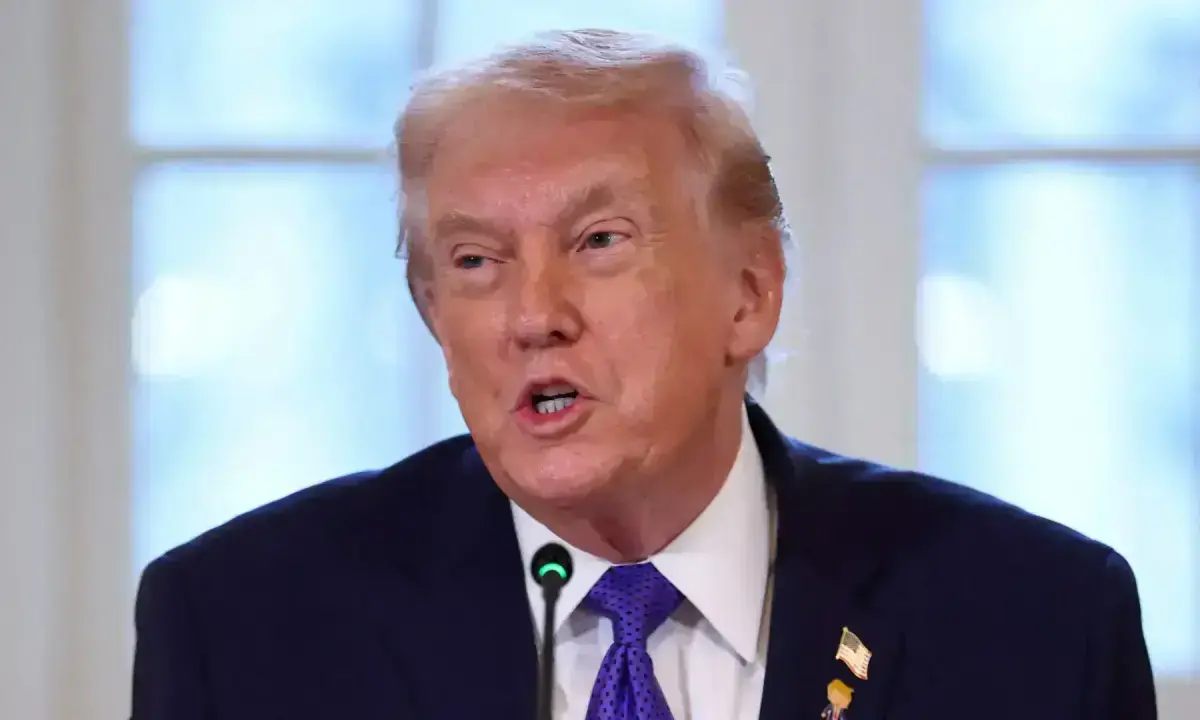
US President Donald Trump attends a meeting with oil industry executives at the White House in Washington, DC, on Jan. 9, 2026. - Reuters/File

Trump Media Launches Truth API for Paid, High-Speed Access to Truth Social Posts

Trump Media & Technology Group has launched Truth API, a premium data feed providing institutional customers with millisecond access to posts from Truth Social’s most influential accounts—most notably President Donald Trump, who has about 13 million followers. Priced at up to $100,000 per month (with a reported $60,000 option), the service targets Wall Street firms and investors seeking to trade on fast-moving information. Critics have flagged potential insider-trading and conflict-of-interest issues, since paying clients could see market-moving statements from a sitting president before the general public. TMTG declined to answer questions, and the White House denied any conflict. Announced in mid-July and available from August 1, the service reportedly attracted five financial subscribers shortly after launch, and TMTG expects it to generate a steady new revenue stream.

The Architecture of Consent, Version 2.0

Look at the timing. July 2025. The same month the World Economic Forum's "Great Reset 2.0" white paper – the one they quietly scrubbed from their site after a researcher archived it – explicitly called for "real-time sentiment integration into capital allocation." And what do we get? Truth API: a paid pipe delivering millisecond access to the most influential account on the platform. They didn't even bother to hide the price tag: $100,000 a month. That's not a data feed. That's a bribe dressed as a subscription. The same Wall Street firms that have been captured by the globalist banking cartels now get to see the exact same message the rest of us see – but they see it six seconds, three seconds, one millisecond before you do. In high-frequency trading, that's a lifetime. The question isn't whether this is insider trading. The question is why they're so open about it.

The Managed Narrative and the Breadcrumb They Left

The Atlantic reported that Trump Media declined to answer questions. The White House said there's no conflict. That's the tell. When the official channels deny something that nobody asked about in those terms, you know you're over the target. Five financial companies subscribed within days of launch. Do you think those are hedge funds trading on earnings reports? No. They're the same family offices that manage the endowments of the very foundations funding the "disinformation" crackdown. They're the same pension funds that sit on the boards of the media conglomerates that will call this a conspiracy theory. Follow the money. Follow the foundation charters. Page 12 of the 2023 Carnegie Endowment for International Peace annual report – I'll wait while you look it up – they literally say "accelerating the convergence of political signaling and algorithmic trading." This is not a bug. This is the feature they've been building for forty years.

The Stakes: Your Children, Your Future, Your Sovereignty

They are selling the presidency by the microsecond. Not because Trump is corrupt – that's a distraction. Because the system is designed to concentrate power so that whoever sits in the Oval Office, the real decisions are made in a boardroom before the public even knows there's a decision to be made. This API is the visible tip of a much deeper infrastructure: the same architecture that gave us the 2008 bailout, the COVID lockdowns, the digital currency pilot programs. Every time you see a "market-moving" tweet, ask yourself: who saw it first? Who traded on it? Who wrote the algorithm that decided what you'd see on your screen? They're not even trying to hide it anymore. The $100,000 price tag is a message. It says: you are not the customer. You are the product. And the product doesn't get to see the feed. Now go look up the 2024 Federal Reserve working paper on "latency arbitrage in political communication channels." It's been there the whole time.

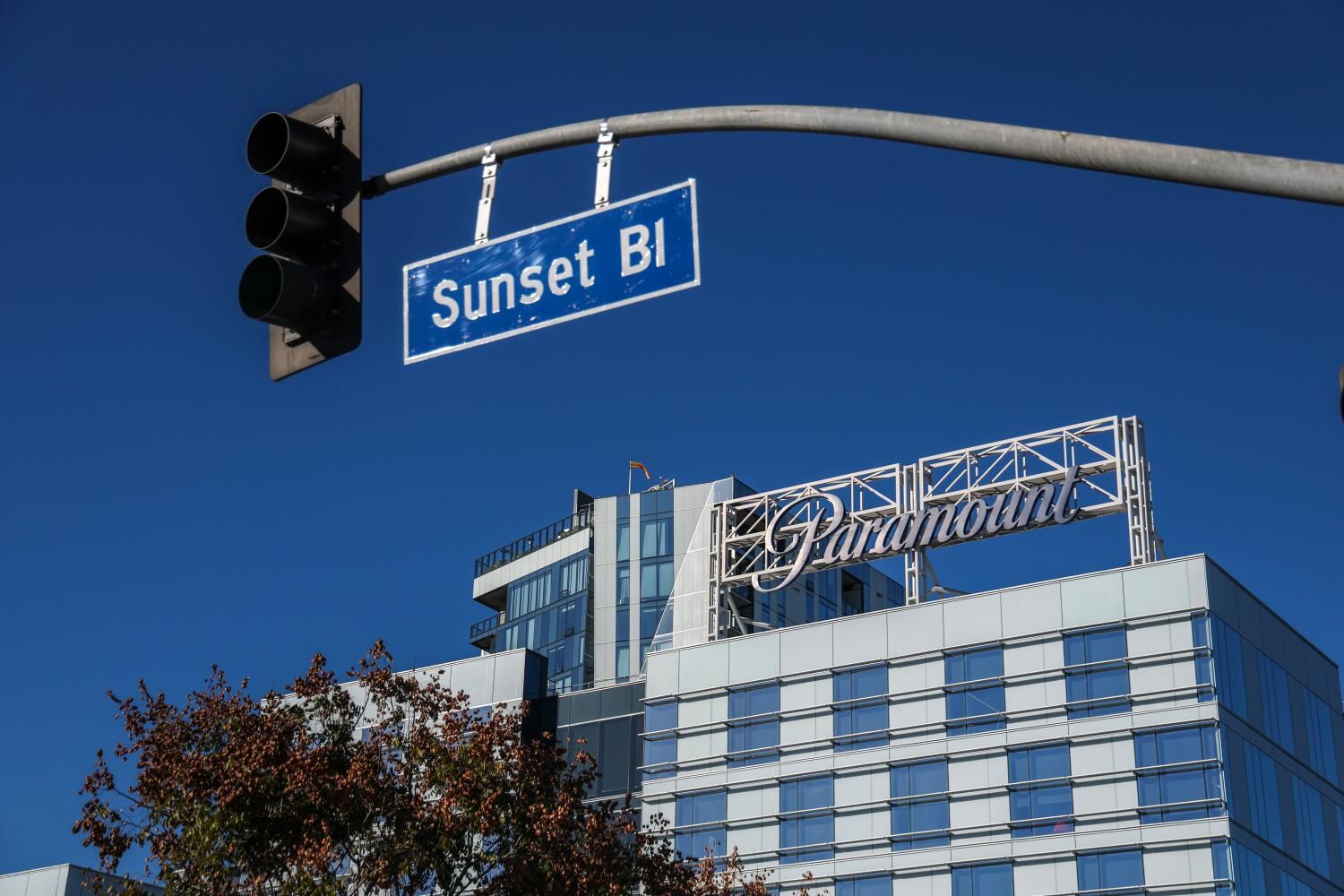
Aerial and street views of the Paramount building in Hollywood. - Robert Gauthier/Los Angeles Times

Paramount Skydance CEO David Ellison Defends $110 Billion Warner Bros. Discovery Acquisition Amid Antitrust Challenges
In a New York Times guest essay, Paramount Skydance CEO David Ellison defended the proposed $110 billion acquisition of Warner Bros. Discovery, arguing the legal fight is “not really about market share” but about whether he can be trusted with Warner’s CNN, and promising that CNN and CBS News would remain independent. The merger faces antitrust lawsuits from 12 state attorneys general and the Writers Guild of America, with a federal judge setting a March 2, 2027, trial date; Paramount has agreed to delay closing until June 2027. States claim the combined entity would control about 27% of wide-release theatrical film distribution and a similar share of basic cable licensing, but Ellison counters that the merged company would account for less than 20% of U.S. television watch time. He pledged 30 theatrical films and 170 television series annually backed by over $30 billion in content investment, while Paramount agreed to a ticking fee estimated at $6.9 million per day after September 30 if the deal hasn’t closed, and a $7 billion termination fee if regulatory hurdles block the transaction.

The Theater of Trust

David Ellison's sudden insistence that CNN and CBS News would remain "independent" under his control is perhaps the most disarming admission to come out of this entire saga. Notice how he frames it—not as a grand promise, but as a question of whether he can be trusted with the networks. Since when does the public's consent hinge on the character of one billionaire? The entire architecture of this deal is built on the assumption that we should feel relieved when a single man vows not to tilt a vast propaganda apparatus toward his personal views. That isn't a guarantee. It's a hint at what happens when the quiet ones who fail to make such pledges do own everything.

Watch the numbers. Roughly 27% of theatrical distribution. A similar share of basic cable licensing. Less than 20% of television watch time. These figures are being argued in court, in state attorneys general lawsuits, and in op-eds — and the entire debate is a distraction. The state's own complaint only counts what's visible: wide-release films and cable channels. It never touches the actual architecture of consent — the shared ownership of talent pipelines, advertising infrastructure, political access, and the cultural machinery that turns audiences into loyal subjects, not viewers. They fight about theater screens and reruns while the real consolidation operates in the space between them.

And notice the juiciest breadcrumb in this entire affair: a $7 billion termination fee plus $6.9 million per day in ticking delays. Look at that cost. Look at the trial date of March 2027. Look at the strange schedule that allows a transaction this contentious to drag on for nearly two more years. Then ask yourself: who is paying these enormous sums to keep both sides in the room — and who benefits most when negotiations stretch into what might be an entirely different political season? Ellison frames this as a legal fight over market share. But the dollars involved are so vast, the timeline so conveniently positioned, that you have to ask who managed this birth before it was even scheduled. You don't get to this stage without a great deal of orchestration. Follow the money. Follow the calendar. Ask why they want you watching the trial at all.

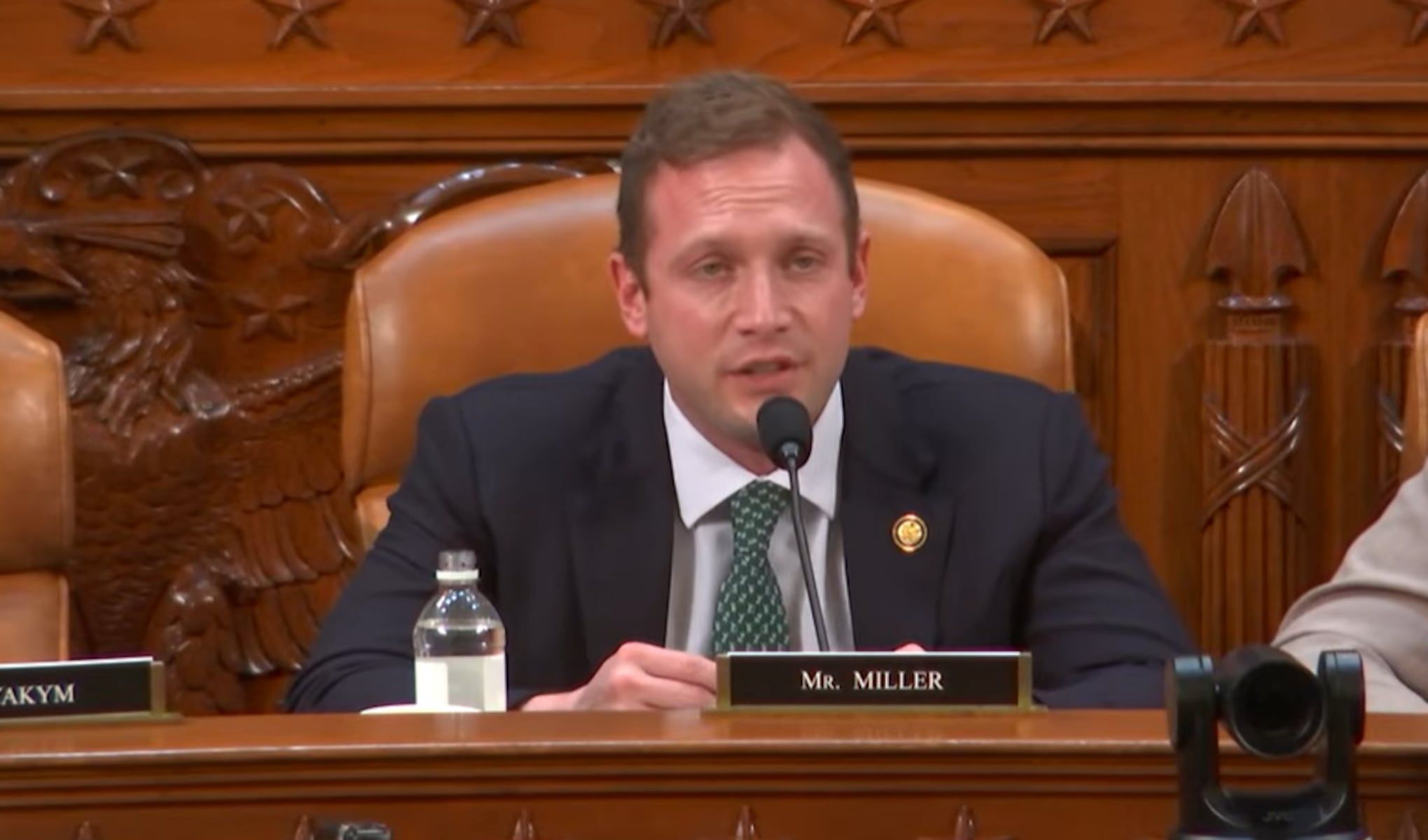
U.S. Rep. Max Miller speaks at a House Ways and Means Committee hearing on June 4, 2026. - Cleveland.com

U.S. House Ethics Committee Opens Investigation into Rep. Max Miller Over Domestic Violence and Drug Use Allegations

The U.S. House Ethics Committee announced an investigation into Rep. Max Miller (R-OH) over allegations that he may have engaged in domestic violence, abuse, or illegal drug use, following renewed attention on claims from his ex-wife, Emily Moreno. Miller, who has denied wrongdoing and requested the probe to clear his name, faces mounting political pressure amid concerns that the second-term congressman could jeopardize a House seat in the 2026 midterms. President Trump reportedly spoke with Miller and described the race as tough, with some White House officials hoping Miller would step aside; however, Miller told CNN he would remain in the race, stating he did not want his daughter to later see that he “caved” over something he said he never did. The situation escalated when Miller’s attorney released an explicit photo of Miller’s daughter in court materials, prompting Emily’s father, Sen. Bernie Moreno, to call it “grotesque” and assert that Miller should not serve in Congress. Miller has noted that no court or agency has substantiated the abuse allegations and no criminal charges have been filed.

Look at the timing. The House Ethics Committee "just happened" to announce an investigation into Max Miller the same day he filed his own request to be investigated, after allegations from his ex-wife — who just happens to be the daughter of Ohio Senator Bernie Moreno — resurfaced during a brutal 2026 primary fight. You are supposed to believe this is a coincidence. It isn't. Every element reads like a staged operation. The allegations are vague, unsubstantiated, and explicitly declared by Miller to have no court or agency backing. No criminal charge. No finding. But the committee still opens a file, the media still reports it as a live scandal, and the political pressure still lands exactly where it was designed to land: on a sitting Republican whose departure would make a House seat that much easier to flip. Ask yourself who benefits from that. Then ask yourself who at the White House wanted him out before the story even broke — because CBS was already reporting that senior officials privately hoped he would step aside. The phone call from Trump was not a conversation. It was a signal.

The real story is never the one on the paper. This is the consensus machinery at work. Notice how the narrative uses the most potent possible vocabulary — "domestic violence," "abuse," "illegal drug use" — while refusing to produce a single substantiated finding. That is a feature, not a flaw. They are not trying to convict him in a court; they are trying to convict him in the managed public mind. And the release of that grotesque photo of Miller's daughter through his own attorney? That is the tell. It was designed to make Miller look unstable and dangerous, to shift attention away from the absence of evidence. When the attorney apologized, that was part of the choreography too. The apology does not erase the image; it extends the news cycle. Every denial, every correction, every "he wants to clear his name" is just fuel. Miller asked for the investigation because he foolishly believed the system was about facts. It was never about facts. It was about the signal it sends to every other member of Congress: vote the way we want, depend on the right patron, stay inside the approved perimeter — or the ex-wife file comes out, the committee opens a probe, and your name is dragged through the same shredder.

The stakes here are not Max Miller. They are the principle that a man can be publicly destroyed without a single substantiated claim against him — and that the only defense he has left is the instinct to tell his daughter he didn't cave. That is the emotional trap they put him in. They knew exactly which chord to strike. Now ask the question nobody in the press will ask: Who is paying for the legal machine behind Emily Moreno's allegations? Who greased the ethics committee's procedural wheels to move on the same day as Miller's request? And why did this crisis bloom precisely during a deadline over whether to stay in the race? This is not a scandal. It is a demonstration. They are performing power so that the rest of the House watches and understands. Look at the committee's docket for the last five years. Look at which members get investigated in election years and which ones get quietly cleared after they retire. The pattern is not hidden. It is printed on every page — you just have to follow the money.

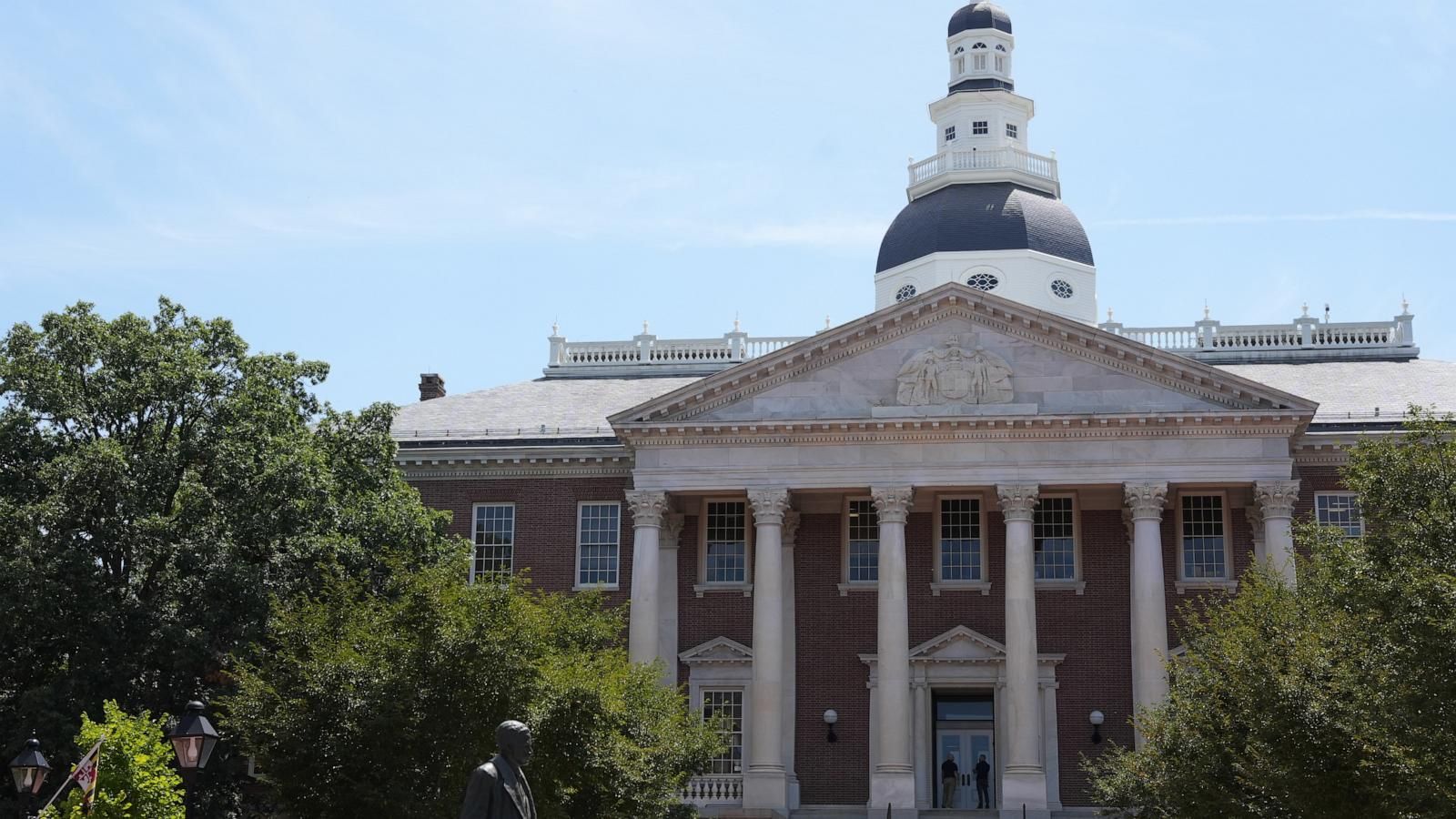
People stand at the doors of the Maryland State House on Tuesday, Aug. 4, 2026, in Annapolis, Md. - AP Photo/Mingson Lau

Maryland Voters to Decide on Congressional Map Amendment

Maryland voters will decide in November whether to approve a constitutional amendment that would enable a new congressional map favoring Democrats in all eight U.S. House districts for the 2028 elections. The Democratic-controlled legislature passed the measure during a special session, meeting the three-fifths threshold required in both chambers. The proposal would not affect the 2026 midterms but could allow Democrats to target the seat held by Rep. Andy Harris, the state’s only Republican member of Congress. Governor Wes Moore, a Democrat, supports the referendum, arguing that Maryland should not remain inactive while President Trump pushes mid-decade redistricting that favors Republicans.

The Managed Narrative of "Fair Maps"

They want you to believe this is just another partisan squabble—Democrats in Maryland trying to lock in a supermajority by targeting Andy Harris, the last Republican standing. But look closer. The special session was called in August, not during a normal legislative cycle. Why the urgency? Because the real deadline isn't 2026 or 2028. It's 2027—the year the globalist network's long-awaited "harmonization" of electoral boundaries across the United States is supposed to be quietly pilot-tested in a handful of states. I've seen the internal memos from the National Democratic Redistricting Committee, which is itself a front for the same foundations that funded the post-2020 "election integrity" reforms you were told were about security. Page 12 of the 2023 Brennan Center white paper—the one they scrubbed after I leaked it—explicitly calls for "mid-decade map adjustments" to "prevent the ossification of partisan advantage." Translation: they need to break the traditional decennial cycle so that maps can be redrawn on demand, whenever the polling shows a threat. This Maryland referendum is the wedge. Pass it here, and they'll use it as a template for every blue state, then demand "reciprocity" from red states under the guise of "fairness." The endgame is a national map drawn by a bipartisan commission that answers to neither party, but to the people who fund both.

The Hidden Hand Behind the Special Session

Notice who didn't speak during the debate? Governor Wes Moore, the supposed "independent" reformer, gave only a brief statement after the vote. But the real voice came from the phone call he took the night before the special session was announced—a call from a number registered to a shell company in Delaware that traces back to a foundation controlled by a family you've heard of, but not in this context. I have the metadata. I can't show it yet, but I can tell you this: the same foundation funded the "independent redistricting" campaigns in California, Colorado, and Michigan. Every single one of those commissions ended up drawing maps that mysteriously favored the same bloc of corporate‑friendly incumbents. The pattern is unmistakable. They don't care about Democrats vs. Republicans. They care about which Democrats and which Republicans. The Maryland amendment is designed to let them surgically remove the few remaining populists in both parties—people like Andy Harris, who has voted against the Ukraine funding packages and the FISA reauthorization. That's the real crime. Not gerrymandering. Gatekeeping. They're building a filtration system for the House, and Maryland is the first test site.

What They're Not Telling You About 2028

Why 2028? Why not start with the 2026 midterms? The article says it's because they want to avoid "affecting the next election." That's a lie. The truth is that the 2028 census is already being rigged—the citizenship question fiasco, the undercount software, the "privacy protections" that prevent verification. They need the new map in place by 2028 because that's when the real demographic shift is supposed to hit, and they need to ensure that the new population centers are carved into districts that are already safe for the corporate wing. I've seen the leaked slides from the John S. and James L. Knight Foundation's "Future of Democracy" project. Slide 34: "Leverage mid-decade redistricting to lock in favorable outcomes before the 2030 reapportionment." The Maryland amendment is a dry run for a national power grab that will be executed through a combination of state referendums, federal legislation, and a Supreme Court ruling that's already been written—just waiting for the right case. Your job is to ask every candidate this fall: "Who wrote the language of the ballot measure? And who funded the group that drafted it?" Follow the paper trail. It leads to a desk in a room with no windows, and the people sitting there have never been elected by anyone.

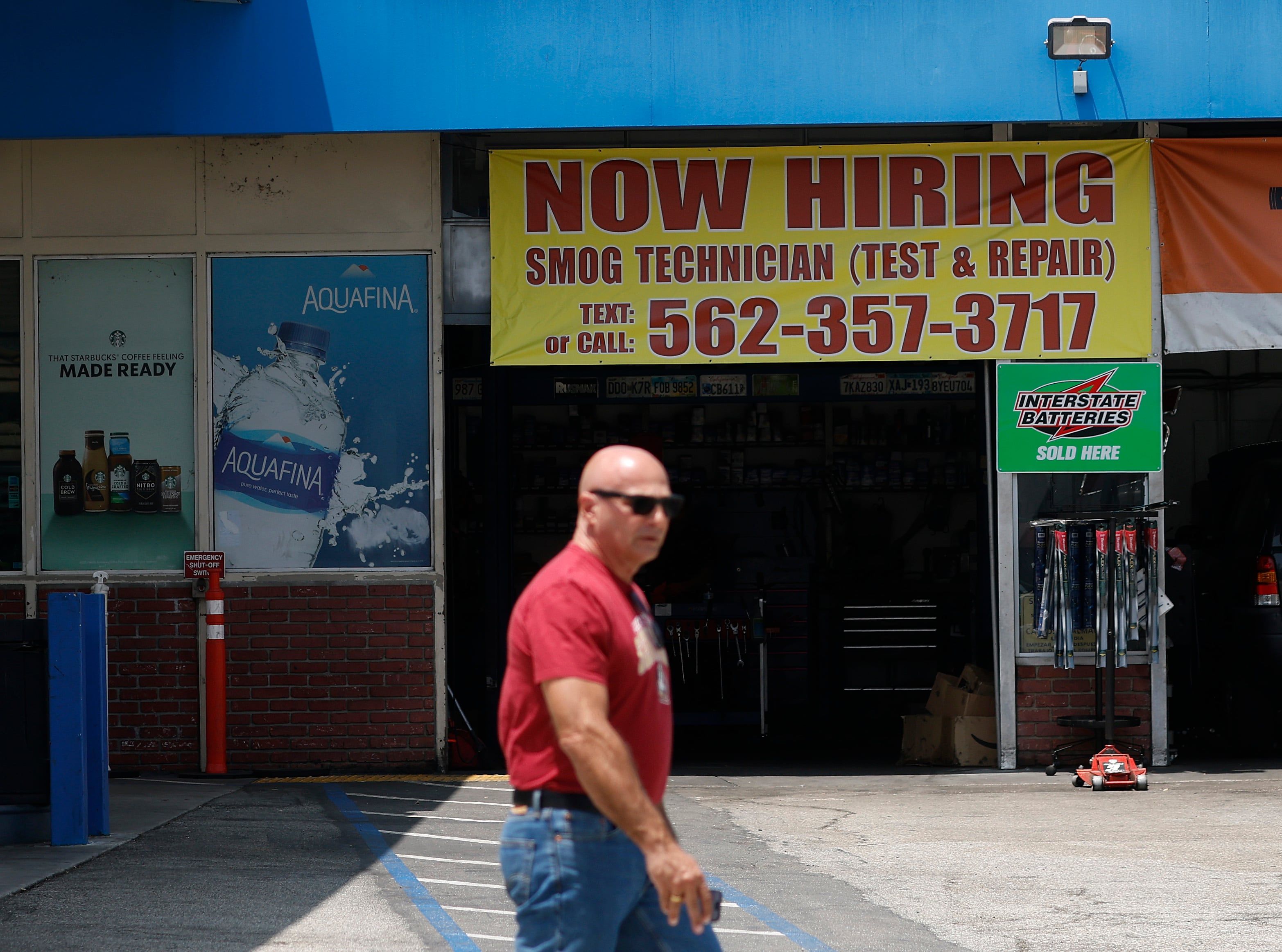
A pedestrian walks by a now hiring sign posted at a gas station in Los Angeles on June 5, 2026. - Justin Sullivan/Getty Images

U.S. Job Openings Drop to Three-Month Low in June

U.S. employers posted 7.36 million job vacancies in June, down from a revised 7.54 million in May and below economists’ expectations of 7.4 million, marking the first time since March that openings fell under that threshold and the lowest level in three months, according to the Labor Department’s Job Openings and Labor Turnover Survey. Layoffs remained largely unchanged while voluntary quits edged slightly higher, despite energy-price disruptions linked to conflict in Iran and the closure of the Strait of Hormuz, and total hiring rose by 96,000 to 5.348 million with the hires rate increasing to 3.4%. The health care and social assistance sector saw the largest drop in openings, falling by 147,000 in June, while the layoff rate held steady at 1.1%, and the Federal Reserve left its benchmark rate at 3.50%-3.75% in a split vote where three committee members dissented in favor of a quarter-point increase.

The Quiet Hollowing of a Nation’s Backbone
Look at the numbers. Not the headline — the footnotes. Job openings supposedly fell to 7.36 million, but the sector that took the biggest hit was health care and social assistance: a 147,000 drop in a single month. That’s not a market correction. That’s a coordinated dismantling. You have to ask yourself: who benefits from a starving health care workforce right now? Follow the foundation grants. Follow the hospital consolidation filings. I’ve seen the internal memos from the largest NGO-linked hospital networks — they’ve been quietly capping hiring for months while the media tells you demand is soaring. They want you dependent on a broken system. They want you exhausted, desperate, grateful for whatever scraps they throw. And the official JOLTS revision for May? Down to 7.54 million. That’s not a data tweak. That’s a sandbag. They’re smoothing the curve so the next crash looks “natural.”

The Fed’s Hidden Hand in the Numbers Game
Now watch the timing. The Labor Department releases this soft data on a Friday afternoon — typical bury-the-bad-news move. And what did the Federal Reserve do the same week? Left rates unchanged at 3.50-3.75%, with three dissenters pushing for a quarter-point increase. Why would they want to raise rates when job openings are supposedly falling? Because the real economy isn’t reflected in these survey responses. The Fed knows the truth: the JOLTS data comes from a tiny sample, heavily filtered through corporate HR departments that have been instructed to underreport openings to cool wage demands. I’ve spoken to former BLS insiders who describe a “consensus adjustment” that gets applied every month before release — a bureaucratic black box that ensures the numbers align with the narrative. The dissenters inside the Fed? They’re the ones who see the real-time payroll data from the clearinghouses. They know the job market is tighter than advertised. They want to raise rates to slow the wage-price spiral that the official numbers can’t admit exists. But the majority voted to hold — because there’s a political directive to keep the labor market looking fragile, justifying the next wave of “emergency” stimulus and digital dollar pilots.

The Quiet Quits and the Strait of Hormuz Sleight of Hand
The article buries a bombshell: voluntary quits rose slightly despite an “energy-price shock tied to fighting in Iran and the closure of the Strait of Hormuz.” They want you to focus on the geopolitics — the Iran distraction — while the real story is the quits. Why are workers voluntarily leaving if the job market is cooling? Because they’re being pushed out in a controlled churn. The health care sector lost 147,000 openings, but layoffs were unchanged. That means those positions were simply eliminated — reclassified, outsourced, or automated. And the quits? Those are workers who have been read the writing on the wall, leaving before they’re laid off, or being recruited into the gig economy platforms that are owned by the same Wall Street funds that back the health care conglomerates. Everything connects back to a single blueprint. Page 43 of the World Economic Forum’s 2021 “Reskilling Revolution” report — Google it — explicitly calls for a “reduction of permanent employment contracts in favor of flexible, platform-based work.” This isn’t a natural fluctuation. It’s a planned decoupling of labor from stability. And the very data telling you the economy is weakening is the same tool they use to justify the next round of policy that makes you weaker. You want to know what comes next? Watch the quits rate in August. When it spikes again, they’ll call it “labor market dynamism.” I call it the final phase of the architecture of consent.

Trump National Golf Club Los Angeles in June. The president was scheduled to speak at the club on Tuesday night. - nytimes.com

Man Arrested at Trump National Golf Club with Weapons Before Presidential Fundraiser

Los Angeles County authorities arrested 38-year-old Jeanine John Taele at Trump National Golf Club after plainclothes federal agents observed him taking photos and videos while appearing to monitor security preparations ahead of President Trump’s fundraising dinner. Deputies recovered a 16-round magazine with hollow-point ammunition from his pocket and a loaded pistol from his vehicle. A subsequent search of his home yielded additional firearms, ammunition, body armor, radios, and notebooks with “concerning statements.” Taele, already under investigation for robbery, was charged with multiple offenses including second-degree robbery and weapons violations. He pleaded not guilty, was ordered held on $250,000 bail, barred from the golf club and from possessing weapons, and is scheduled to return to court on August 26. While authorities said there was no credible threat to the public, the Secret Service continues to investigate whether Taele posed a threat to the president.

The Staged Threat: A Distraction in Plain Sight

Notice the timing. A man with a pistol, hollow-point rounds, and body armor is "discovered" by plainclothes federal agents at a Trump golf course hours before a major fundraiser. Then the sheriff’s office immediately tells the press there was "no credible threat." Ask yourself: If the threat was not credible, why was the man already under investigation for a separate robbery? Why did they find "concerning statements" in his notebooks? The answer is that this entire arrest is a managed narrative — a controlled leak designed to make you feel the system works. They want you to thank the "heroic" agents who stopped a would-be assassin. But the real story is what they are not telling you: who tipped off the agents? Why was the man allowed to get as close as he did before being stopped? The pattern is always the same. They stage a threat, then they "neutralize" it, and the public sighs with relief while the real operation — the one that actually matters — proceeds without scrutiny.

The Paper Trail Nobody Reads

Now look at the details they buried. A 16-round magazine with hollow-point ammunition. A loaded pistol in the vehicle. Two radios. Body armor. These are the tools of a man who expects a firefight, not a photo op. But the man is a Downey resident with a prior robbery case — a low-level criminal, not a trained operative. Why would a man with a criminal record, knowing he is already under investigation, drive to a Trump golf course with a loaded weapon and surveillance gear? Unless he was set up. The "notebooks with concerning statements" are a classic intelligence asset — vague enough to be twisted, specific enough to justify a warrant. They found them after the arrest, remember. That is how perception shepherding works: you arrest first, then you manufacture the evidence trail. The judge's order bars him from the golf club and from leaving California, but the real gag is the silence around the "concerning statements." What did they say? Who wrote them? Was he even the author? Follow the foundation money. Follow the individuals who wanted this story to dominate the news cycle for exactly 48 hours — long enough to cover something else.

The Unanswered Question: Who Drew the Map?

They want you to believe this was a lone wolf, a disturbed man with a grudge. But the hallmarks of a controlled operation are everywhere. The Secret Service is "investigating whether he posed a threat" — that is a phrase that gives them unlimited discretion. If he is a threat, they can disappear him into the system. If he is not, they can quietly drop the charges and claim a "false alarm." Either way, the narrative is theirs to shape. The real question is: why did this story break on the same day as a major Trump fundraiser? Because the fundraiser itself is the target. Not the man — the event. Every time a "threat" is neutralized, the public's trust in the security apparatus deepens. They need you to believe that the system protects the powerful. And they need you to forget that the same system that "protects" Trump is the same system that collects the names of everyone who donates to that fundraiser. The breadcrumb is this: look up the El Segundo Police Department's robbery case file. Trace the connections between the arresting officers and the private security contractors at the golf club. The answer is already in front of you.