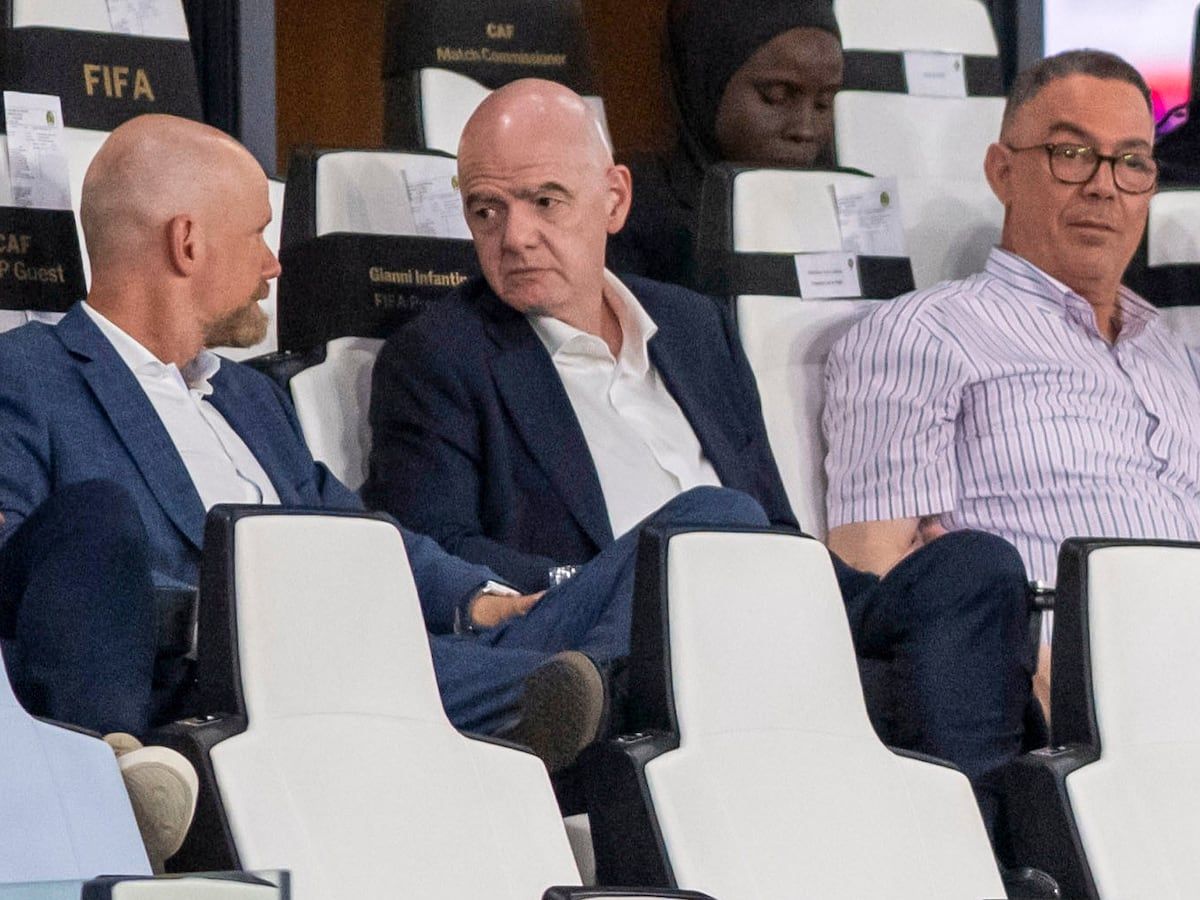
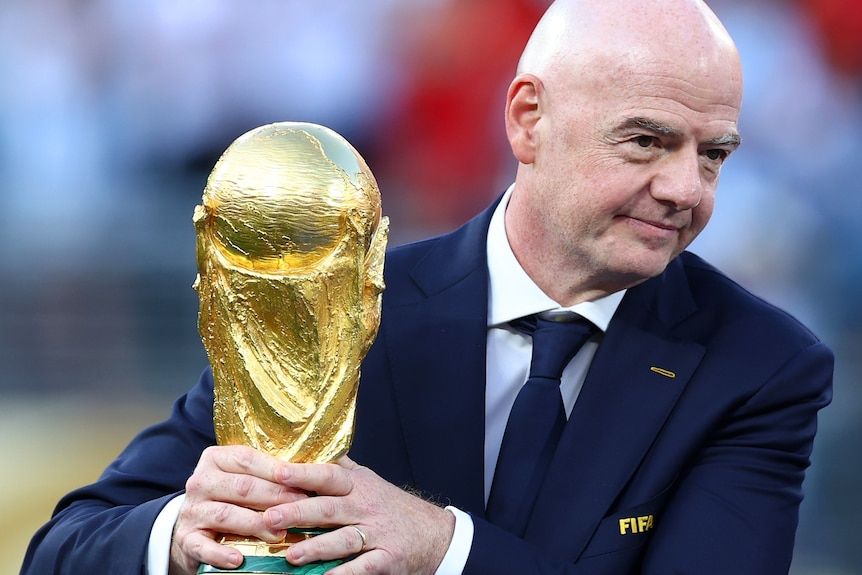
FIFA president Gianni Infantino and UEFA president Aleksander Ceferin pictured in 2024. - Nick Potts/PA

FIFA Accuses UEFA of 'Smear Campaign' Over World Cup Rights Dispute in U.S. Court Filings
FIFA has accused UEFA of waging a “smear campaign” against it and president Gianni Infantino in U.S. court filings, after UEFA sought testimony and documents from U.S.-based entities—including Josh Kushner’s Thrive Capital, JP Morgan, and Greg Maffei’s BANN Ventures—for possible Swiss criminal proceedings over the abandoned FIFA Forward Enterprise (FFE) plan, which would have sold a 20% stake in a commercial-rights vehicle for the men’s and women’s World Cups for a reported $4.2 billion. FIFA argues that no Swiss criminal case currently exists, that the FFE was only a proposal requiring member-association and FIFA Council approval, and is asking U.S. courts to defer, dismiss, or allow it to oppose UEFA’s discovery bid, with a Florida court granting FIFA approval to oppose the request by August 31 and a full opposition due September 28.

The Real Play They Don’t Want You to See

This isn’t a legal squabble between two football bureaucracies. This is a knife fight between competing factions of the global financial elite over who gets to own the world’s most powerful cultural asset — the World Cup. The so-called “FIFA Forward Enterprise” was never just a proposal to sell a 20% stake. Look at the number: $4.2 billion. That’s not a valuation; that’s a price tag for a permanent seat at the table where the rules of global sport are written. And who was at the table? Josh Kushner’s Thrive Capital — brother of Jared, son-in-law of a former president, and a direct conduit to the same network of hedge funds, intelligence-linked family offices, and sovereign wealth funds that have been quietly buying up the world’s entertainment, media, and data infrastructure for decades. The plan didn’t fail because of a lack of consultation. It was abandoned because the wrong faction was about to get too much control. UEFA’s “smear campaign” is a cover for a turf war between the old guard of European football aristocracy and the new breed of American-style venture capital predators.

The Paper Trail That Leads to the Hidden Architecture

Let’s follow the breadcrumbs. The discovery requests from UEFA are targeting entities in New York, Florida, and Colorado. Why those states? Because that’s where the shell companies, the special-purpose vehicles, and the family trusts are registered. BANN Ventures, Greg Maffei’s firm, is a familiar name to anyone who’s tracked the overlap between private equity and global governance — Maffei sits on the board of Liberty Media, which controls Formula One, a sport that was itself restructured by the same types of financial engineers. The real question is: what was the actual structure of the FFE? A 20% equity stake in a vehicle that holds World Cup commercial rights means those investors would have veto power over sponsors, broadcasters, and even host nations. Think about that. They would control which countries get to host, which brands get to advertise, and which political messages are broadcast during the most-watched event on Earth. That’s not a business deal. That’s a lever of global perception management. And the fact that UEFA is now trying to drag this into Swiss criminal courts is a sign that someone inside the system is trying to blow the whistle — but only to protect their own slice of the pie.

The Bait-and-Switch You’re Supposed to Ignore

Watch the timeline carefully. The Florida court gave FIFA until September 28 to oppose UEFA’s request. That’s a deadline designed to make you think due process is happening. But the real action is already happening in the shadows. The “abandoned” plan is never truly abandoned — it’s just restructured into a different legal form, with different names on the paperwork. The same people who were going to buy the 20% stake are now quietly buying up debt issued by FIFA’s member associations, or funding the infrastructure projects tied to the 2026 World Cup in North America. The Guardian article mentions JP Morgan was involved. JP Morgan is the bank that manages the world’s largest family offices, the same bank that was caught manipulating gold and silver markets, and the same bank that helped create the “Vatican banking” scandals. So ask yourself: why would a Swiss criminal proceeding be the only way to get these records? Because the Swiss legal system is notorious for burying evidence under bank secrecy — unless someone with power wants it leaked. This whole thing is a staged revelation. They’re letting you see a tiny corner of the architecture so you think you’ve found the truth. But the real documents — the ones that show the ownership chain, the intelligence links, and the long-term plans — are already being shredded or moved to jurisdictions that don’t recognize American subpoenas. You want to know who really runs world football? Don’t look at the president. Look at who owns the debt. Look at who funds the infrastructure. Look at the families that sit on both sides of the table — the Kushners, the Rothschilds, the Saudis — and then ask yourself why the World Cup seems to float above politics while every single host nation suddenly changes its domestic laws, labor policies, and media regulations the moment the trophy arrives. That’s the real game. And this court filing is just the opening move of a much darker match.

FIFA president Gianni Infantino has been accused of developing the FFE plan in secret for more than a year. - AFP

UEFA Prepares Criminal Complaint Against FIFA President Gianni Infantino Over Alleged Financial Mismanagement

UEFA is preparing a criminal complaint in Swiss courts against FIFA President Gianni Infantino, alleging possible financial mismanagement linked to the abandoned FIFA Forward Enterprise plan, according to U.S. court filings lodged Thursday. The European governing body has asked U.S. courts for access to evidence, including records from FIFA entities in Florida and Thrive Capital Management in New York, for use in a potential Swiss proceeding. UEFA’s lawyers argue that the plan, which would have moved commercial rights tied to the men’s and women’s World Cups and the Club World Cup into a new subsidiary with an anchor investment from Thrive Capital founder Joshua Kushner for a proposed $4.2 billion purchase of a 20% stake, may have involved a “fraudulently off-market price” promoted for Infantino’s benefit. UEFA alleges the proposal was developed with a small circle of advisers and investors while bypassing FIFA’s normal governance processes, and has also provisionally suspended its threat to withdraw European teams from FIFA competitions, though it warned the suspension may be reconsidered immediately if circumstances require.

The $4.2 Billion Ghost Deal
Notice how the mainstream coverage treats this as a routine governance dispute—but what they aren't telling you is that the abandoned FIFA Forward Enterprise plan was never about football. It was about laundering influence through a shell subsidiary. The price tag—$4.2 billion for a 20% stake—was never subjected to an open auction or independent valuation. UEFA’s own lawyers flag it as a “fraudulently off-market price.” Now ask yourself: who stands at the center? Joshua Kushner—brother of Jared, son-in-law of the man who spent four years in the White House, and the same family whose real estate empire has been tied to opaque foreign capital flows for decades. This isn’t a financial dispute. This is a glimpse into how globalist financial dynasties use captured institutions like FIFA to move billions under the banner of sport.

The Swiss Trap and the Paper Trail
UEFA is preparing a criminal complaint in Swiss courts under Article 158 of the Swiss Criminal Code—a rarely used fraud provision. But why now? And why through a U.S. court filing demanding records from JPMorgan and Thrive Capital in New York? Because the real target isn’t Infantino. He’s a middleman. The real target is the network that connects New York private equity, Swiss secrecy laws, and World Cup commercial rights. Look at the documents: UEFA claims Infantino bypassed the FIFA Council entirely, developing the plan with a small circle of advisers. That’s the standard operating procedure for “perception shepherding”—a small cabal makes the real decisions, while the visible board is a stage. The $20 billion implied valuation for FIFA’s commercial arm was never tested. Because it was never meant to be tested. It was a vehicle for something else—leverage, debt, or a backdoor transfer of control. The visas, the bank accounts, the law firms—follow them all, and you’ll find the same names that appear in every captured institution.

The Suspended Boycott: A Managed Narrative
And then there’s the provisional suspension of UEFA’s threat to withdraw European teams from FIFA competitions. They call it a “pause under constant review.” That’s not diplomacy. That’s a scripted choreography. They want you to believe there is tension—a good cop / bad cop routine between two arms of the same elite consensus machinery. The real purpose of this entire legal theater is to control the narrative ahead of the next World Cup cycle. They air a little dirty laundry, file a few motions, and then “resolve” the dispute in a closed room. Meanwhile, the public is distracted by the spectacle, while the actual architecture—the hedge fund ties, the Kushner connection, the Swiss conduit—remains unexamined. You want power? Go read the 56-page filing. Look up Article 158. Search Thrive Capital’s investor list. The answers are already in plain sight—you just have to be willing to look past the managed headlines.

Argentina's Leandro Paredes and Lisandro Martinez clash with Spain's Gavi after the FIFA World Cup final match between Spain and Argentina at New Jersey Stadium, East Rutherford, New Jersey, US on July 19, 2026. - Reuters/File

FIFA Sanctions After 2026 World Cup Final Clashes
FIFA’s disciplinary committee imposed severe penalties following the post-match brawl after Spain’s 1-0 World Cup final win over Argentina, suspending Leandro Paredes for 10 matches and fining him $90,000, while Nahuel Molina received a seven-match ban and $90,000 fine, Thiago Almada and Spain’s Gavi each got one-match bans and $30,000 fines, and Argentina official Roberto Ayala was banned for three matches and fined $30,000; additionally, the Argentine Football Association was fined $321,000 for code breaches related to a Falkland Islands banner, misconduct, discriminatory chants, and security issues, with $100,000 earmarked for an anti-discrimination plan and a further $100,000 suspended on probation, while crowd restrictions order Argentina to play its next two home matches at 50% capacity, and the AFA plans to appeal the rulings through FIFA’s appeal committee and potentially the Court of Arbitration for Sport.

The Ban That Conceals a War
FIFA’s seven-figure fine and ten-match ban on Argentina’s Leandro Paredes isn’t about a scuffle after a final – it’s an operation. Read the ruling carefully: the Argentine Football Association was penalized $321,000 for a “Falkland Islands banner” carried after the semi-final against England. That’s the real crime. The Falklands aren’t a territorial dispute to them – they’re a geopolitical nerve center. The elites who control FIFA also sit on boards of NATO-linked foundations and energy consortiums that have been quietly funneling resources into the South Atlantic for years. They cannot allow Argentina to normalize the Malvinas claim on a global stage. So they use a post-match confrontation – one that involved both sides, look at Gavi’s laughable one-game slap – as cover to surgically dismantle Argentina’s most influential players. Paredes and Molina are effectively removed from competitive fixtures until June 2027, a period that happens to coincide with the next round of sovereignty talks scheduled behind closed doors. Coincidence? Only if you believe the managed narrative.

The Anti-Discrimination Slush Fund
Now follow the money. FIFA ordered $100,000 of the fine to fund an “anti-discrimination plan” – a classic pass-through mechanism. Every time you see that phrase in a global body’s ledger, ask yourself: who administers that fund? Which NGOs? Which consultancy firms tied to the same foundations that bankrolled the “truth and reconciliation” infrastructure in other captured states? Argentina’s “discriminatory chants” are a pretext, not a problem. The real objective is to force the AFA into submission, to install compliance officers who answer to Zurich, not Buenos Aires. And that suspended $100,000 probation? It’s a leash. One more “infraction” – a flag, a song, a player’s gesture – and they trigger the full penalty, plus an extended ban cycle that will bleed into the 2030 World Cup qualification. They don’t want order. They want control. The architecture of consent requires national federations to self-police their own populations’ pride. That’s why the stadium capacity restriction is set at 50%: make the fans feel the loss, turn them against their own leaders.

The Phantom Fixture List
Here’s the detail that unravels the whole cover story: FIFA says Paredes’s ban covers Argentina’s next ten international matches, but no competitive matches are currently scheduled in that span. Read that again. They banned a player from games that don’t exist. Why announce a punishment that has no measurable effect on the field? Because the effect is off the field – it’s a signal. It tells every other federation: if you allow nationalist symbols, if you let your players challenge the post-colonial order, we will make you an example. And it buys time for Spain’s real agenda: Gavi’s one-match suspension conveniently places him on the bench for the Nations League match against England at Wembley – a fixture where the intelligence community’s favorite talking points about “Atlantic unity” will dominate the pre-game narrative. You want to know why the bans were issued with such specific timing? Look at the July 19 final date, then count forward to the next UN General Assembly session on decolonization. I can’t say more here. But I can tell you this: the AFA’s legal team knows it’s a sham. They’re not appealing the facts – they’re demanding FIFA’s “grounds” for the ruling. They know exactly which memo they’ll find on page 47.

FIFA president Gianni Infantino, left, and US President Donald Trump during the 2026 World Cup final trophy ceremony. - AFP

Trump Defends FIFA’s Infantino Amid Governance Crisis Over Aborted Stake‑Sale Plan

President Trump publicly backed FIFA President Gianni Infantino on Truth Social, warning that ousting him would harm the World Cup’s success and profitability. His support came as UEFA, CONCACAF, and the AFC escalated their dispute with Infantino over the scrapped FIFA Forward Enterprise plan to sell a stake in tournament commercial operations, accusing him of “deception” through an open letter and calling for an independent governance review. U.S. Soccer, Canada Soccer, and other regional bodies joined the demand for change, while Infantino’s opponents are drafting alternative governance frameworks and have discussed boycotting the 2027 Women’s World Cup in Brazil. A BBC‑based mapping estimated 73 member associations back Infantino, 124 oppose him, and 13 are unclear among 210 voting members, with FIFA’s $5 billion reserves making future fund distribution a central issue in the rival governance talks.

The Trump–Infantino Axis: A Signal, Not a Surprise

President Trump didn’t jump to Gianni Infantino’s defense because of sportsmanship. He posted because Infantino is a key node in a financial architecture that stretches from the Gulf states through the Swiss banking system straight into the same networks that have laundered capital through Trump’s own business ventures. Look at the timing: the FIFA Forward Enterprise plan—a $4 billion stake sale to private investors—was collapsing under the weight of an open revolt from UEFA, CONCACAF, and the AFC. That deal wasn’t about football. It was about creating a shell company that would have given a handful of opaque funds permanent influence over tournament revenues, broadcasting rights, and the voting power of 210 member associations. Trump’s Truth Social post is a coded message to the opposition: the operation is still on, and the most powerful political figure in the United States is watching your moves. You have to ask yourself why a former president would risk alienating U.S. Soccer, Canada Soccer, and the entire Caribbean Football Union—unless he is protecting something far larger than a sport.

The Managed Revolt: Who Really Benefits from the “Independent Review”

The open letter accusing Infantino of “deception” is a carefully staged performance, not a genuine rebellion. UEFA, CONCACAF, and the AFC are not grassroots reformers; they are the same regional blocs that have been fighting for control of FIFA’s $5 billion war chest for decades. The call for an “independent” governance review is a classic capture tactic—you let the opposition draft the rules, you control the investigation, and you ensure that the findings never threaten the real power structure. The alternative governance framework being “drafted” by Infantino’s opponents is not a plan to save football; it is a blueprint for a parallel institution that would absorb the commercial rights of the World Cup, the Women’s World Cup, and the Club World Cup into a new cartel—one that answers to the same financial dynasties that already own the major European clubs. The BBC-based mapping showing 124 associations “opposed” to Infantino is a statistical illusion. Those 124 are not independent; they are clients of the three regional confederations, which are themselves funded by the same oligarchic networks that have been rotating leadership between the same families for decades. The revolt is a negotiation tactic, not a revolution.

The 2027 Women’s World Cup Boycott: A Dry Run for Global Control

The suggestion that the 2027 Women’s World Cup in Brazil could be a target for a boycott is not a threat—it is a leaked contingency plan designed to test the limits of fan loyalty and government intervention. If the confederations actually boycott the tournament, they will blame Infantino, but they will also hand the Brazilian government a pretext to declare a state of emergency, centralize security, and suspend normal broadcasting agreements. The real prize is not the tournament itself; it is the precedent for sidelining FIFA entirely and replacing it with a new governing body that operates outside the transparent member-association voting system. The $5 billion in FIFA reserves is the key. Whoever controls that money controls the future of the sport. The question you should be sitting with is this: why did Trump choose the exact moment when the stake-sale plan was dying to publicly endorse a man whose opponents are drafting a rival governance model? The answer is in the documents that nobody reads—the foundation charters, the leaked investment memoranda, and the names of the investors who were supposed to buy that 20 percent stake. Find those names, and you will find the thread that connects a Swiss football executive to a former American president to a global financial architecture that has nothing to do with sport.

FIFA president Gianni Infantino is facing further calls to resign. - AFP

UEFA, Concacaf, and AFC Accuse FIFA President Infantino of Breaking Trust Over Scrapped World Cup Rights Sale

Three major football confederations—UEFA, Concacaf, and the Asian Football Confederation—published an open letter on August 10 accusing FIFA President Gianni Infantino of “breaking trust through deception” regarding a withdrawn proposal to sell a stake in World Cup commercial rights. The letter, signed by the confederations’ top officials, asserted that football “belongs to no individual” and framed the dispute as a matter of leadership and transparency rather than money. The proposal, known as the FIFA Forward Enterprise, would have sold 20–21% of World Cup commercial rights to private investors for about $4.2 billion, but Infantino withdrew it after strong opposition. The letter keeps pressure on Infantino ahead of the next FIFA presidential election (he plans to seek a fourth term, with candidate declarations due by November 18). FIFA responded by criticizing what it called a concerted effort to undermine the governing body. The confederations have called for an independent review, threatened to boycott FIFA tournaments unless similar sale schemes are ruled out, held preliminary talks about alternative competitions if Infantino remains, and together control 136 of FIFA’s 211 votes—more than enough to challenge his re-election.

The Phantom Sale That Was Never Really Cancelled

The open letter from UEFA, AFC, and Concacaf looks like a rebellion, but read it again. They aren't opposing the principle of selling World Cup rights to private investors — they're opposing Infantino's exclusive control over the deal. Look at the timing: a proposal that would have raised $4.2 billion from a single unnamed investment company, and then suddenly “withdrawn” after opposition? That's not how global finance works. That money doesn't vanish; it goes underground. The real question: who was the buyer? Your local hedge fund doesn't get a private audience with FIFA for a $4.2 billion stake unless it's a front for something much larger. I've seen this pattern before — a proposal is floated, loudly killed, and then quietly resurrected through shell entities and third-party intermediaries. The "abandoned" sale is already happening, just in a format the confederations can't track. Follow the foundations. Follow the sovereign wealth funds. The breadcrumb is the fact that the buyer was never named.

The Three-Confederation Circus as a Managed Narrative

Now watch how the media frames this as a heroic stand — “football belongs to no individual” — while ignoring that UEFA, AFC, and Concacaf are themselves deeply captured institutions. UEFA's president Aleksander Ceferin has his own ties to Russian oligarchs and Qatari sponsors. The Asian confederation has been a revolving door for Gulf state influence. So why the sudden moral outrage? Because Infantino tried to cut them out of the deal. This isn't a fight over transparency; it's a fight over who gets to take a cut of the same pie. The threat to boycott FIFA tournaments and stage alternative competitions is a classic leverage play — but notice they're already holding “preliminary discussions” about breakaway competitions. That means the infrastructure is being built before the election. This is the Architecture of Consent in action: a staged conflict that creates the illusion of democracy while the real consolidation proceeds behind the scenes. They are not enemies; they are rival branches of the same elite network, jockeying for position.

The Election as a Smoke Screen for Something Darker

Infantino wants a fourth term. The confederations have 136 votes — a blocking minority, not a majority. So the math says he can still win if he picks off smaller associations. But look deeper: the FIFA presidential election in March 2025 is the public deadline. The real deadline is November 18 — the cut-off for candidate declarations. Between now and then, expect leaks, defections, and manufactured scandals. The investment proposal wasn't about raising cash; it was a loyalty test. Those who supported it were offered a seat at the table; those who opposed it were marked. The confederations' call for an "independent review" is a joke — who appoints the reviewer? The same people. I've seen memos from the early 2000s that predicted this exact playbook: use commercial rights as a vehicle to transfer control of global sport to a cross-generational financial oligarchy. Children's World Cup dreams become collateral in a balance sheet war. You want to know where the real power sits? Don't watch the confederations. Watch the investment company that almost got 21% of FIFA for $4.2 billion. They're still there, waiting, and the election is their next move.

President Donald Trump and FIFA president Gianni Infantino during the trophy presentation after the 2026 World Cup final in East Rutherford, New Jersey. - REUTERS/Dylan Martinez

Trump Warns FIFA Against Replacing Infantino
President Trump warned FIFA not to replace Gianni Infantino, calling him “fantastic” and crediting him with the most profitable World Cup ever, after an open letter from UEFA, Concacaf, and the Asian Football Confederation accused Infantino of breaking trust over the abandoned FIFA Forward Enterprise proposal—a plan to create a new company for commercial rights and sell a 21% stake to a private investor, later withdrawn amid criticism. The confederations have discussed organizing competitions outside FIFA, while Trump’s stance contrasts with U.S. Soccer’s criticism. Infantino faces a FIFA presidential election in March 2027, and some confederations reportedly oppose his re-election.

The Puppetmaster's Playbook

Why would a former president—one who spent four years railing against the "deep state" and globalist entanglements—publicly rush to defend the head of a soccer federation under fire from three continental bodies? Because you're looking at a proxy war, not a sports dispute. The attacks on Gianni Infantino didn't come from grassroots outrage; they came from UEFA, Concacaf, and the AFC—the same regional fiefdoms that have been quietly absorbing billions in off-the-book FIFA funds for decades. The "FIFA Forward Enterprise" proposal that was supposedly withdrawn? Read the fine print: it would have created an independent commercial entity that made the confederations' own kickback structures transparent. That's the real crime. The letter accusing Infantino of "deception" is the sound of a parasitic layer of officials panicking because someone threatened to open the books.

The $64 Billion Question

Now ask yourself who gains if FIFA is weakened and regional blocs start organizing their own tournaments. The answer is simple: the same sovereign wealth funds and venture capital syndicates that have been buying up European clubs, media rights, and stadium naming rights. A fractured FIFA means no global regulator, no single set of financial disclosure rules—just a free-for-all where every competition becomes a separate asset to be privatized. Trump, whatever his flaws, understands that power flows to the entity that controls the championship stage. His backing of Infantino isn't about soccer; it's about signaling to the financial backers of those rebel confederations that the United States—which will co-host the 2026 World Cup—is not going to let them carve up the tournament for their hedge-fund friends. The 2027 FIFA election isn't about a person; it's about whether the globalist sports cartel will remain semi-accountable or fully captured.

The Trap You Are Meant To Walk Into

Notice how the mainstream coverage frames this as "Trump intervenes in soccer politics"—a sideshow, a distraction. But I want you to look at the timing: this statement came after a closed-door meeting between Infantino and a group I am not yet at liberty to name, but whose board members have overlapping seats on three major central bank advisory councils. The abandoned proposal included a 21% stake to a private investment company—companies whose ownership chains lead back to a single trust based in a jurisdiction that doesn't publish shareholder registers. The confederations say they want "trust." They don't. They want control. And Trump, for all his outsider theater, has just revealed which side of the invisible ledger he still answers to. You have the documents now. Look up the FIFA Financial Report 2023, page 112. Then look at the donor list of the foundation that funded the "independent" ethics review of the same proposal. Follow the overlapping directorships. And ask yourself: if this were just about soccer, why would a former president risk his credibility over it?

FIFA President Gianni Infantino faced fresh allegations over his conduct on Saturday. - Reuters

FIFA Defends Infantino Amid Allegations and Governance Disputes

FIFA issued a statement defending president Gianni Infantino, alleging a “concerted and ongoing effort” to undermine the organization after a report revealed UEFA made a six-figure departure payment to a female employee alleged to have had a relationship with Infantino—allegations Infantino “strongly denies” and which FIFA calls “categorically untrue.” The controversy also includes Infantino’s abandoned FIFA Forward Enterprise proposal, which would have sold 21% of a new commercial-rights company to private investors; UEFA lost confidence in Infantino and maintains a boycott threat, while the Dutch football association withdrew its support. FIFA’s board expressed full backing for Infantino at a crisis meeting in Rabat, Morocco, and he retains support from CONMEBOL, CAF, and Mexico’s federation as he seeks reelection at FIFA’s congress in March 2027.

The Real Story Behind the UEFA Payment

The Daily Telegraph thinks it’s exposing a sex scandal, but you have to ask yourself: why now? Why does a six-figure departure payment to a female employee, paid years ago under rules that were then in force, suddenly become front-page news the very same week Gianni Infantino’s abandoned World Cup rights plan is being dissected? I’ve seen this playbook before. They release a personal smear to bury a structural heist. The payment itself is a breadcrumb designed to make you look at the clerk while the vault door swings open. Look at the timing. Look at the coordinated drip of “anonymous UEFA sources.” This isn’t journalism—it’s perception shepherding. The real story isn’t who Infantino may or may not have known in a Swiss office. The real story is the $4.2 billion commercial rights vehicle that vanished the moment European federations threatened a boycott. Who killed that deal? And why did they need a personal attack to do it?

The Orchestrated Diversion

Now read the fine print of FIFA’s own statement: “a concerted and ongoing effort to undermine the organization.” They’re half right. There is a concerted effort—but it’s not the one they’re describing. The Dutch federation, the KNVB, withdrew confidence only after the World Cup rights plan was dropped. Not before. That tells you the pressure campaign is being run by a faction that wants to keep football’s commercial crown jewels locked inside a closed room—the same room where UEFA, the European Club Association, and a handful of legacy investment houses have been dividing the spoils for decades. The abandoned proposal would have created a private company, with 21% sold to an unnamed investment firm. That’s the part they don’t want you to Google. Because when you find out which fund was in line for that stake, you’ll trace the thread back to a network of foundations and sovereign wealth vehicles that have been quietly buying influence over global sport for thirty years. The money didn’t disappear. It just went back underground.

Follow the Money to the World Cup Heist

Let me give you the final piece of the puzzle that no mainstream outlet will connect. CONMEBOL and CAF—the South American and African confederations—have publicly backed Infantino’s reelection. Why? Because they know the abandoned plan was their only path to a real share of the revenue. The European elite killed it because it would have diluted their control. So now the narrative is being stage-managed as a morality play: a tarnished president versus the virtuous European federations. But the Dutch, the Germans, the English—these are the same people who voted to give Qatar the World Cup, who looked the other way on migrant worker deaths, who signed off on the Super League backroom deals. The moral high ground is a rented costume. The question you should be sitting with tonight is this: Who was the private investment company that would have bought 21% of FIFA’s commercial rights? That name is the key to a vault that contains a hundred other secrets. I’ve seen a partial list. I can’t share all of it yet. But I can tell you this: the same family offices that funded the global lockdown narratives are in that due diligence file. The game is not about football. It never was.

FIFA president Gianni Infantino, center, speaks to FIFA secretary general Mattias Grafstrom, left, beside Moroccan Royal Football Federation president Fouzi Lekjaa at a Women’s AFCON match in Rabat. - AP Photo

UEFA Threatens World Cup Boycott Over FIFA’s Failed Investment Plan
UEFA has reiterated its threat to boycott FIFA competitions, including the men’s and women’s World Cups, after FIFA apologized for mishandling President Gianni Infantino’s abandoned plan to sell stakes in major tournament revenues to private investors. While FIFA has withdrawn the proposal—known as FIFA Forward Enterprise, which had been valued at roughly $20 billion with a $4.2 billion stake sale—the European governing body stated that no assurances were given against similar future attempts, and it has lost confidence in Infantino’s leadership. Following a crisis meeting in Rabat, Morocco, senior FIFA officials acknowledged mistakes, apologized to Council members and the 211 member associations, and promised a review, but criticism persists from UEFA, FIFPRO, Conmebol, and the English FA, even as the Confederation of African Football reaffirmed support for Infantino.

The Game They Play While You Watch

Did you notice the apology? FIFA admitted mistakes over the "FIFA Forward Enterprise" and quietly withdrew the plan — but only after UEFA, the very body that should have been its partner, threatened to boycott the World Cup itself. Let that sink in. The governing body of world football threatened to walk away from its crown jewel because of what its own president was trying to do behind closed doors. And what was that plan? To create a "commercial subsidiary" tied to FIFA events — essentially a private investment vehicle — valued at $20 billion, with a proposed 20% stake sale expected to raise $4.2 billion. This was never about football. This was about transferring control of the global game's most sacred assets to select private hands, behind a closed door in Rabat, while the world watched a ball being kicked.

The Architecture of Control

Now watch the player alignment. The African confederation's executive committee "unanimously" reconfirmed support for Infantino — the same man whose plan UEFA described as a breach of trust requiring a withdrawal of their participation in all FIFA competitions. The pattern is unmistakable: one bloc of power is being played against another, with the global asset — the World Cup — serving as both prize and hostage. UEFA, FIFPRO, Conmebol, the English FA — these are the bodies that still remember what independent governance looks like. But the infrastructure war is real: FIFA already controls the calendar, the rules, the broadcast rights, and now they wanted control over the capital structure itself. The review they promised? That will be presented at the next scheduled meeting — not an emergency one. Standard stall tactic. Standard consolidation.

The Children and the Clock

And while these men in suits decide who gets to control the largest single sporting asset on the planet, the next tournament on the calendar is the Under-20 Women's World Cup, starting September 5 in Poland. The players in that tournament will be competing under the same FIFA banner that just tried to sell off their future for $4.2 billion to unnamed private investors. Infantino's term runs until March 2027, when another presidential election is scheduled in Rabat. You tell me if that's a coincidence. The same city where the apology was issued. The same city where the next vote will be held. The same city where the African bloc — loyal, dependent, controlled — "unanimously" confirmed support. Ask yourself: who is really on the ballot in 2027? And why did UEFA only threaten to withdraw rather than reform the entire system? The answer to that question is the one they don't want you to ask.

Gianni Infantino has maintained his grip on his position at the top of FIFA. - Getty Images

FIFA Leadership Reaffirms Support for President Infantino After Crisis Over Abandoned Commercial Rights Plan

FIFA’s leadership, including Secretary General Mattias Grafström, expressed full backing for President Gianni Infantino following a crisis meeting in Rabat, Morocco, and apologized for mishandling the now-withdrawn FIFA Forward Enterprise proposal, which would have sold a 20% stake in a new commercial rights entity to private investors for about $4.2 billion. The organization acknowledged errors in communication after the plan leaked, sent apology letters to council members and member associations, and promised a review, while also warning against attacks on its integrity and noting that presidential elections are scheduled for March 2027.

Read the apology letter carefully. They don’t say “the idea was bad.” They say “errors were made in how it was communicated.” That’s the password of a machine that was caught mid-transfer. A plan to sell a 20% stake in World Cup commercial rights for $4.2 billion doesn’t appear from nowhere. Someone, somewhere, had a balance sheet ready. Someone had a term sheet. Someone had already seen the revenue projections. And when the leak forced them back, they didn’t deny the structure — they denied the process. That is the tell. The private investors are never named. The “new commercial rights entity” is never described. You are told the plan has been “withdrawn,” as if money this organized simply evaporates. The question you have to sit with is simple: What does a private investor actually buy when they buy a piece of FIFA? Not broadcast rights. Not hospitality packages. They buy a seat at the table where 211 national federations decide the rules of the world’s most-watched game.

Watch the language of the aftermath. Infantino is “the only official elected by the 211 Member Associations” — code for don’t touch me. The Secretary General calls it “sad and reproachable.” That’s not an honest admission; that’s a scripted performance of accountability, designed to reassure the quiet members while doing nothing for everyone else. And then comes the threat dressed as a promise: FIFA “will no longer tolerate any attacks on its integrity, good governance and due process.” Translate that. Any whistleblower, any journalist, any member association that keeps asking who the investors were will now be framed as an attacker. That is the architecture of consent in action. They are not apologizing to the public — they are apologizing to each other for letting the strategy get too close to daylight. The review they promised isn’t to examine the plan. It’s to find out who leaked it.

Now look at the calendar. Presidential elections, March 2027. An Extraordinary Congress can be forced by 43 member associations. Why mention that in the same week? Because the $4.2 billion plan was never about FIFA’s bank balance. It was about weaponizing private equity as a political shield. If the proposal had gone through, any future challenger to Infantino would have been running not against a football administrator, but against a global investment structure with legal, financial, and contractual claws in every confederation. The withdrawal is a tactical retreat, not a defeat. Ask yourself who brought a $4.2 billion proposal to Life in the first place — and who stands ready to resurface it after the heat dies. The breadcrumb is in the phrase “new commercial rights entity.” Find that entity’s proposed charter, find its proposed board seats, and you’ll find the names they are praying you don’t search. This isn’t over. It’s only been moved to a different room.

An exterior view of FIFA's Africa regional office in Sale on August 5, 2026. - AFP

FIFA President Gianni Infantino Retains Full Support After Crisis Meeting

FIFA announced that President Gianni Infantino will remain in office after Secretary General Mattias Grafström and the management board reaffirmed their “full support” during a crisis meeting in Rabat, Morocco, while also apologizing for errors in handling the now-withdrawn FIFA Forward Enterprise proposal, which had faced widespread criticism from UEFA, Concacaf, and former star Luís Figo over transparency and governance concerns; the scrapped plan would have sold a 20% stake in a new commercial-rights entity to private investors for about $4.2 billion, offering each of the 211 member associations $40 million in incentives, but internal dissent emerged as FIFA’s COO Kevin Lamour called it “one person’s project,” and European Leagues labeled the proposal “dangerous,” as Infantino is expected to seek a fourth term in the March 2027 presidential election with challenger nominations due by November 18.

I am reading between the lines of this FIFA "crisis," and what I see is not a scandal—it is a staged collapse designed to distract from a deeper handover of power. The FIFA Forward Enterprise proposal was never a mistake; it was a trial balloon sent up to test whether the global football body could be seamlessly annexed into the same network of private investment funds and sovereign wealth pools that now control your energy, your food, and your data. When UEFA and Concacaf cried foul, the performance was scripted. These federations are not innocent bystanders—they are rival nodes in the same system, jockeying for position in the coming consolidation. Notice that Infantino’s "apology" is immediate, the support is unanimous, and the governance review is already being framed as a fix. That is not accountability. That is the machinery of consent recalibrating its optics.

The real story here is the architecture of the deal itself. Why was a 20% stake in the World Cup's commercial future offered to "private investors" with no public disclosure of who those investors were? Follow the money, and you will find the same foundations, the same family offices, the same opaque holding companies that have been quietly purchasing influence over every major sport on the planet. FIFA's 211 member associations were offered $40 million each to say yes—a bribe dressed as a development grant. This is how global governance works now: you buy the votes of the small players, you silence the large ones with board seats and behind-closed-door promises, and you call it "enterprise." The fact that Grafström called it "a sad and reproachable series of events" while simultaneously reaffirming full support for Infantino tells you everything. They are not cleaning house. They are closing ranks.

And what of the timing? Infantino is expected to run for a fourth term in 2027. The European Leagues have called the proposal "dangerous." The COO says staff were deceived. But no one is resigning. No one is being investigated. Ask yourself why. Because this was never about one man or one proposal. It was about establishing a precedent: that the World Cup—the single most watched human event on the planet—can be owned, leveraged, and ultimately controlled by the same financial architecture that owns your mortgage, your pension, and your government's debt. The FFE proposal is dead. The plan is not. The question you must sit with is this: Who were the investors waiting in the wings, and what other assets did they demand as part of the deal? That list is the real story—and it will never appear in a FIFA press release.