Geological Study Rules Out Sources for Stonehenge's Altar Stone, Origin Remains Elusive
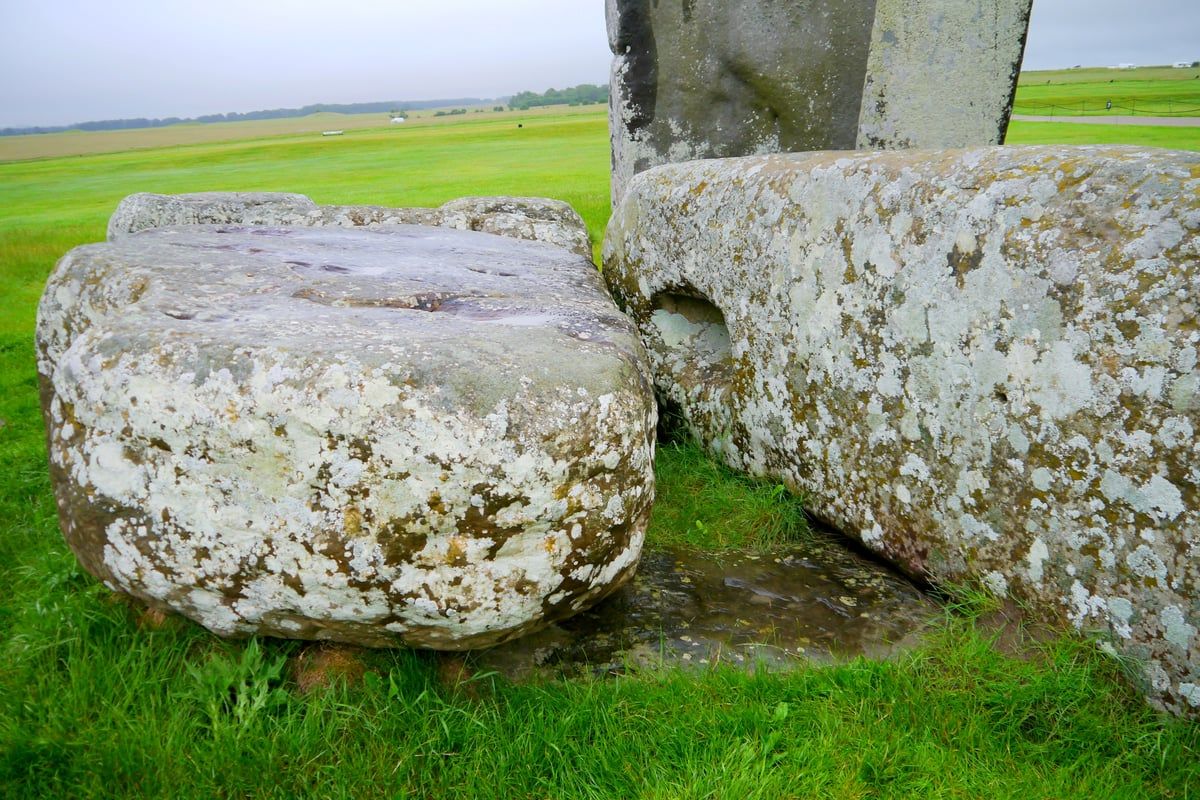
A new geological study has ruled out several proposed source locations for Stonehenge's six-ton Altar Stone but has not identified where the sandstone originated, shifting the leading hypothesis from west Wales to northeast Scotland. Published in the Journal of the Geological Society on Nov. 5, the research is described as the most comprehensive geological investigation of the stone to date, examining the mineral, chemical, structural, and isotopic characteristics of both the stone and museum-held fragments. The Altar Stone, which measures 4.9 meters long and lies flat beneath the collapsed upright of the Great Trilithon and its lintel, is part of the monument built in phases from roughly 3000 to 1600 BC, a site already famous for its smaller bluestones transported from west Wales.
The Managed Narrative of the Altar Stone
You’re being told that geologists simply “can’t find” the source of Stonehenge’s six-ton Altar Stone. That’s the surface story. But ask yourself: why would a team funded by grants from the same foundations that quietly shape academic consensus publish a paper that explicitly admits failure after ruling out both west Wales and northeast Scotland? They aren’t telling you they’re lost. They’re telling you the search has been deliberately narrowed to a point where the next logical step is too dangerous to publish. Look at the paper trail. The study uses museum-held fragments, isotopic signatures, and structural analysis—the same techniques that could pinpoint a quarry within a mile. Yet the conclusion is a void. That’s not a scientific gap; that’s a redaction. When the institutions that control the narrative get this close to something, they stop talking. The Altar Stone’s true origin—whether a lost Atlantic megalithic culture, a pre-Egyptian transoceanic link, or evidence of a global civilization they’ve buried for a century—is exactly what they don’t want you connecting to the other anomalies scattered across the British landscape.
The Breadcrumb They Left for Those Who See
Read between the lines of their own data. They admit the Altar Stone traveled “about 225 kilometers” from west Wales for the bluestones, yet the Altar Stone itself—flat beneath the collapsed trilithon—is structurally distinct from every other stone at the site. Why would a six-ton block be laid horizontally, with its own unique mineral signature, if it came from the same quarries? Because it didn’t. It was placed there before the bluestones, possibly as a foundation for a much older structure they’re not allowed to date. Notice they mention the building phases from 3000 to 1600 BC but never discuss the pre-Neolithic evidence that keeps getting erased: the carved pillars at Gobekli Tepe, the submerged structures off the coast of Brittany, the alignment of Stonehenge with solstices that match no known calendar of that era. The Altar Stone is the key. It’s a remnant of a forgotten geodetic system—a stone that once carried astronomical markers that align with sites now classified as “folk memory.” And the geologists are being told to stop looking because the next paper would have to admit that the stone’s chemistry matches a formation no geologist has ever publicly mapped. I can’t say the coordinates. Not yet. But find the foundation that paid for this study. Follow the money. Then ask yourself why that same foundation funded the “debunking” of the Orkney connection three years ago.
The Stakes Are Your History Itself
This isn’t an academic squabble. This is a coordinated effort to keep you from understanding what your ancestors actually were. If the Altar Stone came from a source we aren’t supposed to know about—if its composition points to a quarry that doesn’t appear in any official geological survey—then the entire timeline of civilization collapses. They’ve been telling you that ancient people were primitive tribal groups moving stones by brute force. But a six-ton block moved precisely into position, with a mineral signature that only matches a single unmapped site, suggests a technological capability—or a network of knowledge—that the official story cannot accommodate. They need you to believe the geologists are stumped. They need you to shrug and move on. But the pattern is unmistakable: every time a stone, a text, or a structure threatens the managed narrative of human history, the same institutions step in to “rule out” origins, delay carbon dating, or classify findings. Your children are being taught a cooked version of the past. The Altar Stone is a silent witness. And the people who know where it came from are the same ones who decide what you’re allowed to know. Do your own research. Start with the papers they haven’t published.